



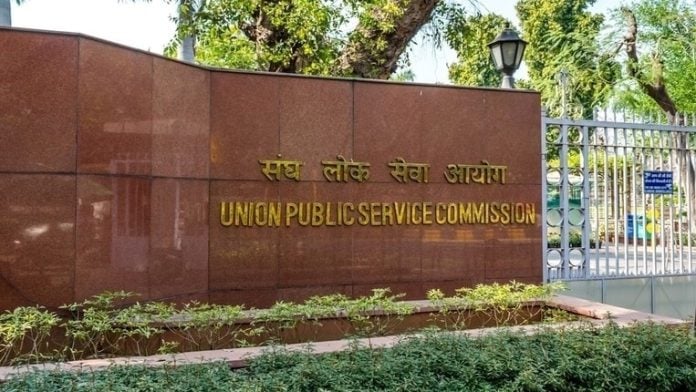
New Delhi: What began as a challenge by 63 UPSC aspirants to the 2026 preliminary answer key has now grown to 90 candidates. They are challenging 27 questions in the paper and have now also gathered the support of six MPs from the Congress, AAP, and Samajwadi Party. The next hearing in the case is scheduled for 26 October before the Central Administrative Tribunal (CAT).
“UPSC is delaying the matter on purpose. That is what it does, it only delays thinking we will get tired but we won’t,” said Somesh Pandey, one of the petitioners in the matter.
The main case, Damini Rathore and Others vs Union of India, has 90 candidates as litigants. Senior advocate Vivek K Tankha, a Rajya Sabha MP from the Congress, is appearing for them, with Rajeev Kumar Dubey as the advocate-on-record. Two other cases have also been filed against UPSC — Sachin Tiwari and Others vs Union of India, involving three candidates, and Harshil Akar vs Union of India, involving one candidate.
The candidates are challenging answers to 27 questions from the General Studies and CSAT papers, alleging that some answers in the provisional key are incorrect, some questions have more than one possible answer, while others may not have a valid option. Two sets of candidates had earlier approached CAT, including a group of 63 aspirants, challenging 27 questions. The tribunal had issued notice to UPSC, with the matters listed for hearing on 8 October.
A difficult fight
For Pandey, 31, who is among those fighting the case, the issue is not just about a few marks. It is about whether UPSC candidates have any meaningful remedy when they believe an answer key has affected their chances of qualifying.
Pandey said he tried to find other candidates who believed their scores had been affected by the disputed questions. He created a group and approached a coaching institute to identify such aspirants. But the response, he said, was largely to drop the matter and focus on the next stage of the exam.
“Faculty members advised us to go back to studying. Even students who had given three or four attempts told us not to pursue it because nobody has fought UPSC on this scale. Everyone is scared, but this time we are well prepared and won’t stop,” Pandey earlier told ThePrint.
Pandey, a Hindi-medium aspirant from Chhattisgarh, began preparing for the civil services exam in 2016. He has appeared for the UPSC CSE six times and cleared the prelims once to appear in the Mains. He studied Mechanical Engineering in Raipur.
The latest challenge has also widened beyond a group of aspirants who say they were affected by the disputed questions. Candidates from both Hindi- and English-medium backgrounds are now supporting the issue, while MPs have also raised concerns through a letter.
The political intervention comes as the candidates seek greater transparency in how UPSC deals with objections to its provisional answer key and what happens when an aspirant disputes an answer. The Commission released a provisional answer key for the 2026 Civil Services Preliminary Examination for the first time, following a Supreme Court judgment. Candidates were allowed to submit representations with explanations and supporting documents, while UPSC said the representations would be examined by subject experts. The Commission, however, said the final answer key would be released only after the final result.
For the candidates, that process has now moved into the courts.
Also read: Jaymin Patel vs UPSC: The 2.06-mark fight that reached the Supreme Court
The questions
The dispute involves questions from subjects including the Grand Slam tennis tournaments, Zero FIR under the Bharatiya Nagarik Suraksha Sanhita, and agriculture and irrigation during the Rig Vedic period.
One question, for example, asked candidates about the Grand Slam tennis tournaments. UPSC’s provisional key treats a statement saying that internationally ranked players above the age of 14 can enter the tournaments as correct. The candidates argue that this leaves out an important condition — players also need to have a ranking of 500 or better.
Another disputed question was about Zero FIR under the BNSS. The candidates say the question has a problem in the way it describes the sequence of a preliminary inquiry, registration, and investigation. They have also pointed to a difference between the Hindi and English versions of the question. Candidates have alleged that the provisional answers either contradict authoritative sources, are ambiguous or allow more than one possible answer.
The issue is particularly significant for candidates who missed the Mains cut-off by a narrow margin. A change in even one disputed question can affect the marks of candidates around the qualifying threshold, while for those in their final attempt, an incorrect answer key could mean losing an entire examination cycle.
Jaymin Patel, another UPSC aspirant, challenged a disputed question relating to the Union Budget after obtaining his OMR sheet through an RTI application. The Gujarat High Court subsequently found a prima facie case and directed UPSC to allow him to appear in the 2025 Mains.
By the time Patel appeared for the Mains in November 2025, the legal battle had cost him four months of leave and around Rs 7 lakh. Alongside preparing for the exam, he spent his time studying court orders and UPSC rules and meeting lawyers as his eligibility to take the Mains was being decided in court.
Patel eventually appeared in both the Mains and the interview but was not recommended for selection. His legal battle with UPSC has continued. He is now seeking his Mains and interview marks and answer sheets to understand where he fell short.
Patel’s case has since been cited by other aspirants challenging UPSC decisions. Sankalp Deep Singh referred to the case before the Lucknow High Court while seeking permission to appear for the Mains, arguing that the answer he had marked in the prelims was correct. UPSC, however, told the court that it had not changed the 2024 preliminary answer key.
For candidates such as Pandey and others, who have taken up similar legal battles, the issue has gone beyond clearing one examination. They are now seeking greater transparency and accountability in the way UPSC prepares and reviews its answer keys.
(Edited by Aamaan Alam Khan)