





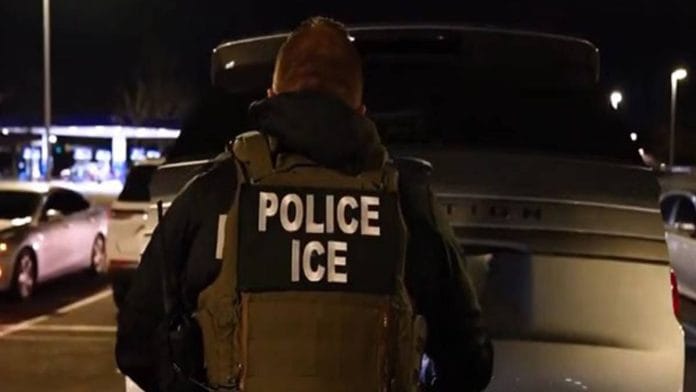


New Delhi: Over 1.45 lakh American children have faced separation from their parents detained under President Donald Trump’s immigration clampdown, a new research by the Brookings Institution has found. The findings come as detention and deportation become central to the Trump 2.0 administration’s immigration policies.
Since the beginning of Trump’s first presidency, 4 lakh people have been booked into Immigration and Customs Enforcement (ICE) detention, the study published on 18 May revealed.
The study estimated that around 22,000 US citizen children have been left without any parent in the home due to detention. Yet only five per cent, approximately 1,000 children, are estimated to have received services through the child welfare system.
Nearly 53,500 separated children were under the age of six. Over 52,000 from ages 6-12 and about 40,000 aged between 13 and 17. Almost 54 per cent of children have a detained parent from Mexico; 25 per cent belong to parents from Guatemala and Honduras.
“Even a short separation from a parent is likely traumatic for a child, but a majority of detentions are not short-lived separations,” researchers noted in the paper.
The findings stand in contrast to numbers reported by the Department of Homeland Security (DHS), pointing to an undercount in official data. According to the US think tank’s estimates, the number of affected US citizen children is more than double of what government figures would suggest over the same period. DHS reported that a total of 18,277 parents were detained in FY 2025.
The research argued that for reasons, both logistical and political, the US’ goal to remove every unauthorised immigrant will not succeed, but if the immigration enforcement policy continues, it might impact “hundreds of thousands of children”.
And the number is likely to grow under the One Big Beautiful Bill Act, which allocates $170 billion for immigration enforcement, detention, and deportation, of which, $45 billion goes toward building new immigrant detention facilities.
Thirty billion dollars have also been earmarked to “detain and deport more immigrants, more quickly”.
Also read: Are Australian teenagers starved for news? How social media ban is affecting them
What happens to the children?
Researchers said that “surprisingly” little is known about what happens to children after their parents are detained.
“Children who are themselves unauthorised may face detention or deportation, but most children of detainees are U.S. citizens. In some cases, the child may travel to the parent’s origin country with a deported parent, but the government does not publish systematic data on its transportation of U.S. citizen children to foreign countries and we do not know how commonly this happens,” the study noted.
Highlighting anecdotal evidence, the researchers suggested that immigrants avoid mentioning their children fearing consequences.
Families are often encouraged by community partners to create preparedness plans identifying relatives or close friends who can assume caregiving responsibilities in the case of detention. But many of these arrangements take place outside formal systems, as parents frequently avoid contact with child welfare agencies even when care options are limited.
Interviews with community organisations and child welfare agencies suggested that most children remain with relatives or family friends, while some may leave the country. Researchers conclude that there is currently no systematic governmental approach to protecting children affected by ICE.
“Parents also prefer to avoid engaging with child protective services, especially in a heightened enforcement environment when those in their caregiving networks may be at risk of apprehension. Child protection agencies likewise prefer to avoid engaging with families when there are no concerns about maltreatment, and some avoid collecting or documenting information that could identify children of detained parents for fear of exacerbating the child’s situation,” the study said.
As per the report, an estimated 13 million adults are undocumented or have partial legal protections, jeopardising the future of 4.6 million US citizen children living with a parent who is at the risk of deportation, while 2.5 million children could face the detention of all parents in the household.
Preksha Chaudhary is a TPSJ alumnus currently interning with ThePrint.
(Edited by Aamaan Alam Khan)