



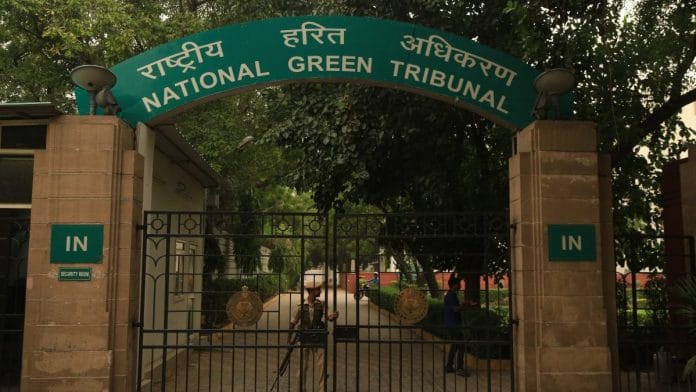
New Delhi: From January to June 2026, the National Green Tribunal dismissed all environment justice and public interest-centred appeals, while around 60 per cent of industry-centred appeals were accepted.
A new report by the South Asian Reporter on Environment Law (SANEL), published on 19 September, examined all 119 appeals decided by the NGT in the first half of 2026. It divided the cases into three categories: environment and social-justice appeals, appeals filed by industries or project proponents, and procedural appeals that were disposed of on technical grounds.
Of the 119 cases, 52 were disposed of without the NGT examining their merits — for reasons including being time-barred, withdrawn, or outside the tribunal’s jurisdiction. The remaining 67 appeals were considered on substantive grounds: 16 filed by environmental or public-interest parties and 51 by industries or project proponents.
The difference in outcomes was stark. None of the 16 environment-focused appeals resulted in a favourable merits decision, across all five NGT benches — Principal, Eastern, Western, Central, and Southern. In contrast, 30 of the 51 industry/project-proponent appeals were successful, a 58.8 per cent success rate.
“The environmental shut-out is total: no bench has given a favourable judgment to a single environmental / public-interest appeal on the merits in the entire six-month window,” said the report.
In many industry-proponent appeals, the NGT set aside Environmental Impact Assessment rejections and demolition orders for certain projects, and demanded fresh appraisals. Meanwhile, in environment-led appeals, cases against sand dune erosion, tree felling, forest clearance for road projects were dismissed on several grounds.
The only time that an environment-led appeal was approved was in the Central Zone bench, in the Tahir Hussain v State of Rajasthan & Ors. case; however, the report considered this case a “non-win”. This is because the case challenged a set of groundwater guidelines, which were already withdrawn by the state before the bench passed its judgement quashing the guidelines — effectively, the NGT did not deliver any substantive obligation or clarification beyond it.
Also read: India’s heat hotspots are spreading. Northwest is worst-hit, IMD study finds
No environment wins in each zone
One of the core points in the report was that the rejection or dismissal of environment-focused appeals was unanimous across benches.
“Three findings hold across the data. First, the filing side predicts outcome more clearly than any single bench does,” said the report.
Each bench also differed in the total number of appeals it had to adjudicate in the six-month time period, with the Western bench seeing 74 appeals and the Eastern bench only seeing one appeal. However, a majority of the zonal benches had more than 50 per cent approval rate for industry-side NGT appeals, with the Southern bench leading the pack at a 75 per cent approval rate.
Established in 2010, the National Green Tribunal looks at cases relating to environmental protection to provide “speedy environmental justice” in specialised courts.
(Edited by Aamaan Alam Khan)