







By Jihed Abidellaoui
TUNIS (Reuters) – Tunisia’s blisteringly hot summer has hit Tunisia’s small wine industry, damaging or destroying grapes and leaving farmers and vintners to fear for their future as climate change brings hotter, drier weather to North Africa.
Estimates of how far wine output has fallen vary, from a roughly 20% drop according to the Agriculture Ministry’s Kilani Belhaj, to a reduction of 40-50% according to Vineyard Producers’ Syndicate head Salim Chaouch.
Winemakers in France and elsewhere in southern Europe have also warned of lower wine output this year due to the heat.
Farmer Wajdi Graya said his own production had fallen by between two fifths and three fifths this year after July temperature highs of between 38-48 Celsius as the heat reduced sugar levels in his grapes.
“Climate change has impacted both the quantity and quality of production, with a broad effect on the sector. We have delayed harvesting the crop to achieve acceptable sugar levels in the grapes but it will inevitably affect quality,” he said.
In ancient times Tunisia was a major wine producer under the Carthaginian and Roman empires and commercial-scale output began again under French colonialism, though it has not become a significant exporter.
However, Tunisian supermarkets stock a wide selection of locally made wines, many of them from the fertile northern hills near the base of the Cap Bon peninsula.
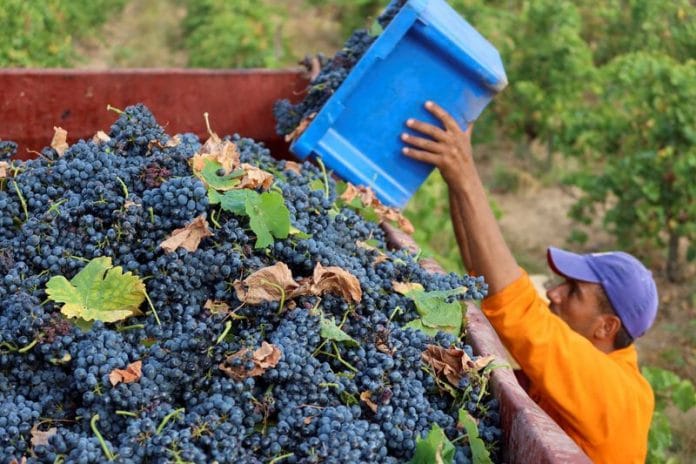
The grapes are picked early in the morning and driven to a modern processing facility at Takelsa in central Tunisia to be turned into wine.
“This year farmers are suffering. Some couldn’t harvest any grape clusters from their crops. Anything that wasn’t irrigated yielded nothing and although watered crops fared a bit better, most farmers were badly affected,” said Graya.
At Coteaux Takelsa company, which produces wine from grapes grown by Graya and about 160 other farmers, director Hammadi Brik said he was rescheduling farmers’ debts and altering grape specifications to help them manage.
“The farmers complained and we took this season into account,” he said.
(Additional reporting by Latifa Guesmi, writing by Angus McDowall, editing by Alexandra Hudson)
Disclaimer: This report is auto generated from the Reuters news service. ThePrint holds no responsibilty for its content.