





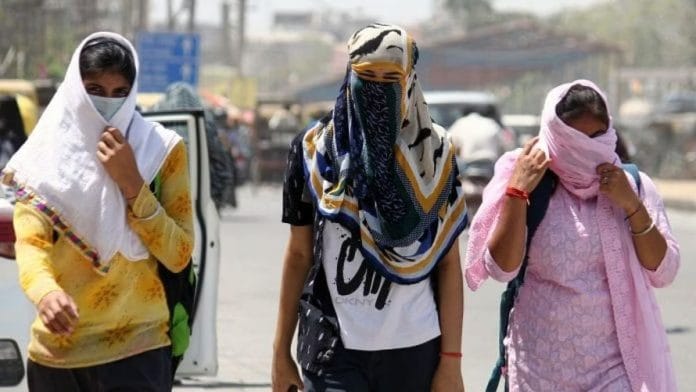


New Delhi: At least 14 new Indian cities have featured on the list of heat hotspots this season, with daytime temperatures consistently crossing normal levels by 3-5 degrees over the past two weeks, according to India Meteorological Department data.
IMD data shows that Akola, Amravati, and Nagpur in Maharashtra, Banda and Prayagraj in Uttar Pradesh, Bhagalpur in Bihar, and Talcher in Odisha are among the new heat hotspots, with maximum temperatures in some of these cities nearing the 47°C mark in April, and Banda recording 47.4°C.
The daytime temperatures in many hill stations have also surpassed normal temperatures by several notches. Dehradun, Manali, Mussoorie, Nainital, and Shimla have been recording temperatures ranging between 27°C and 30°C, which is 4-6 degrees above what is considered normal for these cities.
Other cities that have recorded unusually high temperatures are Kathua, Samba, Jammu, Mahabaleshwar, Lonavala, Karjat, Ooty, Munnar, and Gulmarg.
Considering that these cities have traditionally not had to experience such high temperatures, many are not prepared to handle its impact.
Officials from the National Disaster Management Authority (NDMA), the apex agency managing the heat action plans in the county, told ThePrint that many of these smaller towns do not have a structured heat action plan. The NDMA and state disaster management teams are, however, now conducting stakeholders meetings to implement some kind of heat action intervention in these cities.
“The forecast is of an above-normal summer and we are coordinating with agencies to ensure that we are prepared to handle it,” said Krishna S Vatsa, member and the head of the department, NDMA.
He, however, cautioned that local-level implementation would be crucial to ensure that the heat action plans work.
“Heat resilience cannot be driven by national frameworks alone. It must be implemented at the local level. The real test lies in demonstrating what works on the ground, through targeted interventions that improve living conditions and reduce exposure to extreme heat. Scaling these solutions will be key to building long-term resilience,” Vatsa said.
How are cities coping?
From setting up makeshift shaded areas, temporary water dispenser points, to increasing beds in hospital wards, state governments of these newly identified heat hotspots are now trying to take leaflets out of already implementable plans from other states.
After a cooler-than-normal start to April, temperatures across the country started soaring from mid-month.
In Akola, a city in Maharashtra’s Vidarbha region, the temperature peaked to 46.9°C last week. The heat stress here was worse because the high temperatures were coupled with high humidity levels, which makes the conditions deadly.
The city administration has started water sprinkling along concretised stretches every few hours to provide some kind of relief.
In Nagpur, the municipal body has set up ‘cooling wards’ in government hospitals, with increased beds, medicines, and facilities for patients who come in with heat–related ailments in the coming months. Homeless people have been moved to shelter homes and the school timings for junior classes have been moved up during the day to avoid peak afternoon heat.
Chandigarh has marked its medical wards in a graded system — red being most severe, needing immediate medical intervention, yellow as urgent but manageable medical condition, and green for those patients who only require basic first aid — depending on the severity of heat ailments that patients were coming in with.
Also read: Want to save Alphonso mango from heatwave? Start with open data
How heat action plans have performed in other cities
An assessment conducted in Gujarat’s Ahmedabad, where India’s first heat action plan came about in 2013, showed that every year 1,100 lives were saved in the city because of timely preventive measures to control heat.
The IMD uses a two-pronged approach to define and categorise heatwaves. First, they look at regional temperature increases. When temperatures in the plains exceed 40°C or 30°C in the hills, and this rise is more than 4.5°C above the normal range, a heatwave is declared. A “severe heatwave” is when the temperature departure jumps to over 6.4°C.
The IMD also considers absolute values. If the mercury rockets to 45°C or higher, regardless of the usual highs, it’s classified as a heatwave. When the thermometer reads 47°C or more, it meets the criteria for a severe heatwave.
“The HAPs (Heat Action Plans) should work like clockwork. And the plan is not seasonal. The action on the ground peaks before and during the heatwave season, but throughout the year agencies need to work to develop heat resistant infrastructure, improve facilities in hospitals and improve early warning systems. You also need to keep assessing the effectiveness of your plan,” Dr Dileep Mavalankar, former director of the Indian Institute of Public Health in Gandhinagar, said.
(Edited by Aamaan Alam Khan)