


New Delhi: India will focus on solution-driven and equitable climate action at the 31st edition of the United Nations Framework Convention on Climate Change (UNFCCC) Conference of Parties (COP), which will commence in Turkey’s Antalya from 9 November.
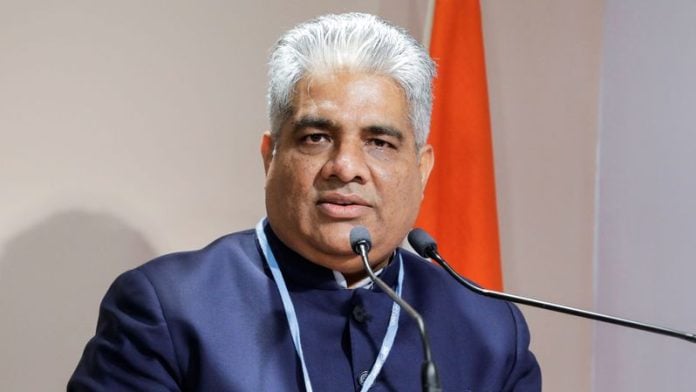
Union Minister for Environment, Forests and Climate Change Bhupender Yadav on Tuesday said that India will be articulating and safeguarding its position, but will also focus on representing the concerns of the Global South.
“India has always said that we will be the part of the solution and never the problem,” Yadav said ahead of COP31.
The minister emphasised that India stands with the principles of Common but Differentiated Responsibilities and Respective Capabilities (CBDR-RC) — a foundational principle of international environmental law and climate policy established under the UNFCCC — saying that it must be upheld in letter and spirit for meaningful and sustained climate action across countries.
India’s delegation to COP31 will be led by Yadav, with senior environment officers including environment secretary Narendra Bhooshan, additional secretary Amandeep Garg, and additional secretary Ashutosh Agnihotri in attendance. Officials confirmed that Prime Minister Narendra Modi is unlikely to attend COP this year.
Also read: Why Delhi’s pollution is rising ahead of Diwali
India at COP31
Yadav said that adaptation will remain a key priority for India. It will push for the Global Goal on Adaptation indicators to remain voluntary and delinked from access to climate finance, while calling for a significant scale-up in adaptation funding.
India will support the continuation of the Just Transition Work Programme through a party-driven mechanism, arguing that the transition must be guided by climate justice, the right to development and equitable access to affordable energy.
On the technology front, India also plans to emphasise that technology transfer is an obligation of developed countries, with barriers arising from high costs, intellectual property rights (IPR), and trade restrictions needing to be addressed. It will maintain that participation in carbon markets must remain voluntary, insisting that voluntary initiatives under the Presidency Action Agenda remain distinct from formal negotiations, and that any global targets or commitments account for differing national circumstances.
“India will bring practical solutions for the Global South, with capacity building, knowledge sharing and geography-specific solutions at the core. India will work closely with G-77 and China, LMDC (Like-minded developing countries) and BASIC,” Yadav said.
(Edited by Aamaan Alam Khan)