


New Delhi: The United Nations Framework Convention on Climate Change COP31 has entered its final week. Negotiations are shifting from technical discussions to political bargaining over climate finance, fossil fuel, adaptations, the energy transition and the responsibilities of developed and developing countries.
On Monday, negotiators published a draft deal to steer discussions towards the disagreements between countries over fossil fuels and climate financing ahead of the final agreement.
Chris Bowen, the Australian Minister for Climate Change and Energy leading negotiations, said that the draft contained certain clauses that have not been fully accepted by all nations.
“We need to move the dial, which means having the conversation about things where parties currently don’t quite see eye to eye to help bring them closer to agreement in coming days,” he said.
The draft seeks consensus from nearly 200 countries on issues including funding for developing countries, the future of fossil fuel, the need for early warning systems, rising temperatures, and the global response to the crisis.
Indian environment minister at COP31
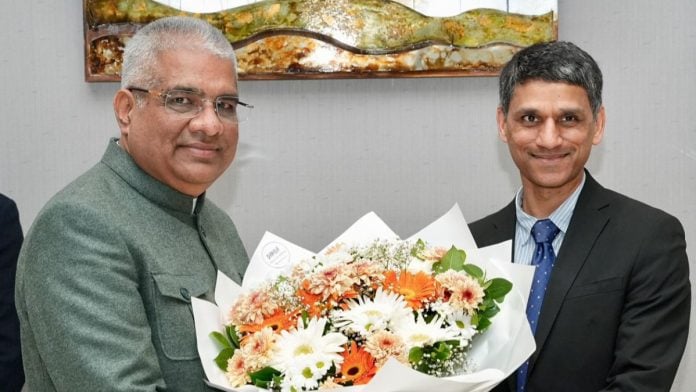
India’s Union Environment, Forests and Climate Change (MoEFCC) minister Bhupender Yadav reached Turkey’s Antalya on 15 November to lead the Indian delegation.
Addressing the fourth annual High-Level Ministerial Roundtable on Just Transition under the UAE Just Transition Work Programme, Yadav said that countries must move beyond dialogues towards a more practical, country-driven approach. He reiterated India’s commitment to an inclusive and equitable global transition that leaves no one behind.
“Just transition must follow a whole-of-economy and whole-of-society approach, addressing employment, social protection, adaptation, poverty eradication, energy access and sustainable development,” Yadav said in his address Monday.
He said that adequate financial support, technology transfer and capacity building are essential to enable developing countries to implement their national priorities.
“There can be no one-size-fits-all approach, India’s sub-national heat action and disaster management plans, which address vulnerabilities of workers and communities, as well as the country’s renewable energy expansion that seeks to combine low-carbon development with affordable energy access. These examples underline the need to integrate just transition considerations across adaptation, livelihoods and development planning,” the minister added.
Also read: AI models cannot be relied on for climate information, says new UNESCO study
Fossil fuel and energy transition
Fossil fuel and energy transition have emerged as two of the most politically contentious issues in the discussions in Turkey.
With less than a week left for the negotiations to conclude, the debates so far have centred on whether the final COP31 agreement should explicitly call for transitioning away from fossil fuels, phasing out fossil fuels, including coal, oil and gas, and accelerating the deployment of renewable energy and electrification.
Countries have remained divided over whether a common global commitment to move away from fossil fuels should be included in the negotiated outcome. For instance, the European Union and several climate vulnerable countries have pushed for stronger language on the energy transition. Fossil fuel-dependent countries have resisted global targets imposed on individual energy sources or sectors.
A proposal by Turkey seeks to increase electricity’s share of global final energy consumption from around 23 per cent to 35 per cent by 2035. Whether these targets will feature in the final negotiated agreement remains to be seen.
This difference in interest has left negotiations at an impasse.
Climate finance
Finance has also been at the centre of discussions at COP31, especially for developing and vulnerable nations.
At the COP29 in Baku, a goal of at least 300 billion USD annually was established in climate finance for developing countries by 2035. It also called for efforts to scale up financing from all sources to 1.3 trillion USD annually by 2035.
At Antalya, countries are discussing how these commitments should translate into actual financial support.
On November 13, the Long-term Finance discussions saw disagreement over whether the earlier 100 billion USD annual climate finance goal had actually been met. Another significant point of discussion has been the Fund for Responding to Loss and Damage which became a talking point after the disastrous floods in Nepal.
Developing country groups, including the African group, Arab group and Least Developed Countries (LDCs) and Alliance of Small Island States (AOSIS), expressed the need for guidance that would help the fund provide accessible finance, including grants and faster disbursement.
In another meeting on November 16, the Climate Finance Work Programme discussions exposed a deeper disagreement—developing countries want the developed countries’ financial obligations under Article 9.1 of the Paris Agreement to remain central, while some developed countries favoured a broader interpretation of the finance agenda.
What to expect in the final week?
In the final week, the political compromises will determine what the final document looks like. The draft cover decision has already exposed divisions over fossil fuels, electrification and finance. The next few days will show whether the presidencies can find language acceptable to both developed and developing countries before the conference closes on 20 November.
Yadav is part of the ministerial pair leading consultations on mitigation, with Germany’s Federal Minister for the Environment, Climate Action, Nature Conservation and Nuclear Safety, Carsten Schneider. The larger negotiations include Mitigation Work Programme and discussions on how countries should raise ambitions before 2030.
The debate is likely to centre around how much the final outcome should prescribe specific energy-transition pathways, and how it should balance emission reduction with development priorities, energy access and national circumstances.
(This story is supported by Informed Earth)
(Edited by Janaki Pande)