





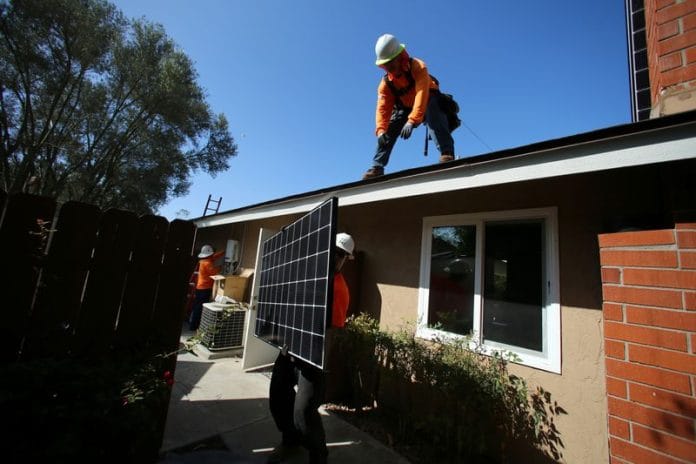


(Reuters) – A California residential solar subsidy will cost ratepayers who do not have rooftop panels about $8.5 billion annually by the end of this year, contributing to higher electricity rates for consumers, according to an analysis published on Thursday by the top U.S. solar state’s ratepayer advocate.
WHY IT MATTERS
California’s Public Utilities Commission in 2022 reformed a residential solar policy known as net energy metering that allowed customers with rooftop panels to be credited for excess power their systems generated at or near the full retail electricity rate.
The new policy lowered the rate, making going solar less attractive and angering environmental groups and the solar installation industry, which says it has lost more than 17,000 jobs as a result of the change.
Customers who joined the program prior to the change still benefit from the previous incentives. The CPUC’s Public Advocates Office said the cost of those subsidies is shouldered by customers who do not have rooftop panels because they are paying utilities’ fixed costs, such as grid maintenance, while solar owners enjoy lower bills.
BY THE NUMBERS
Net energy metering will cost ratepayers who do not have solar $8.5 billion by the end of 2024, up from $3.4 billion a year in 2021, according to the analysis.
Customers will continue to benefit from the net metering program for up to 20 years.
WHAT’S NEXT
The Public Advocates Office proposed several changes to the net metering program to reduce what is known as the cost shift to customers who do not have solar.
The recommendations include converting net metering customers to the new program after 10 years or the sale of their home, and setting net metering compensation at electric rates that were in effect at the time they joined the program rather than current, higher rates.
(Reporting by Nichola Groom, editing by Deepa Babington)
Disclaimer: This report is auto generated from the Reuters news service. ThePrint holds no responsibilty for its content.