







By Sybille de La Hamaide
PARIS (Reuters) – Bird flu is likely to spread further in the Antarctic region, causing immense damage to wildlife, according to experts on the highly contagious disease that has killed hundreds of millions of birds worldwide in recent years.
The spread of highly pathogenic avian influenza (HPAI), commonly called bird flu, to the remote southern region has raised concerns for isolated populations of species including penguins and seals that have never been exposed to the virus.
The H5 strain of the virus was detected in the region on Oct. 8 in a brown skua on Bird Island, part of the British Overseas Territory of South Georgia and the South Sandwich Islands, according to a report by OFFLU, which gathers experts from the World Organisation of Animal Health (WOAH) and the U.N. Food and Agriculture Organisation (FAO).
Around the same time, the virus was detected in fulmars and albatrosses in the nearby Falkland Islands.
“HPAI H5 virus is likely to spread further among Antarctic wildlife, potentially infecting the 48 species of birds and 26 species of marine mammals which inhabit this region,” the OFFLU said in its report on Thursday.
“The negative impact of HPAI H5 on Antarctic wildlife could be immense, because their presence in dense colonies of up to thousands of pinnipeds (seals) and hundreds of thousands of birds facilitates virus transmission and may result in high mortality,” it added.
Elephant seals in South Georgia could have been infected by migrating seals from South America where there was a large die-off of the species, OFFLU said. Infected elephant seals could possibly transport the virus to neighbouring islands and further south to the Antarctic Peninsula.
“If HPAI H5 virus completes the above-suggested stage of spread, further virus spread in the Antarctic region is likely given the many avian and mammalian species that probably are susceptible to infection,” the report said.
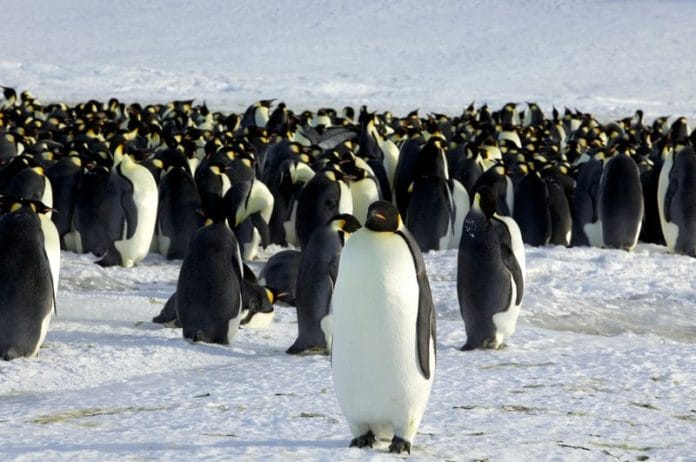
Bird flu in Antarctica particularly threatens the emperor penguin species, considered under near-threat of extinction. If the virus was to enter an emperor penguin colony it could spread to the whole population, OFFLU said.
It urged continued monitoring and surveillance of wildlife populations and biosafety measures to reduce the risk of human-mediated spread of the virus to new areas, and to reduce the risk of human infection.
OFFLU uses the biogeographical definition of the Antarctic region, based on species and ecosystems distribution. It is wider than the Antarctic Treaty region, including all ice shelves.
(Reporting by Sybille de La Hamaide; Editing by Mark Potter)
Disclaimer: This report is auto generated from the Reuters news service. ThePrint holds no responsibilty for its content.