


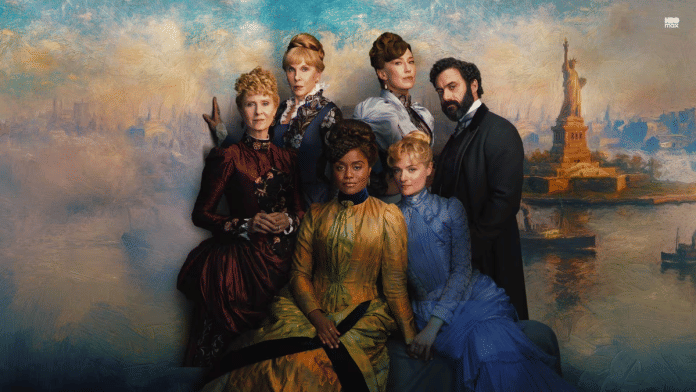
Mumbai: Julian Fellowes is back with another season of the hit HBO series The Gilded Age. But it isn’t the glitz and glamour that is defining the show. According to Washington Post columnist Monica Hesse, The Gilded Age is television’s most perimenopausal show.
In a column published on 6 November, Hesse argues that the older women are the most interesting characters in the show. They know what they want and aren’t afraid to fight for it.
“There are no smug dowagers here, only middle-aged baddies,” she writes, referencing Fellowes’ previous show Downton Abbey (2010-2015).
Created by Julian Fellowes in 2022, The Gilded Age is set in 1880s New York, where old-money families struggle to accept newly wealthy industrialists. The fourth season is currently streaming on JioHotstar in India. New episodes are released every Monday.
Two of its main characters are Agnes van Rhijn, played by Christine Baranski, and Bertha Russell, played by Carrie Coon. Agnes is a wealthy widow from one of New York’s old families, whereas Bertha’s husband has made a fortune in railroads, but she is still trying to get their family accepted into the city’s old-money upper class.
While the men make most of the money, Hesse points out that the women have power of their own. She gives the example of Bertha’s husband, George Russell, played by Morgan Spector, who runs the family’s railroad business. He may not be able to get New York’s elected officials to attend a business meeting, but Bertha can invite them to dinner and help him make those connections.
There’s also a scene from the first season in which Bertha throws her breakfast tray on the floor after learning that a charity auction will be held at a hotel instead of her ballroom.
Hesse explains why this matters to Bertha. Hosting the auction would help her establish her position in society, which could also help her arrange a good marriage for her daughter or improve her son’s prospects. Hesse sees this as an example of “how the domestic realm has always shaped the political”.
The younger characters don’t impress her quite as much. Marian and Gladys, who are both in their twenties, are more concerned with romance and marriage.
“They never do anything conniving, which is to say they never do anything interesting,” Hesse writes.
She also compares The Gilded Age with Youth (2026), a comedy starring Sharon Horgan, which she was watching around the same time. The main character in Youth wants to start dating again, but much of the show’s humour comes from her worries about getting older.
Hesse writes that “every joke and plot conceit revolves around the 50-ish heroine’s relationship with her age”.
That’s not the case with The Gilded Age. Its older women are busy with their families, their money and their ambitions. They aren’t worrying about their appearance or whether they’re too old to do certain things.
Hesse acknowledges that television has reached a point where shows about women over 40 aren’t unusual anymore. But she likes that The Gilded Age is about middle-aged women “without calling attention to the fact that it is a show about middle age”.
(Edited by Insha Jalil Waziri)