





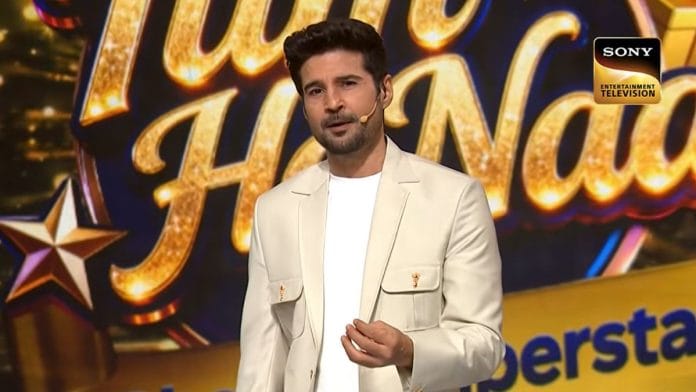


New Delhi: Actor Rajeev Khandelwal has said that his Sony TV show Tum Ho Naa – Ghar Ki Superstar tries to put a value on the unpaid labour of homemakers, asking women what their work at home would be worth if it came with a salary.
In an interview with Curly Tales on Thursday, Khandelwal linked the idea to his own mother. He recalled that as a child, when people asked what his parents did, he would say his father was in the Army. His answer for his mother was: “Mummy kuch nahi karti.” Looking back, he said, she had raised three boys while his father was posted at the border, but her work remained invisible because it was never treated as work.
The comments give a fresh peg to Tum Ho Naa – Ghar Ki Superstar, which premiered on Sony Entertainment Television and Sony LIV on 28 April. Sony LIV describes it as a game show about women who “quietly hold families, communities, and dreams together”, blending emotion, storytelling, and light gameplay.
The show’s promotional material has leaned directly into the question of unpaid work. One official promo said homemakers’ work comes with “no off days” and “no holidays”.
In the interview, Khandelwal said women who describe themselves as “housewives” are actually homemakers, and that the show tries to tell them what their work amounts to. He referred to the format as asking families to calculate what that labour would be worth as salary, especially when women at home are often told that they “do nothing”.
Also read: R Madhavan’s film on inventor GD Naidu to hit theatres in July. New poster out
Making the invisible visible
The idea sits inside a wider debate around unpaid care work. Across the world, housework, childcare, and elder care done inside homes are not counted as economic activity in the way paid jobs are, even though families depend on that labour every day. Tum Ho Naa has taken that familiar invisibility and turned it into a television format: homemakers come on stage with their families, share their stories, play games, and are asked to put a number to work that usually goes unnamed.
The format is built around homemakers as whole people, rather than reducing them to only being mothers, wives or daughters-in-law in someone else’s story. In one episode, Khandelwal speaks to a contestant who had left modelling to become a homemaker, while her husband acknowledges what she gave up.
For Khandelwal, who returns to television after 11 years as host with the show, the idea is personal as well as format-led. His comments in the interview give Tum Ho Naa a sharper frame than a standard tribute show. It packages homemaking as labour that can be named, valued, and rewarded on mainstream television.
Tarini Unnikrishnan is an alum of ThePrint School of Journalism, currently interning at ThePrint. Views are personal.
(Edited by Aamaan Alam Khan)