



I don’t know who will win the US-Iran war. But if you ask me who’s prevailing in the battle over the Strait of Hormuz, it’s clear US President Donald Trump has the advantage. As much as Tehran says the opposite, the strait is effectively wide open. Crude oil exports from regional US allies via the waterway, plus bypass routes, have risen to about 80% of prewar levels. Iran, meanwhile, has seen its own oil exports plunge to zero.
A couple of months ago, the surge in oil shipments would have been seen as a major American victory. Yet Brent crude, the oil price benchmark, remains above $100 a barrel. Inside the White House, some must be asking themselves: If this is winning, what would losing look like?
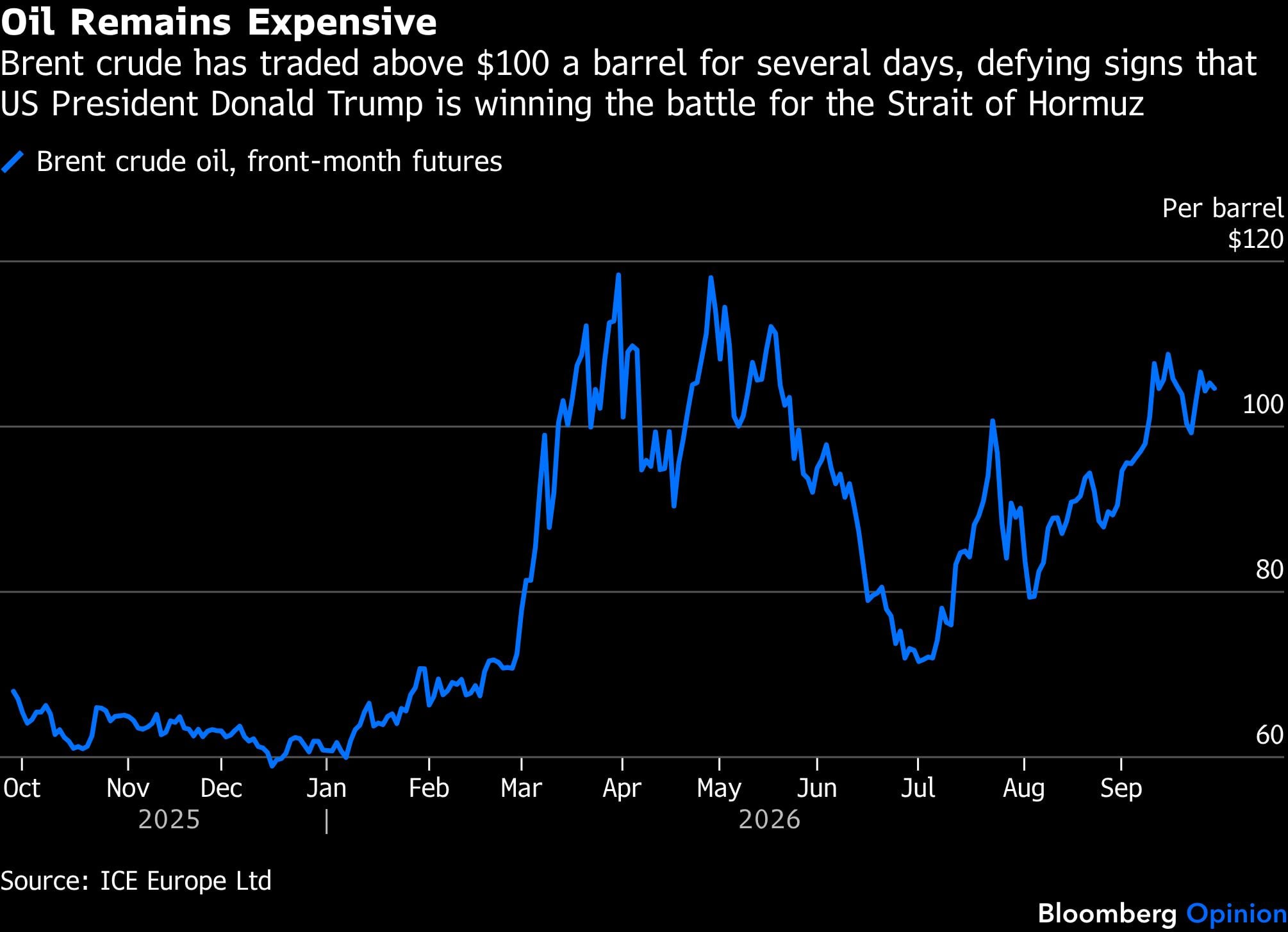
To understand what’s happening, a good place to start is market psychology and the fascination with using a triple-digit price level as a benchmark for success or failure: Thumbs up for Trump if Brent stays below $100 a barrel; thumbs down if it rises above that. Right now, Brent is above $100, but only if you’re looking at the futures contract for delivery in November, which expires on Wednesday; the December contract, the main reference from Thursday onward, is trading below the triple-digit level.
In a world where social media shapes narratives, the difference between $99.99 and $100.01 oil can be vast — and absurd. The perception is crucial, though, because it shapes what investors do. With benchmark oil prices currently in the triple digits and bond yields rising, investors may buy more oil futures as a hedge against the risk of inflation, creating a self-fulfilling prophecy. We saw this trend at work in early September after the 10-year US Treasury bond yield climbed above 5%.
Then there’s a second psychological factor, tied to a bet on military strategy. Many in the oil market think Trump has been so successful at opening Hormuz that a cornered Tehran would have no other option but to escalate militarily. If attacks on tankers — which still happen daily — aren’t enough to close Hormuz, then Iran would have to go after the source of the shipments: ports, pipelines and, ultimately, the oilfields themselves.
By that perverse logic, Trump is inviting a major escalation by winning a key battle. In the eyes of many oil traders, the attack earlier this month against the East-West pipeline, a Saudi oil conduit which has allowed the kingdom to bypass Hormuz, is a rehearsal of what’s about to come. Maybe.
Iran now faces two choices: Either it softens its negotiating position, or it escalates in a way that renders Hormuz irrelevant. The oil market is convinced Iran will choose the latter. The clock is ticking for Tehran to decide because every day its economy deteriorates further under the American economic blockade. What’s clearer is that the oil market would be more vulnerable to renewed conflict now than back in March because the US and its allies have already used significant chunks of their strategic reserves and commercial stockpiles of crude and refined products have fallen. But Trump has demonstrated he has a higher threshold for economic punishment than many, myself included, had expected. Presumably he’s willing to absorb still more pain to force the hand of the Islamic Republic.
What’s a stake? A lot. Excluding Iranian exports, the countries on the shores of the Persian Gulf were exporting just over 17 million barrels of crude a day before the war broke out on Feb. 28. Initially the conflict closed Hormuz almost completely, forcing everyone to use limited bypass routes and, ultimately, reduce shipments. At the worst point, in mid-March, crude exports plunged to a quarter of normal levels — less than 4.5 million barrels a day. They stayed low for months, only recovering in June and bouncing back further in July after Iran and the US signed a memorandum of understanding that put a provisional end to the war.
That deal collapsed soon after, of course, but flows remained strong as the US military increasingly gained control of the waterway using an array of warships, drones, fighter jets and helicopters. In secrecy, the US Navy cleared Hormuz of sea mines, creating a two-way corridor hugging the coast of Oman. At first, convoys crossed only at night, but recently they have started to move in daylight — an indication of the Pentagon’s growing confidence in its ability to control the strait.
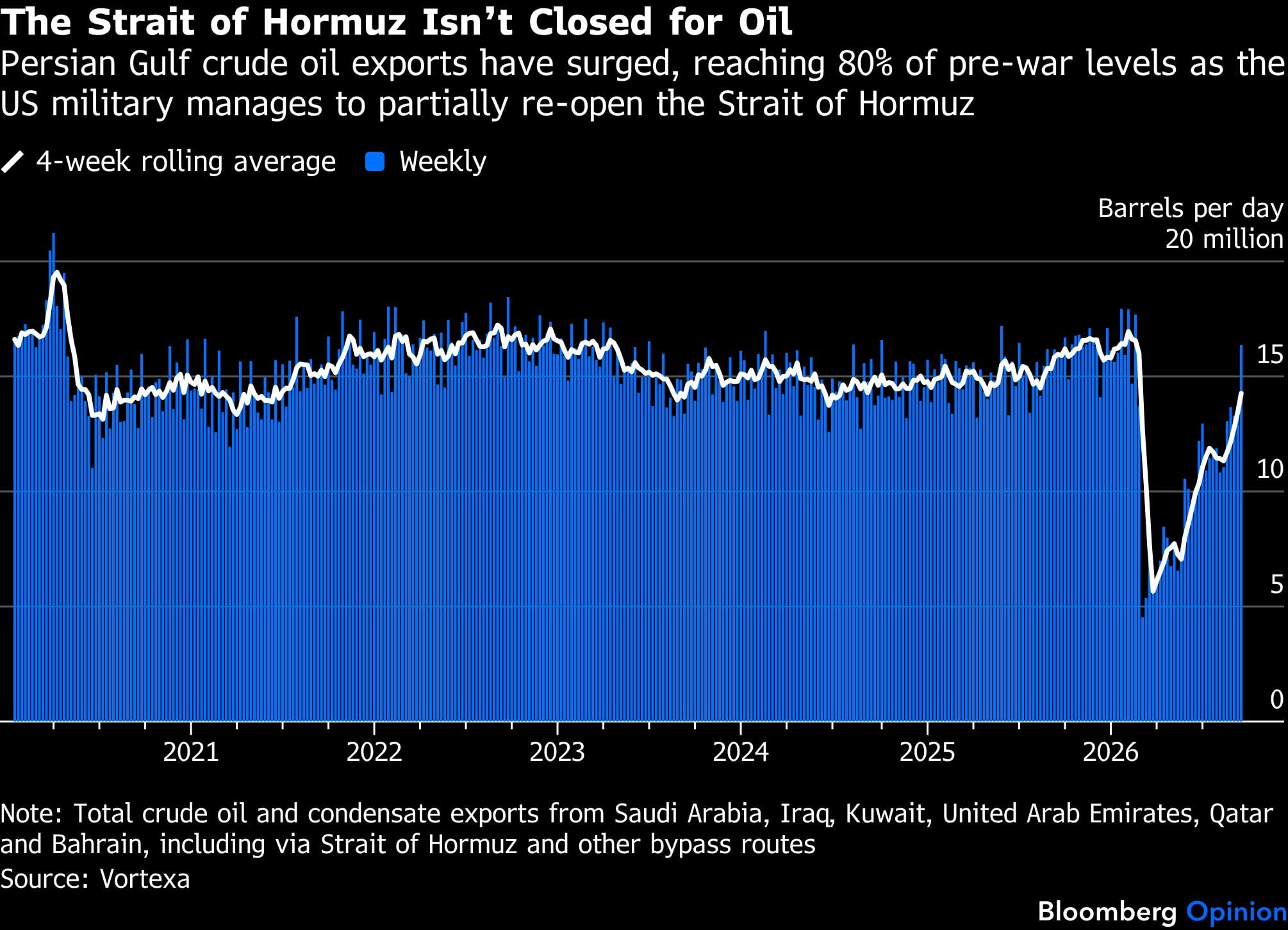
Oil bulls remained incredulous about the flows and suggested the US government was inflating the numbers. But over the last few weeks, most have accepted that Hormuz is witnessing a huge tanker flow. Last week, crude shipments rose to a six-month high of 14 million barrels a day, according to Vortexa, an energy markets analytics firm. Other tanker trackers, oil traders and government officials have arrived at similar figures.
The convoys have a huge cost. Putting aside the military expenses, chartering the supertankers costs an average $30 million per crossing, equal to roughly $15 per barrel. To make the convoys work on pure economics, Persian Gulf nations must discount their crude, at times by $20 to $30 below market levels, just to get traders into the game. Is that sustainable? Not likely.
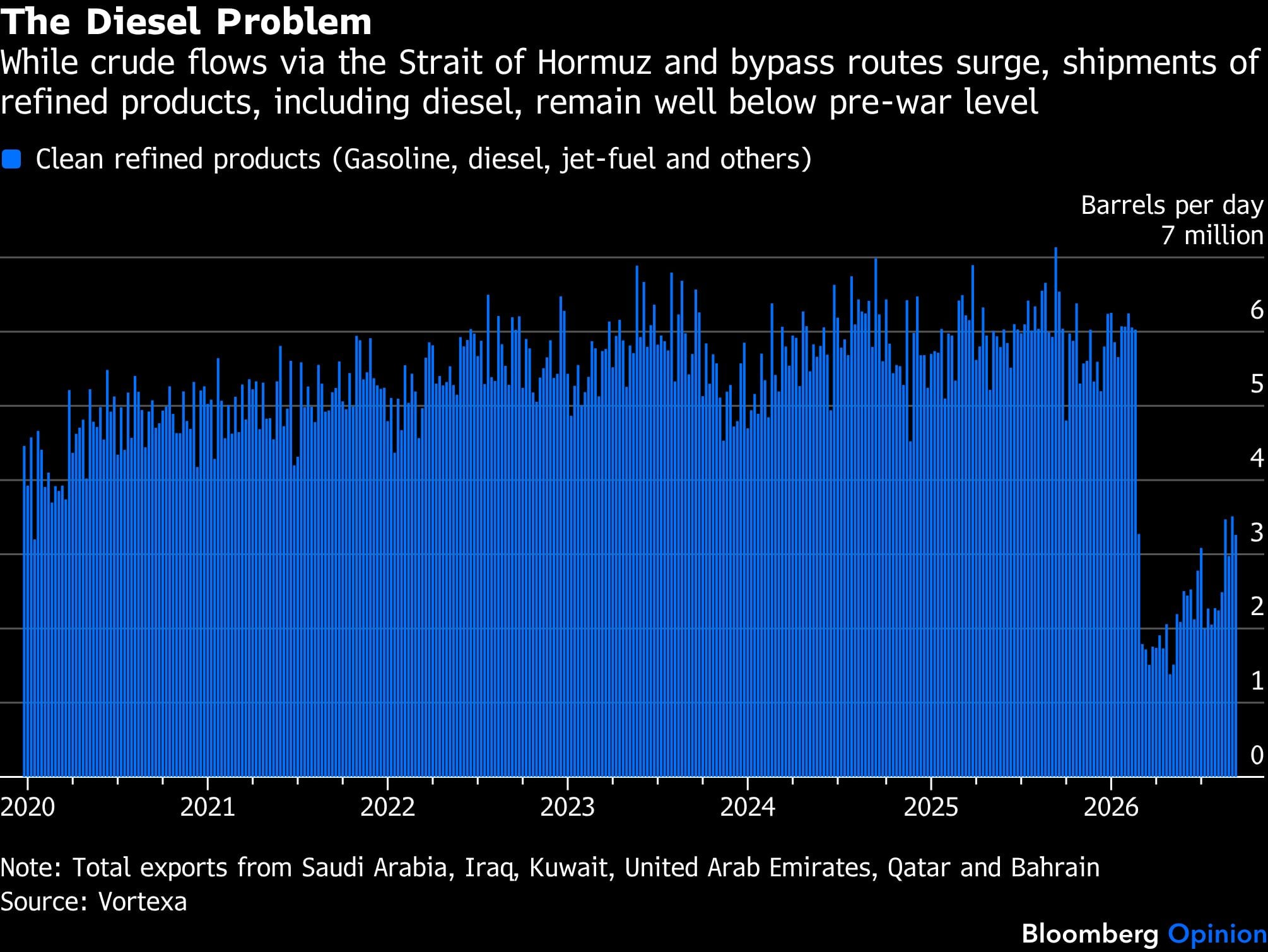
Meanwhile, the oil flows via Hormuz won’t resolve the other problem plaguing the energy market: the scarcity of refined products — above all, diesel. Shipments of gasoline, diesel and jet fuel remain at 50% of normal. The reason? Moving refining products is more expensive than moving crude. On top of that, some of the refineries inside the Persian Gulf that were attacked in the early days of the war have yet to resume operations fully.
Put it all together and the oil market is in wait-and-see mode: Either Iran comes to the negotiation table and prices decline a lot; or Tehran escalates attacks on physical energy infrastructure, sending prices a lot higher. Whatever happens, the status quo isn’t sustainable. That’s the price of winning in Hormuz.
This column reflects the personal views of the author and does not necessarily reflect the opinion of the editorial board or Bloomberg LP and its owners.
Javier Blas is a Bloomberg Opinion columnist covering energy and commodities. He is coauthor of “The World for Sale: Money, Power and the Traders Who Barter the Earth’s Resources.”
Disclaimer: This report is auto generated from the Bloomberg news service. ThePrint holds no responsibility for its content.