







The Reserve Bank of India should temper its currency intervention efforts, and continue with measures to open up the nation’s markets, a former governor said, about a month after the monetary authority imposed sweeping curbs to support a struggling rupee.
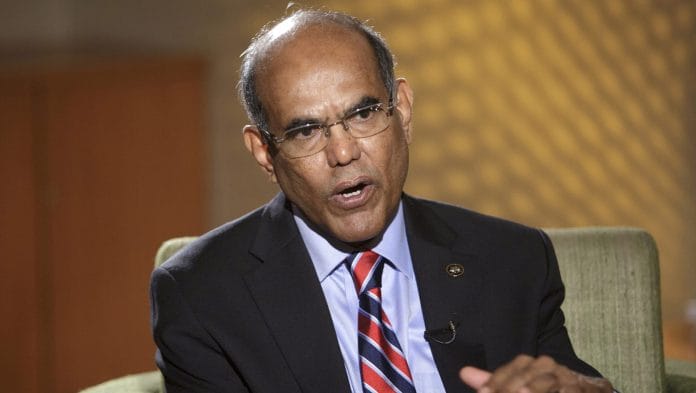
The central bank should let the exchange rate weaken to send the correct price signals amid rising import costs and foreign fund outflows, Duvvuri Subbarao, governor of the RBI from 2008 to 2013, said in an interview last week.
“On a broader level, I believe the RBI should be less interventionist than it tends to be,” said Subbarao, who helmed the central bank during the global financial crisis. “If we want to be a developed economy, our market players must learn to manage two-way movement of the rupee.”
Indian policymakers have taken several steps in recent years to open financial markets to foreign investors. Still, the RBI under Governor Sanjay Malhotra recently stunned investors by limiting how banks can trade the rupee in an effort to arrest a slide to record lows. The most aggressive curbs in decades though, only provided a brief reprieve, with concerns over India’s reliance on expensive crude imports sapping the currency.
“As someone once told me, capital account liberalization is like joining the mafia — you can only get in, but can’t get out,” Subbarao said. Moving forward, “slowly and steadily” is the ideal approach, he said.
The rupee has borne the brunt of the Iran war-driven oil spike, as India’s reliance on fuel imports makes it vulnerable to energy shocks. The currency has weakened about 5% this year versus the dollar, ranking as Asia’s worst performer.
Subbarao said policymakers should let the exchange rate weaken as the country entered the crisis in a relatively strong position, with robust growth and low inflation.
During his five-year tenure, which ended in September 2013 and included the taper tantrum, the currency declined sharply against the dollar. The slump contrasted with most other Asian currencies, which rose during the period.
Back then, India’s economic fundamentals were on a weaker footing, while reserves were much lower, prompting analysts to include the country in the so-called ‘fragile five’ grouping of nations.
Subbarao said raising interest rates — the “ultimate” exchange rate defense — should be the last resort, as the markets could read it as a sign the conflict poses a bigger threat to India’s economy than previously thought.
“RBI cannot also raise rates out of concerns for growth at a time when several other factors are already militating against growth,” he said.
After his term at the central bank, Subbarao had teaching stints at the National University of Singapore and at the University of Pennsylvania.
Disclaimer: This report is auto generated from the Bloomberg news service. ThePrint holds no responsibility for its content.