




New Delhi: More than nine in every ten instances of non-compliance identified at business sites across India involved labour, environmental, health and safety laws, according to a report by TeamLease RegTech, a regulatory compliance management and automation company.
The report titled ‘Hiding in Plain Sight: Compliance Audit Insights 2026’ which was released on Tuesday, analysed physical compliance audits conducted across 52 factories, warehouses, corporate offices and mining facilities in India and identified 4,694 instances of non-compliance.
Labour laws account for most compliance gaps
Of the 4,694 instances identified, 3,086, or 65.7 percent, concerned labour laws, making them the largest category of regulatory gaps.
These included, among other violations, those relating to wages and working hours, such as overtime payments at a single rate; employee welfare provisions, including mandatory crèche facilities; and statutory obligations concerning apprentices, registers and records.

Environmental, health and safety regulations accounted for another 26 percent, or 1,219 instances. These included violations such as hazardous waste, fire and electrical safety, and pollution approvals.
Together, labour and environmental, health and safety regulations accounted for 4,305 findings, or 91.7 percent of all instances identified. In contrast, just 110 findings, or 2.3 percent, concerned finance, taxation and company laws.
Rishi Agrawal, co-founder and CEO of TeamLease RegTech, attributed the disparity to differences in compliance management. While financial and corporate regulations are typically overseen by specialists at company headquarters, labour and safety compliance depends on personnel at individual sites, where expertise and supervision may be weaker.
He said the gaps reflected shortcomings in implementation rather than necessarily deliberate violations, particularly as the companies had commissioned the audits voluntarily.
Also Read: India’s new labour safety code promises more jobs and safer workplaces
Environmental violations carry highest risk
Environmental, health and safety regulations recorded the highest proportion of findings classified by the auditors as Critical or High risk, at 81.1 percent. The corresponding figures were 55.8 percent for labour-related findings and an average of 59.8 percent across all categories.
Of the 1,219 findings in the environmental, health and safety category, 935 of the 1,153 that received a risk rating were classified as Critical or High risk.
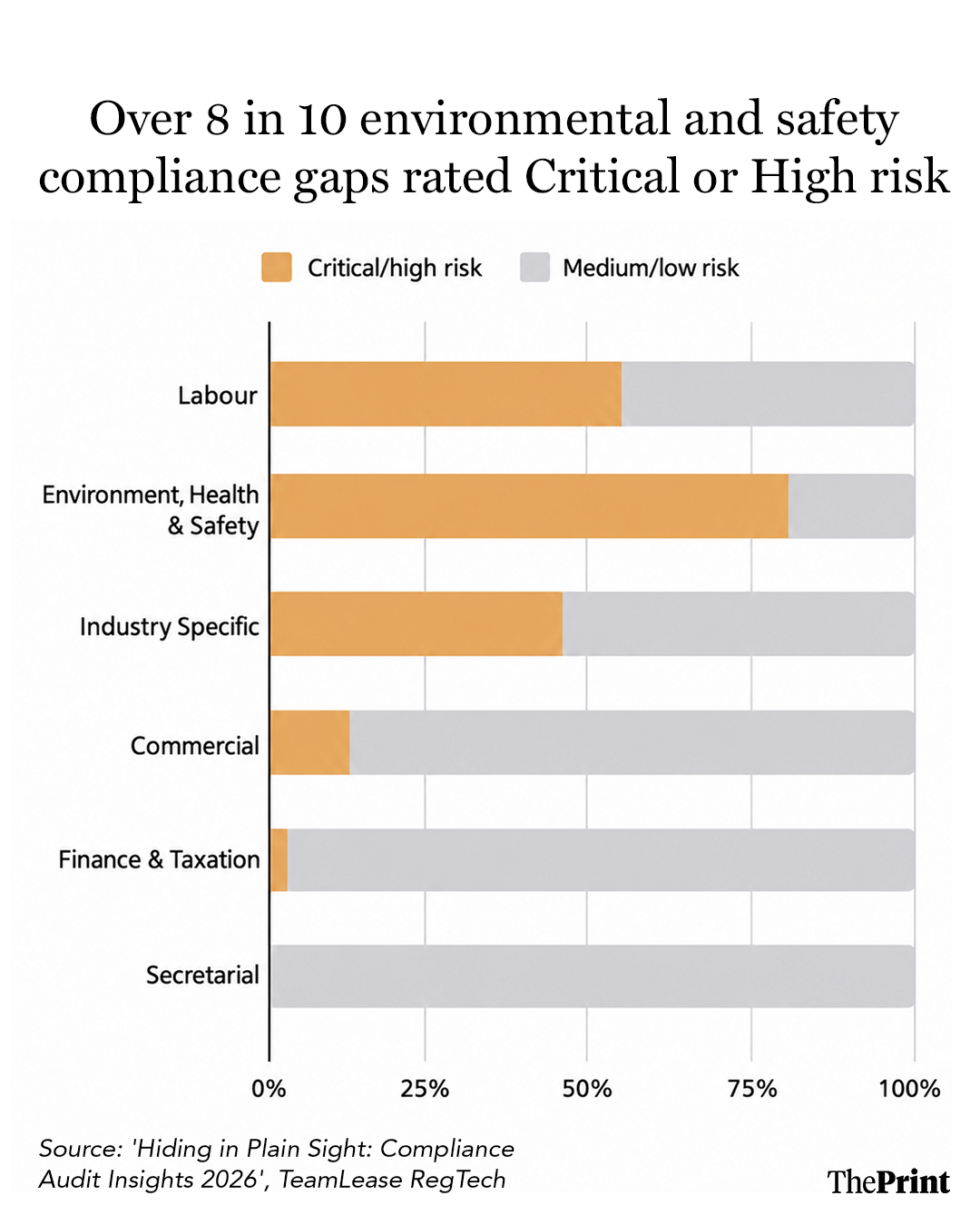
Across all categories, 362 of the 4,694 findings were not assigned a risk rating. The risk comparisons are therefore based on the 4,332 rated findings.
Factories have most gaps; warehouses face greater legal risks
Factories recorded the highest average number of non-compliance findings per site and the largest share classified as Critical or High risk. Warehouses and depots had the highest proportion of findings linked to legal provisions allowing imprisonment for non-compliance.
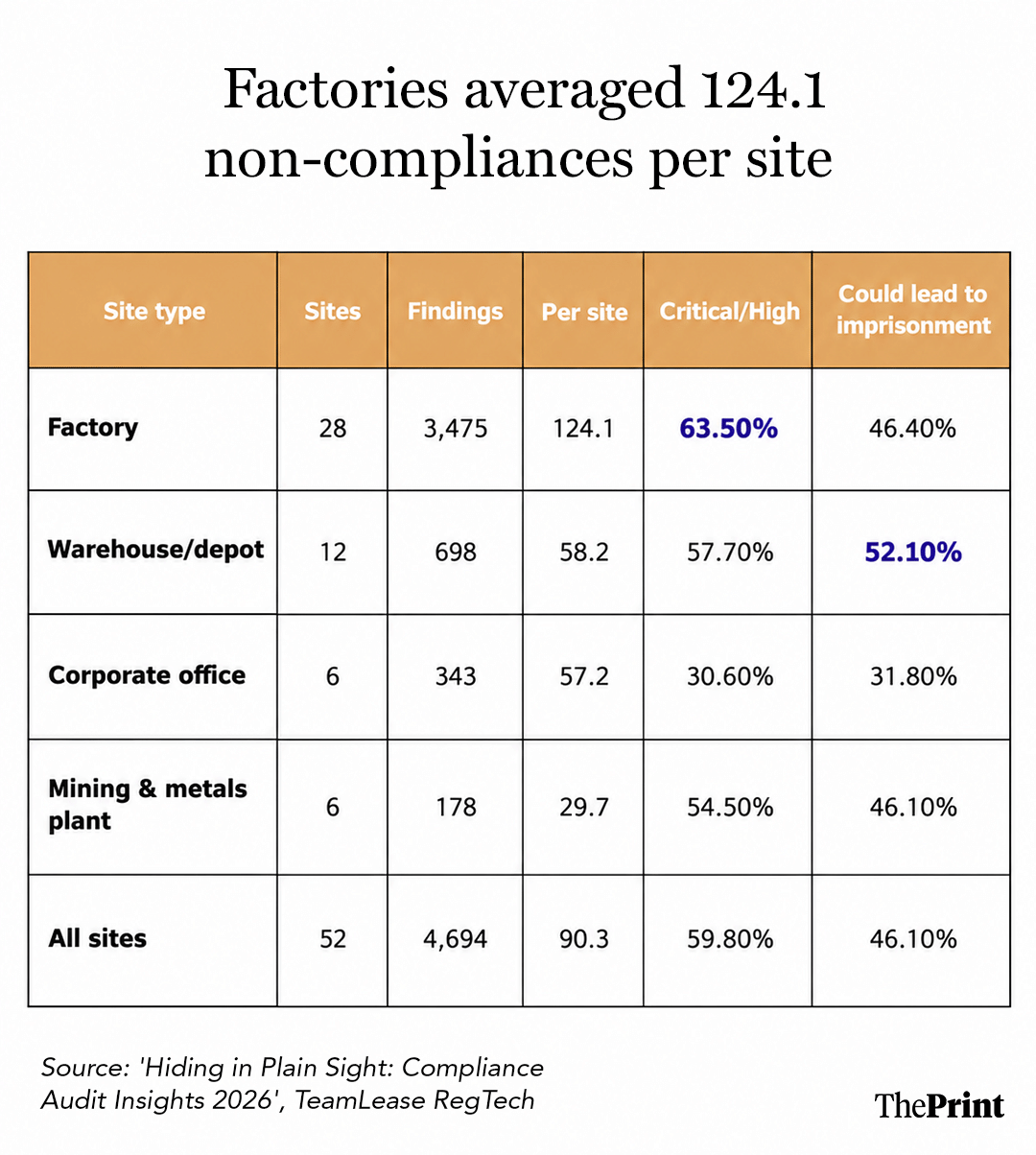
Factories averaged 124.1 findings per site, compared with 58.2 at warehouses and depots, 57.2 at corporate offices and 29.7 at mining and metals plants.
Factories also recorded the highest share of Critical or High-risk findings, at 63.5 percent, followed by warehouses and depots at 57.7 percent, mining and metals plants at 54.5 percent, and corporate offices at 30.6 percent.
At warehouses and depots, 52.1 percent of the 698 findings were linked to provisions allowing imprisonment, compared with 46.4 percent at factories. These figures indicate potential penalties under the laws in force at the time of the audits, not actual prosecutions or imprisonment. Subsequent legal changes may have altered the applicable penalties.
The report suggests warehouses may be particularly vulnerable to compliance gaps because they tend to have fewer supervisors, more contract workers and greater distance from headquarters teams responsible for compliance management.
The findings are based on audits voluntarily commissioned by companies and are not representative of businesses across India.
(Edited by Chingkheinganbi Mayengbam)
Also Read: India’s factories have stayed small for too long. Labour reform can finally force a rethink