







New Delhi: While it will not result in an abrupt halt in the purchase of Russian oil, the passage of a Russia sanctions bill in the US Senate last week has put India in a difficult position. If the legislation becomes law and Washington uses its tariff powers, Indian refiners could face pressure to reduce their dependence on Russian crude, potentially raising the country’s oil import bill.
At the same time, Indian exporters could also face higher barriers in the US market.
Further, enforcement of the legislation, analysts told ThePrint, could potentially raise oil and fuel prices, including in the US.
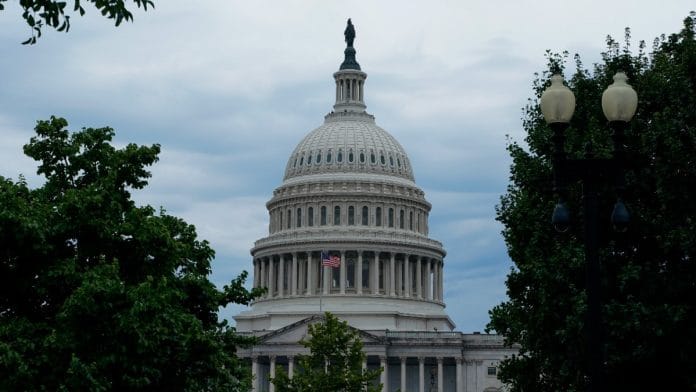
The Lindsey O. Graham Sanctioning Russia Act of 2026, passed by the Senate, 86 in favour and 11 against, would allow US President Donald Trump to impose tariffs of up to 100 percent on buyers of Russian oil or gas including India and China.
However, the Bill is yet to be cleared by the US House of Representatives, which is scheduled to take it up on 31 August, and would need Trump’s signature to finally become law.
For India, the stakes remain high because Russian crude has over the years become a major part of its oil basket. Kpler data show Russia’s share of India’s crude imports has been gradually rising and reached around 55 percent in July 2026.
“The proposed US sanctions legislation significantly increases the geopolitical and commercial uncertainty surrounding Russian crude trade, but it does not automatically imply that India will abruptly stop purchasing Russian oil,” Praveen Rai, director, energy markets at Grant Thornton Bharat, told ThePrint.
Rai said the legislation still leaves scope for waivers and executive discretion, meaning the practical impact on India would depend on how aggressively Washington implements the provisions.
Also Read: Polish FM Sikorski welcomes US Bill that seeks 100% tariffs on top Russian oil buyers like India
What happens if the Bill becomes law?
Even if the House passes the Bill, a sudden halt in Russian oil purchases is unlikely. Indian refiners typically book crude weeks or months in advance, while the legislation also leaves scope for waivers and executive discretion.
Sumit Ritolia, senior manager for oil markets at Kpler, said the impact on Indian crude imports would not be immediate. Based on how sanctions have worked in the past, he expects a wind-down period of 45-60 days during which already-contracted and in-transit cargoes can still be delivered. “The initial impact would be on new bookings rather than near-term arrivals,” Ritolia said.
Meanwhile, Indian refiners are also continuing to book Russian cargoes with no meaningful reduction in buying appetite so far.
Ritolia said replacing India’s current Russian crude volumes would be extremely difficult. Russian imports reached around 2.6-2.7 million barrels per day in June-July, accounting for more than half of India’s total crude intake.
“The key point is that Russian crude has become an integral part of India’s supply mix. Imports reached around 2.6-2.7 mbd in June-July, more than 50 percent of total crude intake, and replacing those volumes quickly would be extremely difficult,” he said.
If Russian supplies become more difficult to access, Indian refiners could increase purchases from Iraq, Saudi Arabia and the UAE, while also looking to the US, West Africa, Latin America and potentially Venezuela.
But replacing Russian crude would come at a cost. The West Asia conflict has already tightened global energy supply chains and increased freight and insurance costs.
“Russian crude remains important from both energy security and refining economics perspectives. Hence, a complete halt to Russian crude imports appears unlikely in the near term,” Rai said.
Global oil prices may rise
The impact of the Bill could extend beyond India’s crude purchases.
If India, China and other major buyers reduce Russian purchases at the same time, Russian barrels would have to be redirected to other markets, while refiners would compete for replacement supplies.
“If the Bill causes India, China and other major buyers to reassess Russian crude flows, it could tighten the market by forcing a re-routing of Russian barrels,” Rai said.
A reduction in Russian supplies could therefore push up global crude prices, increasing India’s import costs. It could widen the trade deficit and put pressure on the current account while creating another challenge for energy security.
Ritolia said the US would also have to consider the wider market impact. “A sharp reduction in Russian flows to India would tighten global crude availability and potentially raise oil and fuel prices, including in the US,” he said.
Both India and US may face economic impact
The sanctions Bill could affect India not only in the form of oil imports but also through Indian exports to the US.
Prerna Prabhakar, fellow at the New Delhi-based think tank Centre for Social and Economic Progress, said Indian exporters in sectors such as apparel, machinery and electronics could be particularly affected because the US is a major market for these products.
“If passed, the Bill is likely to have significant adverse implications for Indian exporters, particularly in sectors such as apparel, machinery and electronics, for which the US is a major export market,” Prabhakar said.
This creates a difficult choice for India. Continuing to buy Russian crude could expose its exports to higher US tariffs but cutting Russian crude oil purchases could increase the oil import bill. “India, therefore, potentially faces costs on either side, either through reduced export competitiveness if the tariffs are imposed, or through a higher import bill if it alters its energy sourcing in response,” Prabhakar added.
The US could also face higher costs. Tariffs on major buyers of Russian energy could disrupt global oil flows and add to inflationary pressures in the US, particularly if crude and fuel prices rise.
For Trump, higher inflation would also be a political risk ahead of the US midterm elections.
Prabhakar said the tariffs could add to existing inflationary pressures in the US, particularly if they contribute to higher import costs or global oil prices.
Still, the final impact will depend on how the legislation is implemented. “The eventual impact, however, will depend critically on the final design of the legislation, including the scope for country, product- or sector-specific waivers and exemptions,” Prabhakar said.
For now, the Bill has created uncertainty, but Indian refiners are still buying Russian crude. If the US eventually imposes tougher measures, refiners may gradually reduce their dependence on Russian oil and increase purchases from other suppliers.
However, an immediate halt seems unlikely.
(Edited by Amrtansh Arora)
Also Read: With crude at $100 again, Russian supplies may cushion India, but cost pressures set to mount