





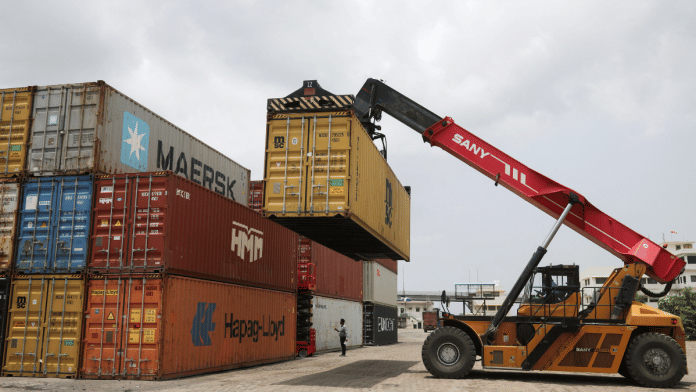


New Delhi: India’s growth in merchandise exports, especially its smartphone and pharmaceutical success stories, are built on its imports of parts and components from China. A number of components used in the manufacturing of smartphones, for example, have seen over 50 percent growth in imports from China during the first three months of the current financial year compared with the corresponding period of the last fiscal.
The first four months of the 2026-2027 financial year has seen India’s merchandise exports grow at an impressive pace, clocking in a 17.04 percent increase in comparison to the corresponding period last year.
However, even as merchandise exports have grown, imports of goods have gone up 19.27 percent between the same period. India’s merchandise imports for April-July 2026 stood at roughly $292.38 billion—up from $245.14 billion last year, according to the latest figures published by the Ministry of Commerce and Industry.
A large part of India’s imports remain petroleum products and gems and jewellery. The price of petroleum imports will naturally be higher this year than the last, given the surge in global oil prices following the US war with Iran.
However, even removing petroleum products and gems and jewellery from India’s import calculations, its overall merchandise imports have grown by around $30 billion to $192.03 billion during the first four months of this year from around $160.95 billion in the last.
A part of the increase from the monthly figures made available by the Ministry of Commerce and Industry can be attributed to the increasing imports of components for India’s own manufacturing sector.
An analysis of the monthly data made available by the Ministry of Commerce and Industry shows that the import of electrical components including the import of printed circuit boards, which can be used in smartphone manufacturing, from China has grown 78 percent between April and June 2026, in comparison to the corresponding period last year.
India imported roughly $4.122 billion worth of electrical components (HS Code: 8517) from China in the first quarter of this fiscal. In the first three months of the previous financial year, India’s imports of these goods from China stood at $2.311 billion.
India’s overall imports of goods under HS Code 8517 stood at $6.090 billion in the first three months of this fiscal. Chinese imports account for 67 percent of all overall imports of goods under this specific HS Code.
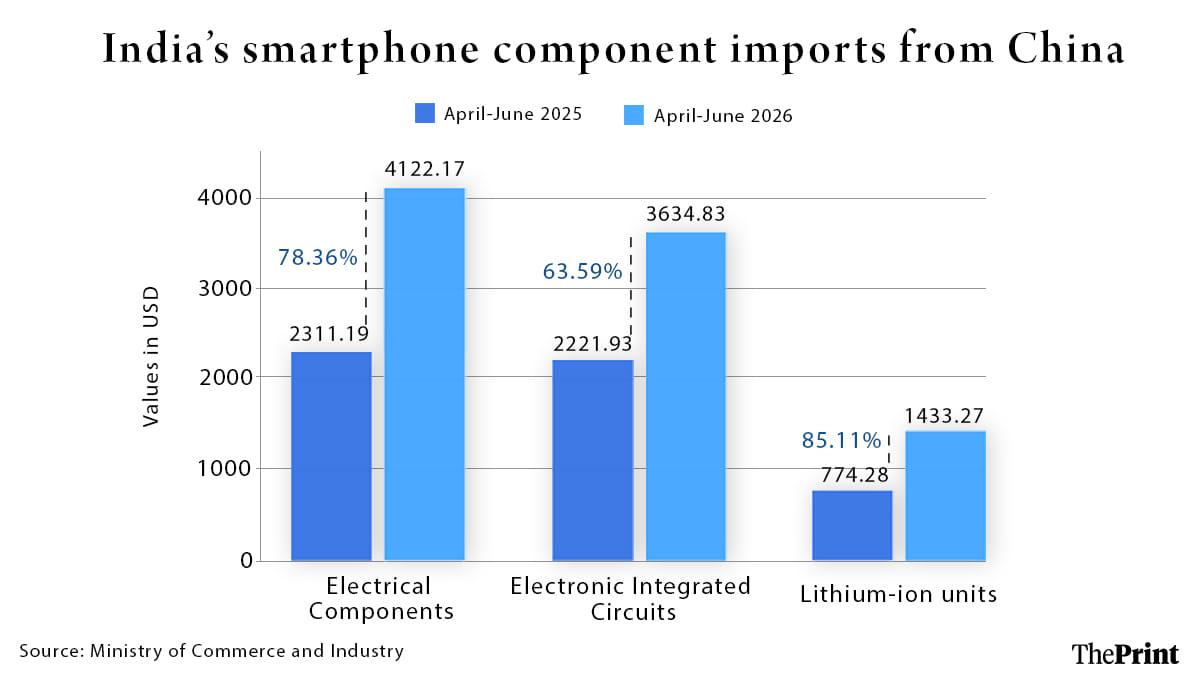
Similarly, the import of integrated circuits (HS Code: 8542) from China during the first three months of this financial year has seen a 63.59 percent increase over the corresponding period during the previous financial year. India imported roughly $3.634 billion worth of electric integrated circuits from China between April and July 2026, up from $2.22 billion during the same period last year.
India’s overall imports of integrated circuits has grown 61 percent this year to $11.6 billion, with high growth seen from a number of other countries including the US, South Korea and Malaysia, indicating potential diversification for the source of these components.
However, China still maintains its position as the top source of integrated circuits for India. Integrated circuits or micro-chips are integral in powering modern electronic goods including smartphones and computers.
Another key component of modern electronics, lithium-ion batteries, has also seen a significant growth in imports from China. India imported $1.433 billion worth of lithium-ion units (HS Code: 850760) from China in the first three months of this year, up from $774.28 million during the corresponding period last year.
This marks a 85.11 percent increase in the imports of lithium-ion units in the last year from China. India’s overall imports of these goods increased to $1.660 billion from $946 million in comparison to the first quarter of last year.
India’s dependence on Chinese imports is clear as cumulatively it imported less than $300 million worth of these goods from other countries.
Imports from China remain key to India’s own growth story. India has exported roughly $9.855 billion worth of smartphones in the first quarter of this financial year. This is a 23 percent increase from the corresponding period last year, when its exports of smartphones stood at $7.97 billion.
India’s total exports of smartphones (HS Code: 85171300) stood at $29.3 billion in the 2025-2026 financial year. The largest market for these smartphones was the US, with over $19 billion worth of exports heading to stores across the North American country. New Delhi is expecting further growth in the exports of smartphones manufactured in the country, however, the supply chain for its components is still largely reliant on China.
Also read: India’s FTA deficits aren’t proof of failure. The string is what holds the kite up
Indian pharma & Chinese APIs
India’s other major export sector, generic pharmaceuticals, also relies heavily on China for its ingredients. The latest NITI Aayog trade watch quarterly report, published in June, points out that China is the key source for Active Pharmaceutical Ingredients (APIs).
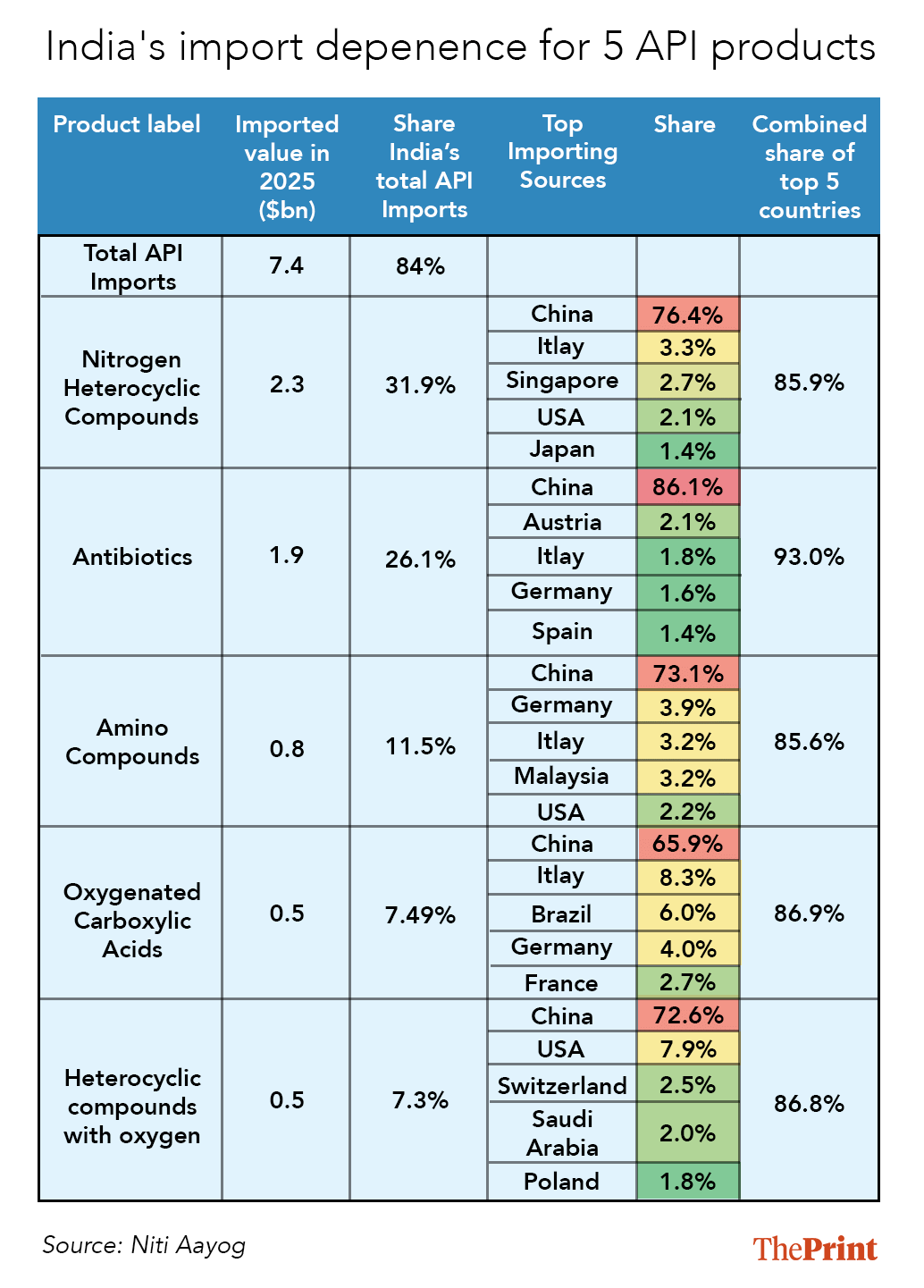
India’s imports of APIs in the 2025 calendar year stood at roughly $7.4 billion, with the top five product categories accounting for roughly $6.2 billion. Of these top five categories—nitrogen heterocyclic compounds, antibiotics, amino compounds, oxygenated carboxylic acids and heterocyclic compounds with oxygen—China is the source for almost three-fourths of all imports.
As much as 86.1 percent of all antibiotics imported by India comes from China, NITI Aayog notes, while 76.4 percent of nitrogen heterocyclic compounds, 73.1 percent of amino compounds, 65.9 percent of oxygenated carboxylic acids and 72.6 percent of heterocyclic compounds with oxygen are all sourced from New Delhi’s northern neighbour.
In the first quarter of the current financial year (April – June 2026), India has imported roughly $496 million of nitrogen heterocyclic compounds from China, which is about 7.18 percent higher than the previous year.
India’s imports of antibiotics in the first quarter of the current financial year has fallen sharply, from $445 million last year to around $368 million. Its import of antibiotics (HS Code: 2941) from China has accordingly fallen , from $381.8 billion to around $308.81 billion. However, China remains the principal supplier of antibiotics to the Indian market.
Similarly, in the first quarter of the current fiscal year, China remains the principal supplier of amino compounds, oxygenated carboxylic acids and heterocyclic compounds with oxygen, all pointing to the continuing trend of India’s reliance on Chinese APIs.
India’s pharmaceutical exports between April and July 2026 have grown by less than 1 percent, according to the latest data published by the Ministry of Commerce and Industry. India’s pharmaceutical exports in the first four months of the current fiscal year is $10.785 billion, slightly higher than last year’s $10.25 billion.
India has taken steps to ease Chinese investments by amending Press Note 3, earlier this year, as it looks to potentially gain foreign direct investment (FDI) from the Northern neighbour. V. Anantha Nageswaran, India’s Chief Economic Advisor made the argument for looking at potential investment from China in the 2023-2024 Economic Survey, setting the stage for a rethink of the control over the flow of Chinese capital into the Indian economy.
(Edited by Ajeet Tiwari)