




I have some news: I just bought an electric vehicle. I fueled up my old car for the last time in September — when my shiny new EV arrived last week, that was the end of my relationship with gasoline.
A great headline for this column would have been “Energy Shock Prompts Oil Columnist to Embrace EVs.” Too bad it’s not true. The reality is I needed a new car and, given the distances I typically drive, electric was the best option. The Iran war wasn’t a factor.
Regardless, like almost everyone else on the planet, I will remain hooked on oil, probably for the rest of my life. For business and family reasons, I fly a lot; my partner’s shopping habits keep a fleet’s worth of delivery vans busy, churning diesel. Every visit to the supermarket means bringing home bags full of plastic. And so on(1).
Still, maybe my new EV — no, it is not a Ferrari Luce! — is a sign of the times. Listen to Patrick Pouyanné, the chief executive officer of French oil giant TotalEnergies SE, who last week told investors that high fuel prices were “pushing customers to electrification.” Pouyanné is an oilman, not a tree hugger, yet he described the uptick in EV sales as “spectacular,” particularly in emerging markets such as Brazil, warning: “We have observed, in the last six months, a huge surge of electric vehicle sales in many geographies… That could affect the oil demand, for sure.”
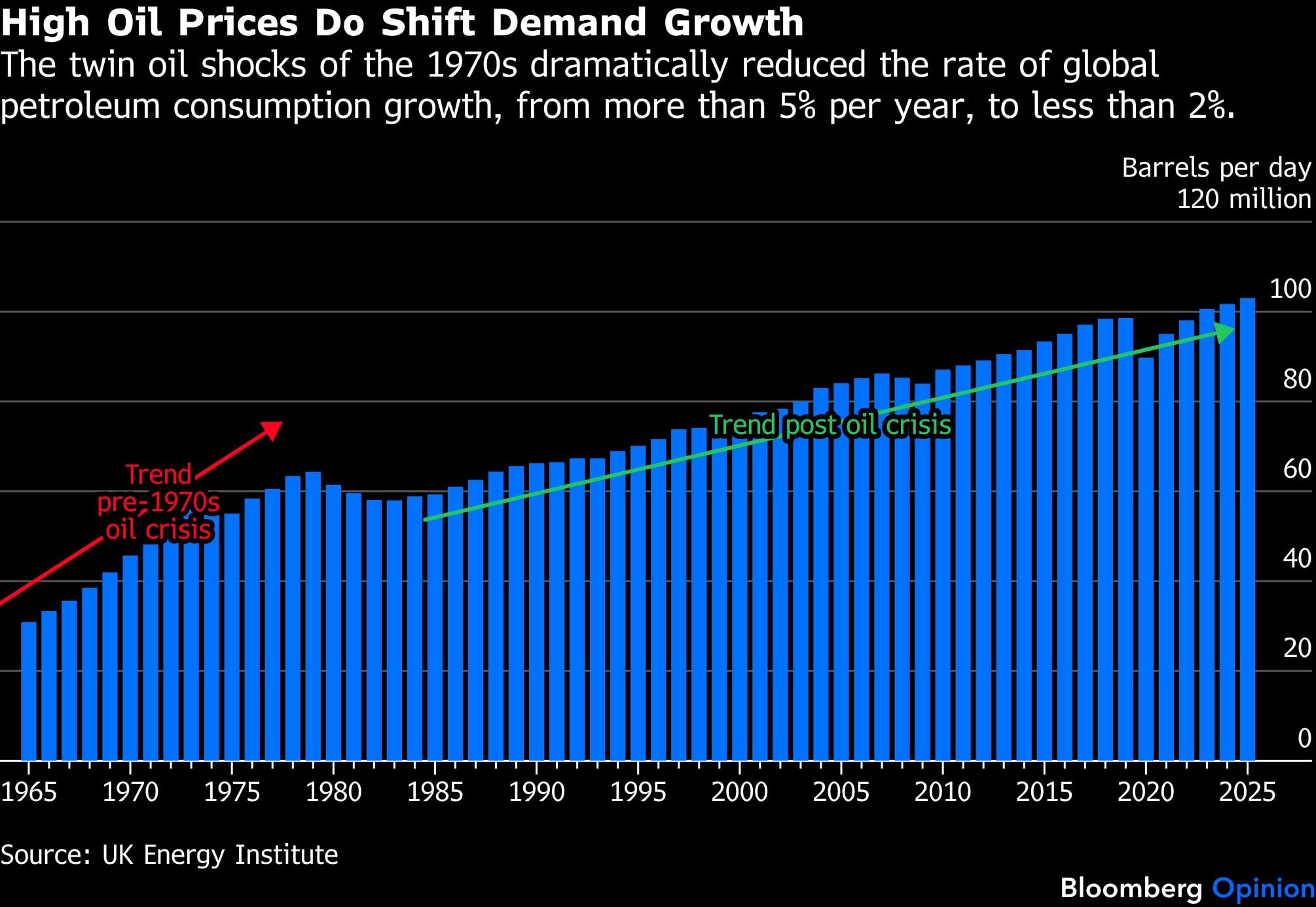
The twin oil crises of 1973 and 1979 dramatically reduced the rate of global oil demand growth. Will the current shock do the same? It’s early days, but the parallels are striking. As happened 50 years ago, today’s crisis hit just when technological, policy and social trends were starting to bite into petroleum demand.
It’s important to emphasize what’s a stake here — and what isn’t. I’m anticipating a slowdown in the rate of growth of demand, rather than an outright drop in overall oil consumption. The latter still seems far off.
In a recent study, the International Energy Agency noted that in the 1970s and 1980s important shifts were happening even before oil prices jumped. Among them, the use of nuclear power and natural gas in electricity generation; the shift from petroleum to gas for heating; and the push to increase vehicles’ fuel economy. “In combination with much higher oil prices in the early 1980s and sluggish economic growth, these factors led to a structural downward shift in oil consumption,” the IEA noted.
From an annual rate of 8% pre-1973, oil demand growth slowed to 3.9% after the first oil crisis and 1.7% after the second one. Since then, it has further slowed to about 1% a year over the past two decades. Now, the current price shock comes just as technological changes are starting to dent consumption. The most obvious of these is the electrification of transport.
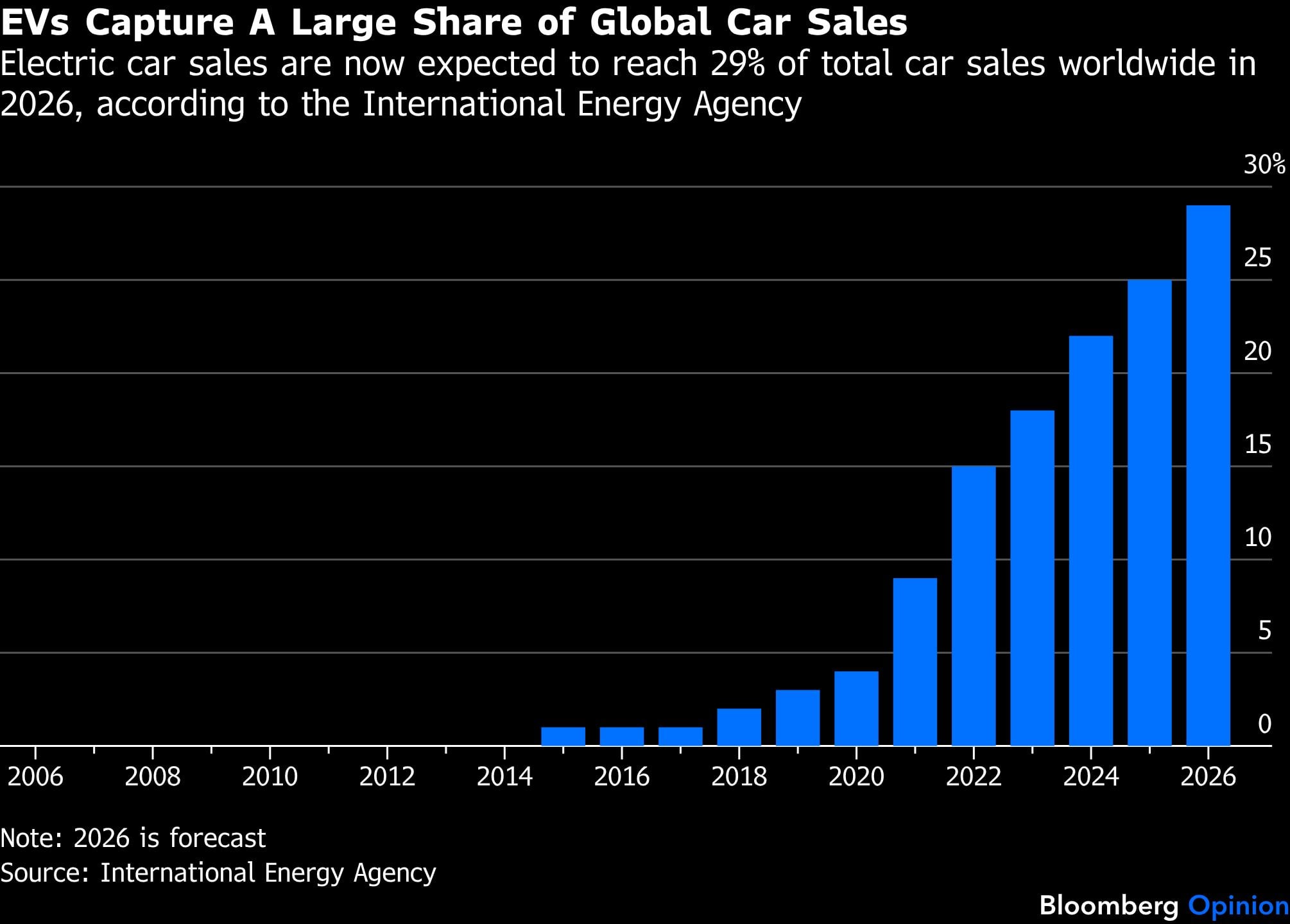
Not only can consumers now access a much wider range of EV models, but, more importantly, today’s electric cars are significantly more affordable than they were just five years ago. Thanks to strong government support, China has rewritten the rules of the car industry, flooding markets in Asia, Latin America and even Europe with cheap models. Based on current sales trends, the IEA estimates that EVs will account for about 29% of global car sales in 2026, up from 25% last year and 1% a decade ago.
Cars are one element of the shifting landscape. Trucks and vans are another. Diesel has been the king of road freight for decades, but in some key markets, notably China, it faces competition not just from electricity but also from compressed natural gas. Aviation isn’t slowing down, but high-speed trains in China and parts of Europe are increasingly competing with the airlines on short-haul routes.
Another trend already in place before the US attacked Iran could prove as significant: remote work. Commuting is a huge driver of global gasoline consumption, keeping demand growth in line with employment growth and economic activity. But that link appears to be wobbling thanks to the rise of work-from-home.
The IEA notes a third change that seldom gets enough attention: Middle East nations are pushing oil out of their electricity systems by moving into solar, gas and even nuclear, much as the US, Europe and Japan were doing when the 1970s crisis hit. If that shift continues — a big if, considering the turmoil in the region — oil demand growth would slowdown materially, in Saudi Arabia in particular.
Put all it together and the increase in global demand looks likely to slow to a crawl. What we won’t see, however, is the cliff-like drop dreamed of by environmentalists. In its latest long-term outlook, ExxonMobil Holdings Corp., the world’s largest international oil company, estimated that global petroleum demand hovered at 100 million barrels a day in 2025 and would grow by five million barrels by 2050, equal to a 0.2% increase per year over the next quarter of a century. (A reminder: It’s been about 1% for the last decade or so.)
For as long as the Middle East and Russia-Ukraine wars continue, the trajectory of future oil consumption will matter little. Regardless of whether your columnist drives an EV or a gasoline car, oil prices will remain high. What’s important today is the flow of barrels, which remains impeded, particularly for refined products. But once the grip of geopolitics eases and supply returns to normal levels, demand will again take center stage. Right now, many assume consumption growth will bounce back to its prewar trend as if nothing ever happened. I wouldn’t bet on it.More from Bloomberg Opinion:
I also rely on natural gas for heating.
This column reflects the personal views of the author and does not necessarily reflect the opinion of the editorial board or Bloomberg LP and its owners.
Javier Blas is a Bloomberg Opinion columnist covering energy and commodities. He is coauthor of “The World for Sale: Money, Power and the Traders Who Barter the Earth’s Resources.”
Disclaimer: This report is auto generated from the Bloomberg news service. ThePrint holds no responsibility for its content.