



In Episode 1843 of Cut The Clutter, ThePrint Editor-in-Chief Shekhar Gupta traces the history of global oil crises and how they affected oil economies of the world—from West to East, with a special emphasis on India. He explains how crises in West Asia led to massive hikes in oil prices, while also focusing on the hikes which had no relation to West Asia at all—2008 and the Russia-Ukraine War.
He also explains the various indices used to measure the price of oil including Brent, WTI and NYMEX. Amidst all of it, he also draws amusing examples from the history of Indian films to portray how the crises were received in India and painted by the film industry.
Here is the complete transcript, edited for clarity.
Aren’t you a little bit surprised that one keyword that’s dominated our lives and headlines all of these days for the moment has faded away? Oil.
But, be sure it will come back in your life because if not today then tomorrow, the government will carry out more price increases and I suspect this will go on. Because if the government does not increase oil prices, it will be extremely unwise and self-defeating. I know what I am saying is not a popular thing, but consumers must pay realistic, correct value for the commodity that they consume. Once again not a popular thing to say.
That is the reason governments also delay these actions for a very long time or they deliver the medicine in very tiny doses like homeopathy. It takes too long, but still you get your medicine in the body.
This is what Atal Bihari Vajpayee had done between 1999 and 2003. That’s when kerosene prices used to be really low, heavily subsidised, because kerosene was the fuel of the poor. A lot of Indian households, particularly in rural India, did not have electricity. Kerosene was used not just for cooking but also for light and that is why it was kept very cheap. However, India began to change and kerosene was no longer such an essential commodity for more and more of the poor.
So what did the Vajpayee government do? They carried out between 1999 and 2003, 33 micro doses of kerosene price increases. What happened as a result? Kerosene went up to 9 Rupees 1 Paisa from 2 Rupees 52 Paisa. That’s almost four times.
So once again, what happens now will not happen over almost four years as the Vajpayee government did. Possibly it will not be 33 hikes, maybe it will be about 7 or 10 in the end. But, it will happen in a much shorter time. At the same time the objective is not to hike your petrol or diesel prices, or gas prices up four times as was the case with kerosene in the Vajpayee era but it will be increased.
Now as we look at these increases, there will be some tamasha. Some people will line up at the petrol pump anticipating an increase. TV channels will be showing those stories. At the same time this will not deter tens of thousands of people jamming all the highways in Himachal Pradesh, Uttarakhand and other parts of the country—wherever you have roads leading up to the mountains in the summer. So this does not seem to be discouraging any consumption of fuel. That said, that’s an editorial point and as you know, our editorial view is that the government should let oil prices go up or down according to the market.
The government should not be administering fuel prices. That was the decision taken but it’s only been observed in brief so far. That said, this also gives us an opportunity to understand these oil cycles. Oil follows a shock and slump cycle and what these shocks and slumps do is that they force you to make adjustments which are usually very uncomfortable and also usually very painful. Particularly when you have a shock situation.
When you have a slump, then the pain is with oil producers. However, those slumps have their own implications as well. So what I am going to do today in this episode of Cut The Clutter, is to give you a little understanding of this shock and slump cycle and the other factor that every shock has led to massive changes in the way oil is used or energy is consumed, or energy is produced and energy is priced. These shocks have shaken governments. In some cases they made governments fall. These shocks have led to wars. Sometimes they are a consequence of the wars.
If you look at our era, say the last 55 years or so since oil became a political commodity in 1973, we have had at least five clear oil price shocks and I will take you through them and give you an idea of what happened during those shocks: what caused them, what arose as a result, and I will also tell you about a couple of slumps, including one famous historic slump where the price of oil became negative. Which means to sell you oil on a certain date, say 20th of April 2020, somebody would pay you more than $37 per barrel.
That was an anomaly. I will take you through that.
I will also tell you the different major indices which price the oil or which indicate the price of oil. That is Brent, WTI or NYMEX, OPEC basket or Dubai, Oman crude basket etcetra.
Also Read: 2026 is like 1973 Indira-era oil shock plus youth anger. Modi has space, but not immunity
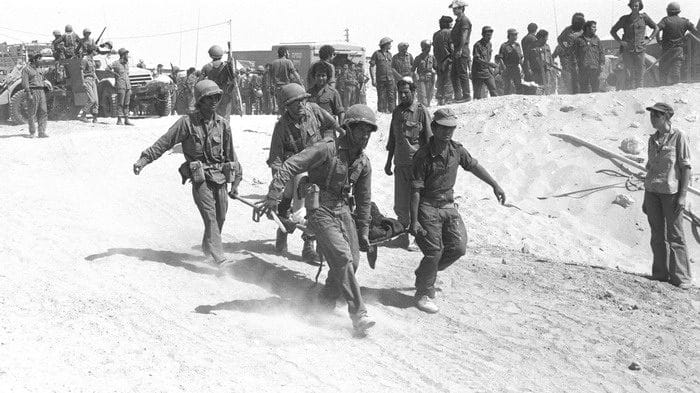
The first big oil shock as we all know came in 1973. Egypt launched a war on Israel. It breached the Suez Canal and the Israeli defences, which Israelis thought were impregnable, Egypt broke through them and made very rapid progress through Sinai Desert. At that point, Israel was in very deep trouble and books have been written about that period in which Israel saw such an existential threat that a thought was given to the use of nuclear weapons, or the Samson option as it was talked about.
All of the western allies came to Israel’s help. The Arab countries, the big oil producing Arab countries. Egypt was fighting. To some extent Syria. Jordan was out of it. Iraqis sent their forces to support the Egyptians but in a few days the Israelis were able to turn the corner. They were pushing back Egyptian forces and making progress.
All of this happened because the Western powers, particularly the US, set up a humongous air bridge bringing in weapons and ammunition into Israel.
This angered Arab countries but they did not have the stomach to fight. The only countries in those parts which have the stomach to fight are Iran and to some extent, Iraq, Turkey which hasn’t had to fight very much since the Ottoman era, and Egypt which has fought a bunch of wars and Syrians also.
The Gulf Arabs are too soft. They don’t want to fight a war. They did not want to get involved in this war against Israel. At the same time, they had to take a position against Israel. So their way of taking a position was actually to stop giving oil to western powers that were backing Israel and also generally to let oil prices go up. That is how the oil shock arrived.
OPEC had actually been set up in 1960 as some of the oil producing countries, the major ones thought they could set up a cartel because the western companies and powers were controlling oil prices and supplies. So, some of the manufacturers or some of the producers thought that they would cartelize. However, this cartel had not been very effective. Who were the founders? The founding members were Iran, Iraq, Saudi Arabia, Kuwait, and one from southern America, Venezuela. They thought this was a good bandwagon to jump on.
When the 1973 oil shock arrived, some of the OPEC countries were not quite into cartelization of upping the prices. They tried to moderate the situation that had gone out of their control as the Arab countries, the Gulf Arab countries were angry. Plus, they had to be seen to be angry because they didn’t want to go to fight the Israelis on behalf of Egypt or Syria or the Palestinians. Fighting was not for them. In this case, they were going to protest. They were going to show the Palestinians and the Egyptians and the other Arabs that they were also fighting but they were fighting by upping the prices and in the process also profiting from it. Because OPEC lost control of this situation, the prices went up from $3 to $13, that is more than four times. It had a lot of downstream impact.
In India, that led to hyperinflation, going up to 29 percent. By 1974, India was also very short of foreign exchange, and had to go to the IMF. It made Mrs Gandhi very unpopular and led to unemployment. That is when films like Roti Kapda Aur Makaan, Shor and before that, Gulzar’s Mere Apne, all these films brought about the pain that India, particularly the young people, were going through. All of them had the same theme: shortages, price rise, hyper unemployment, adulteration.
These significant Bollywood movies of that period and in other languages, reflected this distress in India. This led ultimately to the imposition of the Emergency, and then the defeat of Mrs Gandhi. That was in India, the result of the first oil price shock.
Internationally, this led to a phenomenon called stagflation. Stagflation was a word coined by British politician Ian Macleod in 1965. He was a conservative and Chancellor of the Exchequer. Stagflation was a situation where inflation goes up but unemployment also goes up, contrary to the Keynesian theory. Basically, the Keynesian principle is that if unemployment is going up, then people will be buying less and if people are buying less then inflation can’t go up. So unemployment and inflation have to be inversely proportional. However, what Ian Macleod argued in 1965 Britain was that you could have a situation where both will go up, unemployment and inflation, and growth will stagnate.
Whether that happened in Britain is not so relevant to the rest of the world, but after 1973, stagflation hit America and hit most of the western world. In this period, the western world or the OECD countries – Organisation of Economic Co-operation and Development, got together and they did a bunch of things. One, they set up the International Energy Agency, which said that every member will stockpile 90 days of crude reserves. That would render support for the next shock. It takes time filling up those reserves and in any case, at that point oil was very expensive. So did you really want to fill up these reserves when oil was running at such a high price, four times the price we had just a couple of months back?
Other important things happened too. The western world again, particularly America, came up with an idea called CAFA, Corporate Average Fuel Economy Standards. That for the first time, even Americans came up with standards for fuel economy. Really big cars went out of the window. Niftier cars came in and that had an impact in the entire developed world.
Now you might have thought that the world had settled down with a $13 crude price. People got used to it. That’s when the Iranian revolution took place. In 1978, towards the end, the big protest started. January 7, 1979 the biggest protest in the holy city of Qom took place. By that time the Shah was out, he was on his knees and on 1st of April 1979 Khomeini took over. So, the Iranian revolution was complete. This completely destroyed the oil production situation in Iran at that point and a lot of oil went out of the markets.
At that point nearly 5 million barrels per day went out of the market because of the turmoil in Iran. To make matters worse, soon enough, Saddam Hussein thought of taking advantage of Iran’s weakness. He attacked Iran. His forces went into Iran and a war started. As the war started, once again a crisis erupted and the second oil shock came in.
Also Read: India can’t afford to keep slipping on oil crises
The second oil shock started in 1979, lasted up to 1980 and then dramatically began to ease up. With the 1979 shock, the whole world panicked again. The world had just recovered from the panic of 1973, and governments across the world started worrying what would happen if more oil supplies were disrupted. That was the first time that worries were expressed about the Strait of Hormuz, because Iran had the capability of blocking it.
In that shock, the prices went up three times. In the first shock they went up more than four times, that is 3 to 13. Now it went from 13 to 40, more than 1 dollar, more than 3 times. So 3 times over a base of 13. This was again a very big shock. India was affected very badly. At that point the Janata government was in power. Inflation went up.
By 1980 the Janata government was gone and a new election was held in India that brought Mrs Gandhi back to power.
Thus, oil shock had different impacts in different countries, from causing stagflation in the developed western world to causing political change in a democracy like India.
This changed dramatically. As war picked up, both Iran and Iraq figured that they needed the money. War is a very expensive business and this war went on for eigth years, 1980 to 1988. So, as they settled down in the war, they began producing more crude as they wanted to earn more money to finance the war. That led to a fall in oil prices.
Soon they were pumping more. Other oil producing countries were pumping more and there was a crash in oil prices by 1985. I told you it’s a cycle of bust and boom or shock and collapse. By 1985, the collapse came. Oil, which at that point at an inflation-adjusted dollar price of 35, fell to 10. Almost 1/4th of the price. That is how the oil price collapsed. The 1980s therefore were the decade of a glut. Never mind that in that period, Iran and Iraq also started what was called the tanker war. They were trying to sink each other’s tankers. So somebody has to buy oil. Buy my oil. Why buy my adversary’s oil? So the oil tanker war became a part of the Iran-Iraq war. In spite of that, prices collapsed by 1985.
Now what happens is that when prices collapse, you become lazy. When the prices go up, the world becomes very alert. With the first oil shock of 1973, IEA was set up, headquartered in Paris, which made it mandatory for its members to store at least up to 90 days of supply as strategic petroleum reserves. Also, the Trans-Alaska pipeline was built. More and more rich countries also leaned towards nuclear energy.
But, when the price goes down, the alert level also goes down. What also led to this collapse in prices was the fact that North Sea Offshore Oil, that’s between UK and Norway, started coming out. The production increased there greatly. Prices had gone up. Production follows price signals. Because production went up, it contributed to prices collapsing. In Europe, people began insulating their homes to protect themselves against energy shocks.
And in this process, OPEC started fighting within itself because when prices went down, everybody was panicking that their economy was based on high prices. Then the prices collapsed. So, OPEC member countries started producing more oil, not following OPEC quotas. As they started violating OPEC quotas, Saudis got furious and started pumping oil as if it was going out of the market. So they flooded the market, saying that if the other OPEC members are not following the quota system, then they would also not follow the quota system. They would produce as much as they wished.
All of that led to the collapse and the world again got used to cheap oil. But, not for long.
In 1990, Saddam Hussein invaded Kuwait. Why did he invade Kuwait? Whatever might be his reasons, the primary reason was that Iraq had spent so much money on that wasteful war that didn’t take them anywhere. It had borrowed so much money, that Iraq needed more oil. Iraq at that point had 160 billion barrels of oil, or those were the headlines. Proven reserves. It’s gone up subsequently because technologies have improved.
But, it still needed more oil. What’s the best way of doing it? Just grab a country next to you with no defences that has a lot of oil reserves. Just call its oil your own. And then, find an excuse by saying that Kuwait was producing too much oil, which was leading to a fall in global oil prices. All of them were suffering and also, Kuwait was carrying out what Saddam Hussein called slant drilling. That means literally you put a slanted pipe into what were Iraqi oil fields. And thereby they were stealing ‘Iraq’s oil’. This was the humongous Rumaila oil field. So he went and occupied Kuwait. That led to another oil shock.
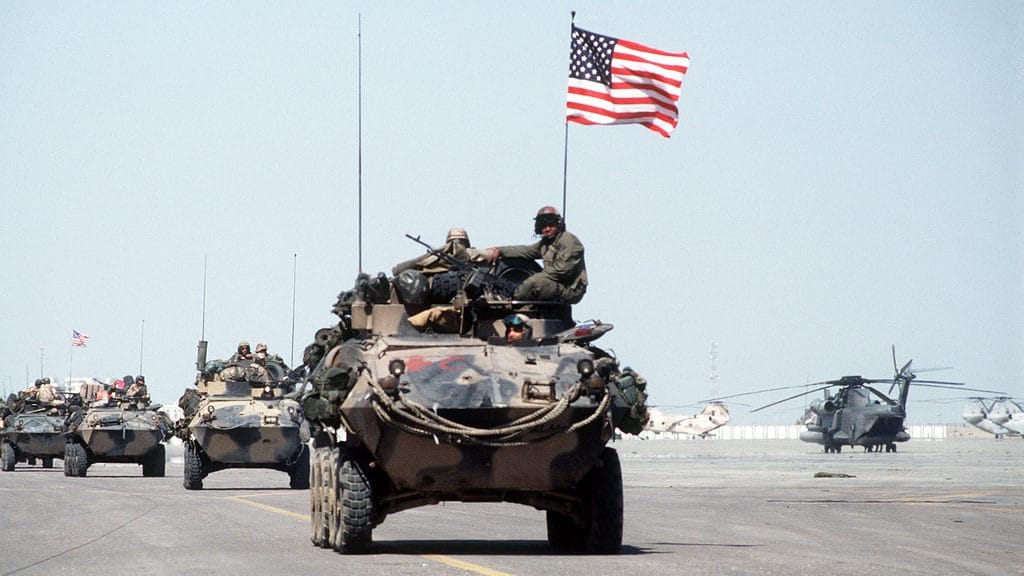
So, 1991 was the third oil shock. It was also the shortest. Because what happened was by this time, the western world had become sensitised. By 1973 and 1979, more oil was coming out of other places, particularly North Sea. Also the Arab countries, the Gulf Arab countries, were against Saddam Hussein and against Iraq. They had joined a coalition with the Americans to liberate Kuwait because it was one of theirs. And they were all scared of Saddam. So, they started to produce more. This crisis lasted about 6-9 months.
Also Read: Iran war, edible oil price shock, weak rupee & monsoon could hit India middle-class hard in FY27
Let’s now focus on India. This was the period when India had its balance of payments crisis, when it was all very close to defaulting on its foreign payments. This is when Chandra Shekhar would become like a Prime Minister with daily wages. He sent out India’s gold to ensure that India did not default on its foreign exchange payments. This led to a big balance of payments, economic and fiscal crisis in India as well.
But, it also had other implications. This led to a Western recession, which also came because of the cost of the war in Iraq, the cost of liberating Kuwait.
At the same time, India started its economic reform. Because India had just seen the pain and trauma of a balance of payments crisis. India’s economy was a mess. And that crisis led India to carry out the 1991 reform because India had to go to the IMF to support its foreign exchange reserves and IMF put conditions for reform. At the same time, India’s leadership by that time had figured that the method they had followed so far of managing the economy was not working. They had to try something new.
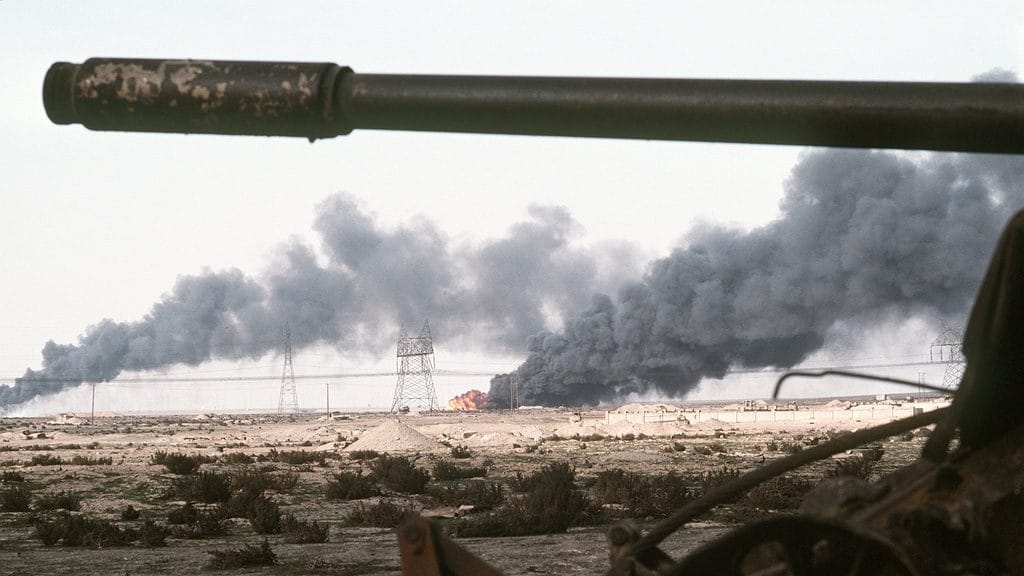
So, it had a bad impact on the Western world, good impact in India and something that we are benefiting from even now. When the war ended, when Kuwait was liberated, Saddam Hussein’s armies, while retreating, out of sheer vindictiveness began setting Kuwait’s biggest oil wells on fire. At one point 700 of the biggest oil wells there were set on fire.
The first Gulf War, or the War of Liberation of Kuwait was also the first time that these strategic petroleum reserves, which came up as a consequence of the 1973 Yom-Kippur oil shock and the setting up of the IEA by OECD, were used for the first time.
George H. W. Bush, the senior Bush, released 3.9 million barrels of oil and then he made another 17.3 million barrels available to bring down the oil prices. This process started in October 1990 itself and kept the oil prices a little bit in control. This was followed by a somewhat longer period of respite on oil prices until July 2008 came.
Now July 2008, oil prices started going up almost serendipitously. There was no crisis. This was one of those rare occasions when a war in the Middle East or instability in West Asia was not responsible for an oil price shock. Up to 2007 globally, we had seen very high growth. India had also seen very high growth. So consumption had gone up everywhere. Then by 2008, came the subprime crisis. American banks began to collapse. As American banks, Western markets, British and European banks began to collapse, people who had money, had to find a safe harbour. So, they found a safe harbor in oil futures. As a result of that, oil prices started going up, touching $147.27 in July 2008.
This was the fourth oil shock—a result of breathless consumption, followed by the 2007 subprime crash and then money rushing out of real estate, equities into commodities, especially oil. So oil became the gold at that moment, and that’s how it went up.
Because it had gone up due to panic, it also collapsed equally dramatically. Within six months, it had come down to $40.
However, as I told you earlier, every shock led to some reforms, some action, or some damage. It did damage in many parts of the world. In this case, it led to the shale gas boom in America because now it looked like oil was expensive enough for you to invest in shale. Some of the environmental concerns were set aside. The shale gas boom did not come immediately, but the market had discounted the inevitability of shale gas-based oil coming in.
By 2012–13, however, one more oil shock came. That’s the fifth oil shock. Once again, while no big war had taken place in West Asia or the Arab world, the origin of this crisis also lay there, because 2012 is when the Western powers put sanctions on Iran.
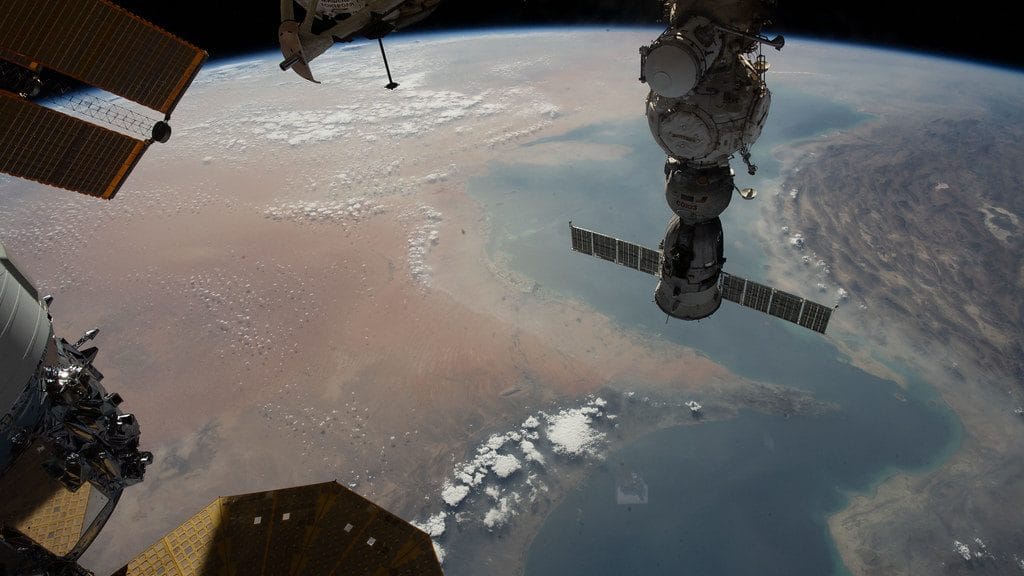
Suddenly, Iranian oil went out of most markets. That led to a fall in supplies and also to panic because people who had dealt with previous crises were still in power, running countries and companies or were opposition leaders. Once again, panic spread that because the Western world, particularly the Americans, had sanctioned Iran, Iran would block the Strait of Hormuz. This was the second panic over Hormuz.
It was also the period when the Arab Spring came up. There was instability in the entire Arabian world. There were rumors that America was going to invade Syria, which it did not. Sudan and South Sudan started fighting a war. They are also oil-producing nations. To make this a perfect storm, some oil pipeline outages took place in the North Sea.
All of this led to a price rise, which countries like India found very difficult to handle. We know too well what happened with this 2012–13 oil price shock. In India, inflation went up to double digits, which is not something Indian public opinion is used to for a long period. People became furious with the UPA government, which already had troubles with scams and other issues. India’s current account deficit went out of control. The rupee weakened, and that became an issue. The government borrowed more because it did not want to pass on the increased oil costs to consumers. It did not want to anger consumers. So the government kept funding subsidies. That led to more deficit, more borrowing, and more inflation. It became a vicious cycle that the UPA got caught in, and we know how they were then set up for their disaster of 44 seats in the 2014 election.
By 2013, India’s current account deficit had gone up to 4.8 percent of GDP. It is just around 1 percent now. The rupee also crashed because of what was called the ‘taper tantrum’. That was when the US Federal Reserve started withdrawing the massive money supply it had pumped into markets after the subprime crisis.
After the boom follows the crash. The crash came between June and December 2014. Oil fell by 40 percent. By this time, the shale gas revolution had started. America had begun putting more oil into its own market, and OPEC was not cutting production. The dollar was strong. All of this led to much cheaper oil. Then, in 2015, the US did something truly historic, a landmark event in the contemporary history of oil. In December 2015, the US lifted its 40-year-old ban on crude oil exports. From being an importer, America now became an exporter. That had an immediate impact on crude prices all over the world.
From 2014 to 2022, things were relatively stable but something had to happen again. This shock did not come from West Asia. It came from Europe. This was when Russia invaded Ukraine. As a result, Russia was hit by sanctions and markets panicked. Oil causes panic, and demand surged globally while supplies were threatened.
Initially, prices went up to $120-130 per barrel. It looked like we were heading into another long-lasting shock. However, Europe and America got together and created a new system where countries could buy Russian crude at a price linked to the Brent index. If Brent was $60, Russia might sell its oil at $52 or $54. Russia’s profits would be capped while global oil supplies would continue to flow. That was an effort to calm markets and stabilize oil prices.
That system was in place until the recent West Asia conflict and renewed concerns about the Strait of Hormuz.
You often hear about crude oil indices like Brent and NYMEX. What are they? There are more than a dozen indices in the world but effectively there are three that matter. For India, the most important is Brent. Brent is traded in London markets and accounts for roughly two-thirds of global oil supplies. That’s why it is the most dominant index. It draws on oil from the North Sea between the UK and Norway.
Why is it called Brent? When European countries started finding oil in the North Sea, they initially decided to name each new well after a bird. A major well discovered in 1971 was named after the Brent goose, a migratory waterfowl. The index was eventually named after this bird. Brent is traded on the Intercontinental Exchange in London.
The second index is WTI, or West Texas Intermediate. It mainly draws from oil produced in Texas, Louisiana, and North Dakota and accounts for much of North America’s supply. It is traded on the New York Mercantile Exchange (NYMEX). Historically, it has been less relevant to India, but India is now buying increasing amounts of crude oil from the Americas, including the United States and Venezuela.
The third index is the Dubai-Oman index, which is important for Asian markets. This crude is of medium density and high sulfur content. Most Asian countries import significant quantities of it. This is the category most directly affected when there are disruptions around the Strait of Hormuz.
Other categories include the OPEC basket, the Urals basket for Russian crude, and India’s own Indian Crude Basket. The Indian Crude Basket is calculated based on the proportion of crude India imports from various countries and sources.
Finally, I mentioned earlier that oil prices briefly became negative in 2020. Not by 1 or 2 paisa but by an exact $37.63. When did that happen?
It happened on April 20 2020, during the first COVID-19 lockdown. Oil consumption collapsed across the world. Oil was still being produced, but nobody had any place to store it. Only in America, specifically WTI, oil futures for May delivery briefly traded at minus $37.63 per barrel. That meant someone would give you crude oil and pay you money to take it, if you had somewhere to store it. This was largely an anomaly caused by the mechanics of commodities trading.
However, Brent did not follow the same trend. The two-thirds of the world’s oil represented by Brent never went negative. Middle Eastern crude oils also did not go negative. On the day WTI hit minus $37.63, Brent was trading at $27.61. However, the shock of American crude going negative caused panic. The next day, Brent fell further to $9.12.
Also Read: China insulated itself against energy shocks. India is ‘all talk, no walk’