







New Delhi: Amid intensifying debates over historical reparations, French foreign affairs minister Jean-Noël Barrot defended his country’s abstention from a UN resolution last month which recognised the slavery of Africans during the transatlantic slave trade as “the gravest crime against humanity”. Barrot argued that ranking it the “gravest” risks diminishing other genocides and injustices.
Barrot said in an interview to Al Jazeera: “We abstained from that resolution because we refuse to create a hierarchy among crimes against humanity or to make a competition of the suffering.”
France abolished slavery on 27 April 1848, but compensated slave owners 126 million francs in bonds with a 5 per cent interest, forcing the freed people in most colonies to continue working under harsh apprenticeships and mandatory labour rules under their ex-masters until 1851.
In 2001, France passed the Taubira Law, which strongly condemned slavery by officially recognising it as a crime. However, the law was weakened because the parts that proposed reparations were removed after criticism from certain political groups, including descendants of former colonial elites.
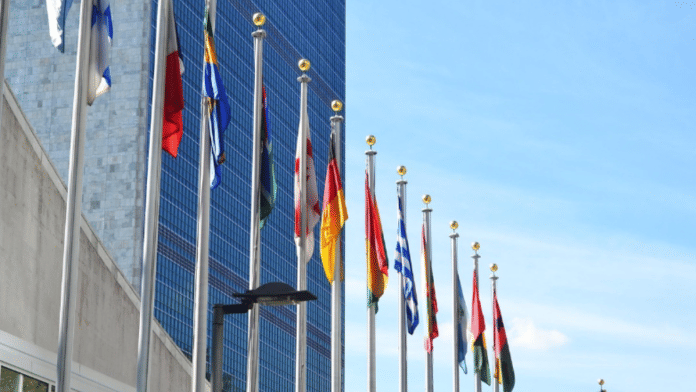
The United Nations General Assembly (UNGA) on 25 March 2026 voted to recognise the enslavement of Africans and called for reparations as “a concrete step towards remedying historical wrongs”. The resolution, initiated by Ghana, received 123 votes in favour; Argentina, Israel, and the US voted against, while 52 nations, including the European Union (EU), and UK abstained.
The resolution came after 55 member states of the African Union set out to create a “unified vision”, last year on what reparations for slavery may look like. The resolution urges member states to engage in dialogue for formal apologies, returning stolen artefacts, reparations, financial compensation, and ensuring guarantees against repetition. Unlike United Nations Security Council (UNSC) resolutions, those at the UNGA are not legally binding, though they carry the weight of global opinions.
This resolution is backed by the idea that enslavement was a turning point in world history because of its vast scale, long duration, organised and brutal nature, and lasting impact. Its effects are still felt today, shaping how work, wealth, and power are distributed along racial lines.
The key architect of the resolution, Ghana’s president John Dramani Mahama, representing the African Union (AU) and the Caribbean community (Caricom) said ahead of the vote: “Let it be recorded that when history beckoned, we did what was right for the memory of the millions who suffered the indignity of the slave trade and those who continue to suffer racial discrimination.”
Experts involved in the drafting of the resolution say it is an attempt to get “political recognition at the highest level” for one of the darkest areas in human history.
Origins of transatlantic slave trade
Between the 16th and 19th centuries, around 12-15 million people were captured in the African continent and forcefully taken to the Americas to work as slaves. It was soon after Europeans had colonised the Americas, when the indigenous workforce was collapsing due to diseases, torture and heavy workload at plantations. Plantation owners switched to African slaves, believing them more suitable for labour-intensive, large-scale agricultural production.
The triangular trade
This was three-way trading, where goods like guns and clothes went from Europe to Africa, enslaved people were transported from Africa to the Americas, and products like sugar, cotton and tobacco were sent from the Americas to Europe.
Powerful European states of the time, like Portugal, Spain, Britain, France, and The Netherlands built huge commercial wealth from this transatlantic slave trade because they controlled the ships, colonies, and markets.
The profits from slavery and the plantation economy helped finance early industrialisation in parts of Europe and North America by filling the coffers of banks, shipping companies, and merchant elites, who then invested in factories, ports, and infrastructure.
At the same time, people who were enslaved and their descendants were systematically denied access to legal rights, land, and capital, so they were largely excluded from the wealth their labour helped create. This pattern can be compared to the caste system which helped cement long‑lasting economic inequalities.
Conditions on slave ships were brutal: Captured Africans were loaded and packed in dark, airless holds, often chained together, with very little food and water, and almost no room to move. Historians estimate, about 10–20 per cent enslaved people died while crossing the Atlantic, of disease, physical abuse, or suicide, while survivors arrived in the Americas physically broken but still forced into a lifetime of slavery as plantation labour.
Enslaved resistance and abolition
Enslaved Africans resisted in multiple ways: They revolted on ships, on plantations, by running away to form communities in remote areas, and by quietly preserving their identity. They preserved their languages, religions, and cultural practices under extreme repression. Even as trade and slavery persisted for centuries, enslaved people’s resistance helped undermine the system from within.
In the 1700s and 1800s, abolitionist movements grew in Britain, the US, and some parts of Latin America, drawing on moral arguments, political campaigns, and the testimony of formerly enslaved people to push for legal bans on transatlantic slave trade.
These rebels organised petitions, published pamphlets and newspapers, and supported formerly enslaved people who spoke out, all of which put much systemic pressure on governments and contributed to the eventual legal abolition of slavery in many places. Even though they were part of these same societies that profited from the trade, they chose to stand against it.
It took a long time, and many struggles, for enslaved Africans and their descendants to gain political representation. Even after slavery was abolished, progress did not come easily. For example, in the US, in the period following the civil war, newly freed slaves were finally able to use their rights as citizens—they voted, ran for office, and were elected to positions at local, state, and even national levels, including seats in Congress.
This progress was made possible through strong community organisation, changes to the Constitution and federal laws that protected voting rights for a time. However, these gains were later weakened and often reversed due to violence and repression by white supremacist groups.
The slave trade caused loss of population and instability in the African continent. The brutality and inhumanity of the transatlantic slave trade were so extreme that 19th-century reformers and international observers labelled it a “moral atrocity” and a violation of natural rights”, calling for its complete abolition. Historians also argue that profits from slavery not only fueled industrialisation in Western countries but also helped build finance infrastructure, trade, and global capitalism.
Long legacy
The United Nations first acknowledged that slavery was a crime in 2001, at a conference against racism, xenophobia and related intolerance in Durban, South Africa. A 2007 UNGA resolution (61/19) established 25 March as the International Day of Remembrance of the Victims of Slavery. The UN inaugurated the ‘Ark of Return’ memorial at its headquarters in New York City to honour victims of slavery.
(Darshan Kumar is an intern at ThePrint)
(Edited by Viny Mishra)
Also read: Amid mounting cyber slavery concerns, 67 Indian youth rescued from Laos scam centres