





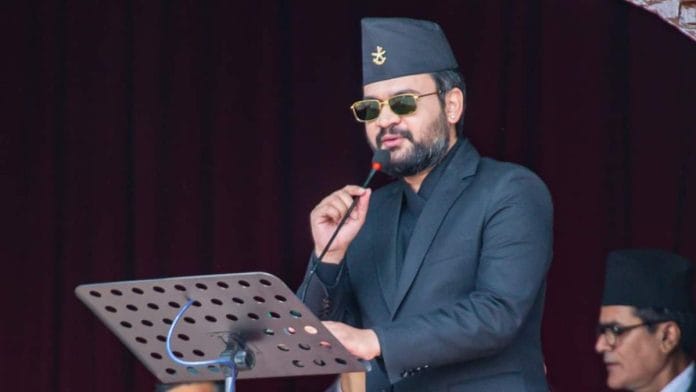


New Delhi: Nepalese Prime Minister Balen Shah’s statement that territorial encroachments along the India-Nepal border were not one-sided and both countries have occupied each other’s land, amid an ongoing border dispute, has become the latest flashpoint in bilateral ties between both countries.
Nepal’s foreign ministry later issued a clarification on Shah’s remarks, claiming disputed territories of Kalapani, Lipulekh and Limpiyadhura are yet to be mapped and that there are problems of “cross-border occupation” and encroachment in some other places. India has dismissed the idea of third-party mediation and termed the matter a bilateral issue.
Nepal’s Foreign Ministry has said preliminary findings by its committee indicate that in some locations land presently used by Nepalese citizens may technically lie on the Indian side of the border, while land used by Indian citizens may fall within Nepal’s territory.
It added that this technical reality formed the basis of Shah’s parliamentary observation that “Indian land may be on Nepal’s side in some places”. However, neither side has given clarity on what the “encroached areas” are, and why they had become contentious.
Rishi Gupta, assistant director at the Asia Society Policy Institute in New Delhi, told ThePrint, “No-man’s land between India and Nepal is vaguely defined, as many pillars across the open borders have either been broken or washed away. So, it’s a very technical issue to find what the other areas are.”
Balen Shah in his speech also referred to the agreement of both countries to work together towards resolving the long-standing border dispute—which dates back to the 1816 Sugauli Treaty—through diplomatic channels, with help of surveyors, historians and other experts.
“PM Balen’s statement could be interpreted in two ways. One, he might have made the controversial remarks intentionally to internationalise the issue. Or, he is of the opinion to resolve at the earliest,” Gupta added.
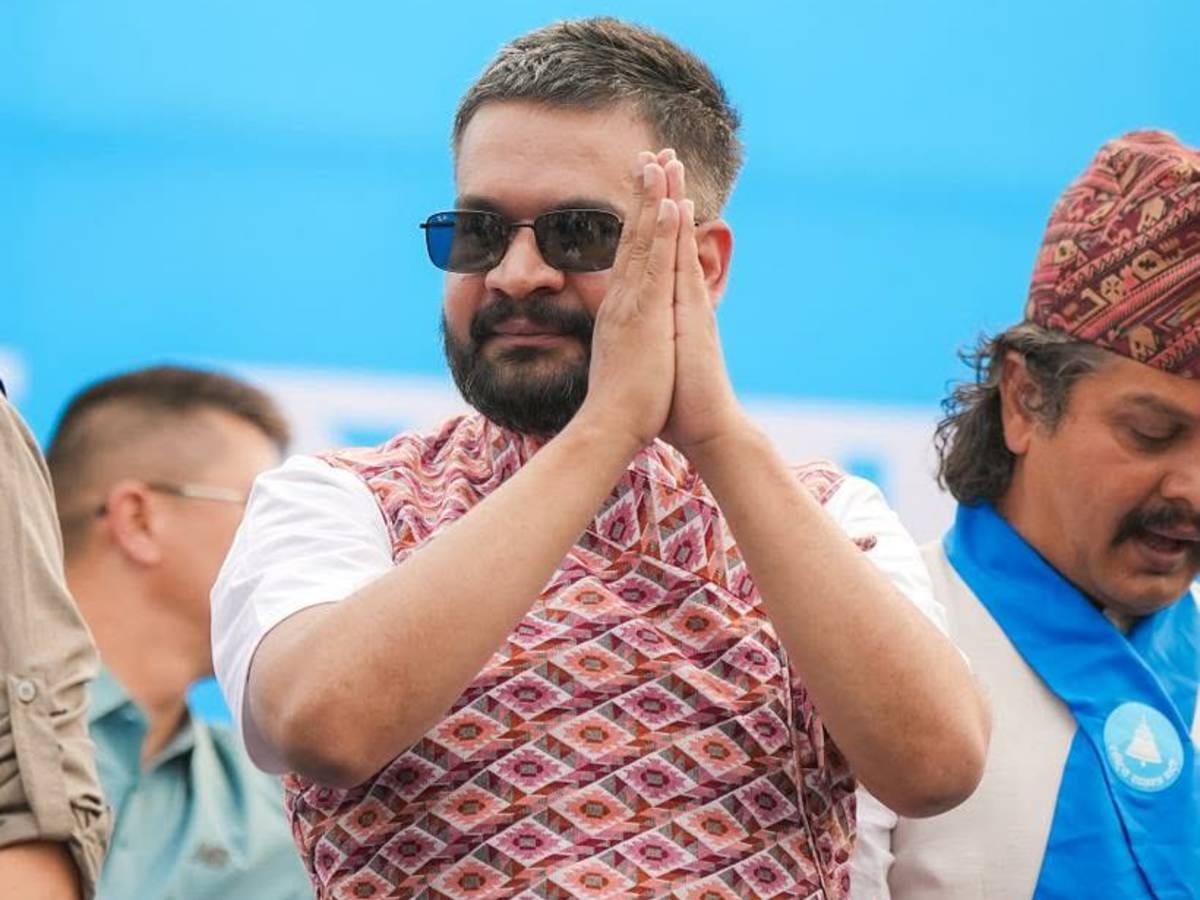
According to Nepal’s foreign ministry, the implementation of the Fixed Boundary Principle along the riverine border has resulted in “cross-border occupation”, a situation where citizens of both nations find themselves cultivating land and establishing settlements within the official territory of the neighbouring country. “The reference to the statement made by the Honourable Prime Minister in Parliament that ‘Indian land may be on Nepal’s side in some places’ is linked to this technical reality and ‘cross-border occupation’,” it said.
Also Read: India-Nepal relations offer limitless potential, says Defence Minister Rajnath Singh
India-Nepal territorial history
The border dispute between the nations dates back to the early 19th century when India was still under British rule and Nepal was a monarchy.
An accord (Treaty of Sugauli) was signed between the East India Company and the Kingdom of Nepal after Nepal’s defeat in the Anglo-Nepalese War (1814-1816), wherein the latter renounced all claims to “countries laying to the west of the River Kali”, but it did not clearly identify the river’s source or provide detailed boundary mapping.
The treaty led to demarcation of Nepal’s international border and the India-Nepal boundary.
But, tensions escalated in the 1950s, when an Indian police post was set up at Kalapani. Subsequently, in 1981, a Joint Technical Level Nepal-India Boundary Committee was established, consisting of Surveyor Generals of the two sides and other officials and advisors.
The first meeting was held in New Delhi wherein the two nations agreed to put boundary markers according to the border map drawn in British India in 1879, and the 17th meeting of the panel resulted in the formation of a Joint Working Group on 26 August, 1994, to examine outstanding issues in the western sector, including the Kalapani area.
By May 2013, almost 98 percent of the India-Nepal boundary was reported to have been clarified, leaving a few issues yet to be covered, like that of Kalapani, and discussions continued over the same.
The Boundary Working Group (BWG) established for the demarcation of external India-Nepal boundaries held its first meeting in Kathmandu in September 2014, and the BWG with an additional joint team in 2017 decided to complete the boundary field works in the next five years.
During Prime Minister Narendra Modi’s visit to China in 2015, an agreement was signed between the two nations to include the Lipulekh Pass as a bilateral trade route.
Nepal objected to the agreement, arguing that the pass lay in territory claimed by Nepal and that Kathmandu had not been consulted.
Tensions further escalated when Defence Minister Rajnath Singh inaugurated an 80-km highway linking Dharchula (in Uttarakhand) to Lipulekh, facilitating the Kailash-Manasarovar Yatra and border area connectivity in May 2020.
The Nepal government soon after expressed regret over the inauguration of what it described as a “link road” connecting to Lipulekh. It stated that the road passed through territory claimed by it.
Backing its position, Nepal argued that under the Treaty of Sugauli, territories lying east of the Kali River—including Limpiyadhura, Kalapani and Lipulekh—belonged to Nepal.
The then Nepal government led by K.P. Sharma Oli issued a revised administrative map incorporating the territories of Limpiyadhura, Kalapani and Lipulekh.
India rejected Nepal’s revised map and termed it a unilateral attempt to enlarge territorial claims without historical basis.
The present
In order to settle the boundary issue, Nepal PM Shah in his maiden speech in Parliament Sunday suggested further discussions with the UK and China to address the long-standing India-Nepal dispute.
India’s Ministry of External Affairs ruled out third-party mediation, stating that existing bilateral mechanisms are sufficient to address the issue. The ministry also highlighted that nearly 98 percent of the India-Nepal boundary is already demarcated.
“While close to 98 percent of the India-Nepal boundary has been demarcated, there are some unresolved segments. The shifting of the course of the Gandak river has resulted in this situation,” MEA spokesperson Randhir Jaiswal said.
He added that both nations are jointly mapping the demarcated boundary segments to address instances of cross-border occupation and encroachment into no-man’s land.
According to Gupta, India and Nepal share a seven-decade relationship defined by a forward-looking approach to resolving differences and a constructive path that India remains committed to pursuing.
“Even if historical records and maps were drawn by the British before India’s independence, issues of the day must be solved amicably and bilaterally,” Gupta asserted. “Making it a global issue helps no one.”
Nishtha Modgil is an alum of ThePrint School of Journalism, currently interning with ThePrint.
(Edited by Nida Fatima Siddiqui)
Also Read: Gen Zs have taken down the Nepal regime. Here’s why this will never happen in India