





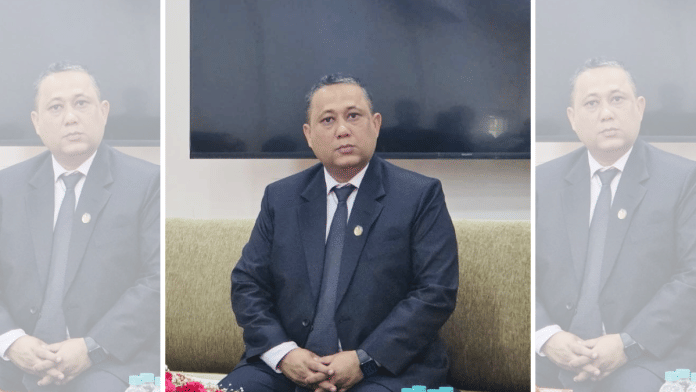


New Delhi: Nepal’s Foreign Minister Shishir Khanal has said that the government does not know whether it still possesses the original copy of the historic 1816 Treaty of Sugauli, one of the most consequential events in the country’s history.
Signed in 1815 and ratified in 1816, the Sugauli treaty led to Nepal surrendering substantial territory to the East India Company. Marking the end of the Anglo-Nepalese War, the treaty became a principal basis for determining Nepal’s boundaries with British India and later, India.
Khanal told Nepal’s House of Representatives that the government had records of documents relating to the treaty but could not confirm whether any of them was the original.
“The Government of Nepal does not have clear information on whether we possess the official treaty documents,” Khanal said Tuesday, adding that some historical treaty documents were believed to be held at the National Archives, but their authenticity had not been established.
Earlier this month, Nepal objected to the resumption of bilateral trade between India and China via the Lipulekh Pass, claiming that it falls under their territory. Nepal asserts that Lipulekh, along with Kalapani and Limpiyadhura, lies east of the Kali River and is, therefore, its territory, as defined by the 1816 treaty.
India maintains that the region has been under its administrative control for decades, and that border trade with China through Lipulekh dates back to 1954.
However, the discussion around the missing treaty and other such documents is not new. In 2016, when the Eminent Persons’ Group on Nepal-India Relations—a joint autonomous group formed that year to review all bilateral agreements—held discussions on reviewing or replacing the 1950 Treaty of Peace and Friendship, Nepal could not locate the original document.
The 1950 treaty established reciprocal rights of residence, property, trade and economic participation for Nepali and Indian citizens.
A parliamentary inquiry into the whereabouts of the original documents, following these events led to the the Delegated Legislation and Governance Committee of the National Assembly claiming that both original copies of the Treaty of Sugauli and the Friendship Treaty could not be found, The Kathmandu Post reported.
In 2019, then Foreign Minister Pradeep Gyawali, however, claimed that his ministry possessed copies of both agreements but could not establish whether they were originals since they could not be forensically verified.
(Edited by Tony Rai)
Also Read: Nepal’s ruling RSP is caught in a power tussle—PM Balen vs party chief Lamichhane