


New Delhi: Ships from India, Iraq, Qatar and China have been exempted by Iran from transit restrictions in the Strait of Hormuz. The aim of this measure is to facilitate the transportation of medicines from India, a senior lawmaker from Iran said.
Amir Hayat-Moghaddam, the deputy chairman of the Iranian Parliament’s national security and foreign policy committee, underlined that ships from these countries can “pass freely” through the strategic waterway, and that the US has not taken any action to stop them so far.
“We have currently exempted India, China, Iraq and Qatar from transit restrictions in the Strait of Hormuz. Ships from these countries pass freely, and the Americans do not intercept them either,” Hayat-Moghaddam explained in an interview to the Iranian Student’s News Agency (SNA) Tuesday.
He added that the measure to exempt ships from these four countries from restrictions in the Strait of Hormuz is also aimed at shoring up “mutual interests”. Tehran is facilitating the movement of Indian ships for the purpose of medicines, while Chinese ships are exempted from the restrictions to “secure” Beijing’s political support, Hayat-Moghaddam told SNA.
The lawmaker underlined that Indian and Chinese ships paid the transit fees to Tehran, while Qatari ships were allowed free passage through the strategic waterway. He did not specify whether Iraqi vessels had to pay any fee. Hayat-Moghaddam’s comments were made in Farsi.
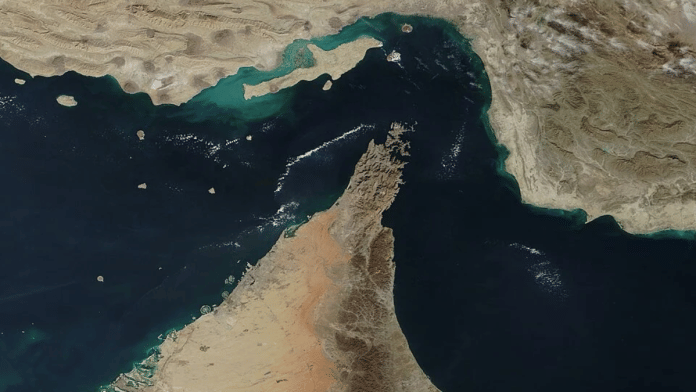
Located between Iran and Oman, the Strait of Hormuz is key to the flow of global energy. India is a major import of crude oil, buying almost 90 percent of its total needs. In the past, a majority of its energy flowed through the Strait of Hormuz. However, in recent years, India has sought to diversify its sources of energy, especially through purchases from Russia, West Africa and the US.
The US’ recent actions in Venezuela, including replacing President Nicolas Maduro, have made the South American country a future source of oil for India. However, around 90 percent of India’s LPG imports transit through the Strait of Hormuz, with Qatar and the United Arab Emirates the main sources for New Delhi’s liquified petroleum gas imports.
Since the US and Israel jointly launched strikes on Iran on 28 February, Tehran has moved quickly to effectively close the Strait of Hormuz. The closure of the Strait has seen global energy prices spiking. The Brent futures benchmark for oil is seeing the commodity priced at roughly $102 a barrel currently, up from around $60 a barrel from earlier this year.
India has consistently pushed Iran to allow the free navigation of merchant vessels through the Strait of Hormuz. At least 15 Indian seafarers have lost their lives in the larger conflict in West Asia, as both Iran and the US have taken aim at vessels transiting through the Strait through the course of this year.
The International Maritime Organisation at the end of September announced that it has verified at least 80 attacks in and around the Strait of Hormuz since the conflict between the US and Iran began earlier this year. At least 22 seafarers have been killed in these attacks, and a number of sailors have been left injured.
Fears remain that the US is likely to restart heavy strikes against Iran, following the completion of the mid-term elections Tuesday. Democratic lawmakers including Senator Chris Murphy have publicly said that they have seen some of the plans for the possible resumption of strikes on Iran. The US in the early hours Tuesday had launched some strikes on Iran’s Qeshm Island.
(Edited by Viny Mishra)
Also read: India pays $22 billion extra as Hormuz crisis triggers $330 billion global fuel hike