





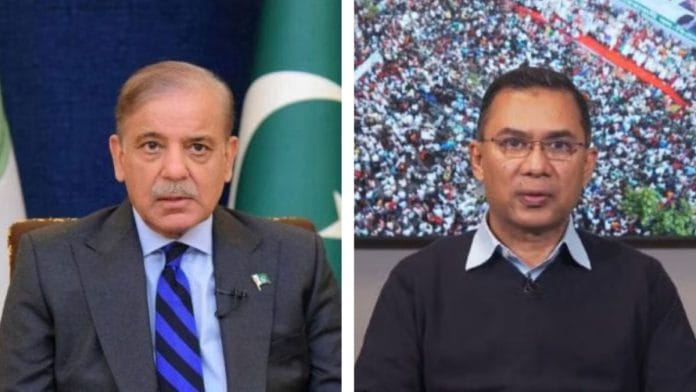


New Delhi: In a small but symbolically significant shift in South Asian diplomacy, Bangladesh has begun sending senior civil servants to Pakistan for mid-career training. The move marks the first structured programme of its kind between the two countries and signals a recalibration of Dhaka’s regional posture after years of close alignment with India.
Twelve Bangladeshi civil servants—an additional secretary and 11 joint secretaries—participated in a training programme at Lahore’s Civil Services Academy from 4 to 21 May, with all expenses covered by Pakistan.
The development comes amid a broader thaw in Dhaka-Islamabad ties, which had remained limited for much of the past two decades. High-level Pakistani visits to Dhaka have resumed, direct flights between Dhaka and Karachi have restarted, and discussions have reportedly taken place on defence cooperation, including Bangladesh’s interest in Pakistan’s JF-17 fighter aircraft, jointly produced with China.
Pinak Ranjan Chakravorty, former Indian ambassador to Bangladesh, told ThePrint that the shift reflects diversification under changing political conditions rather than a structural realignment.
“Bangladesh’s engagement with Pakistan has increased after a period of frozen ties during the Awami League era, partly reflecting a desire to diversify diplomatic options under the previous Yunus-led interim administration. From this perspective, such outreach may be seen as signalling a balancing strategy towards India, even if structural constraints limit how far it can go,” he said.
He added that Bangladesh’s foreign policy has historically involved balancing major partners.
“Bangladesh has, at times, sought to balance its relations with India by engaging more actively with other partners, including Pakistan, particularly after shifts in its domestic political landscape. There are elements within the BNP (Bangladesh Nationalist Party) that have historically been more sympathetic to Pakistan, and past associations with groups like Jamaat-e-Islami contribute to this perception. Pakistan’s primary interest in Bangladesh is to make it anti-India and expand its influence,” he said.
At the same time, Chakravorty cautioned against overinterpreting the training exchange itself.
“India has trained over a thousand Bangladeshi civil servants, and such activities do not necessarily indicate a major strategic realignment between Bangladesh and Pakistan. While there may be episodic engagement, it remains limited in scale and constrained by political, security and economic realities,” he said.
Others familiar with Bangladesh-Pakistan diplomatic exchanges also described such programmes as routine rather than transformative.
Mahfuzur Rahman, former Bangladeshi deputy high commissioner to Pakistan, recalled that similar offers in the past had attracted little interest.
“When I was deputy high commissioner in Islamabad from 2010 to 2012, the Pakistan government regularly offered short orientation programmes for diplomats, usually lasting one or two weeks. However, during my tenure, I did not see much interest from Bangladeshi diplomats in attending them,” he told ThePrint.
“In my two-and-a-half years there, no one from Bangladesh participated in such courses, even though the offer was made regularly by the Pakistan side.”
Rahman added that such exchanges are often viewed in practical rather than political terms.
“Diplomats are often too busy, and such programmes are seen more as a luxury than a necessity because they involve spending time abroad without official work commitments,” he said.
He suggested participation may continue to depend more on administrative preferences than geopolitical alignment.
“Even now, if similar opportunities arise from India or other countries, officials would likely be interested. But this does not necessarily indicate a broader realignment or a major improvement in bilateral ties,” he added.
Until 2024, Bangladesh’s mid-career training for senior officials was conducted at India’s Lal Bahadur Shastri National Academy of Administration (LBSNAA) in Mussoorie under agreements formalised through multiple memorandums beginning in 2014.
Between 2019 and 2024 alone, more than 1,000 Bangladeshi civil servants trained in India under the National Centre for Good Governance (NCGG) programme, part of a broader tally of around 2,500 Bangladeshi officials trained across Indian institutions in recent years.
That arrangement has now stalled. No Bangladeshi civil servant has attended training programmes in India since the political transition in Dhaka in 2024 following the ouster of former prime minister Sheikh Hasina, despite the framework being formally extended in April 2024 through a renewed memorandum of understanding.
The extension, negotiated under India’s Department of Administrative Reforms and Public Grievances (DARPG), reaffirmed cooperation in mid-career training for Bangladeshi civil servants for the 2025–2030 period. It provided for the training of around 1,500 Bangladeshi officials at the NCGG.
According to NCGG data, 1,019 Bangladeshi civil servants participated in its capacity-building programme between 2019 and 2024, focusing on field administration and governance.
Legally, the institutional framework remains intact, but implementation has become uneven as India-Bangladesh ties deteriorated after Hasina’s removal.
In parallel, Dhaka has begun exploring alternative capacity-building avenues, including limited engagement with Pakistan’s Civil Services Academy. The shift reflects a change in execution rather than the formal termination of the India-Bangladesh training arrangement, which continues to exist on paper.
Some analysts see the development as part of a broader diplomatic recalibration by Bangladesh’s post-Hasina leadership, which is attempting to diversify international partnerships and reduce dependence on any single regional power.
Jaideep Mazumdar, former secretary in India’s Ministry of External Affairs, echoed the view that the development should be viewed in proportion.
“There is a wide range of personnel exchange programmes between India and Bangladesh. Beyond LBSNAA, several Indian institutions host Bangladeshi officials in areas such as e-governance, public policy and education. Only a very small number of Bangladeshi bureaucrats have gone to Pakistan for training,” he said.
He described the change as incremental rather than transformational.
“Bangladesh is free to send its officials wherever it chooses, while India continues to maintain a robust training programme. There have been some disruptions in the last year or year-and-a-half in the number of Bangladeshi officials coming to India, though this is expected to stabilise,” he said.
“But this does not represent a major strategic shift. It is more a sign of diversification in bureaucratic training arrangements than a significant change in direction. These developments evolve gradually over time,” he clarified.
Mazumdar added a sharper historical note: “The people of Bangladesh have suffered immeasurably at the hands of Pakistan. If they still feel comfortable sending a few bureaucrats there for training, that is ultimately their decision.”
Bangladeshi geopolitical analyst Asif Bin Ali, however, described the development as a move towards “reducing India’s monopoly over official training, institutional access and regional diplomatic comfort”.
“It is symbolically significant, but not a strategic rupture. Bangladesh is signalling that India will no longer remain the automatic first destination for bureaucratic and diplomatic exposure,” he said.
“The Lahore training programme reflects diversification more than replacement. Bangladesh is not moving away from India’s structural importance, but it is reducing India’s monopoly over official training, institutional access and regional diplomatic comfort,” he added.
(Edited by Viny Mishra)
Also read: India-Bangladesh spar over illegal immigration. New Delhi mum on Dhaka request for consular meeting