




New Delhi: India Saturday rejected the latest award announced by the Court of Arbitration regarding disputes with Pakistan on the Indus Waters Treaty, calling it “null and void.”
“The illegally constituted so-called Court of Arbitration (CoA) has, on 15 May 2026, issued what it termed an award concerning maximum pondage supplemental to the award on issues of general interpretation of the Indus Waters Treaty. India categorically rejects the present so-called award, just as it has firmly rejected all prior pronouncements of the illegally constituted CoA,” Ministry of External Affairs (MEA) spokesperson Randhir Jaiswal said in a statement.
Jaiswal added: “India has never recognised the establishment of this so-called CoA. Any proceeding, award, or decision issued by it is null and void. India’s decision to hold the Indus Waters Treaty in abeyance remains in force.”
India and Pakistan continue to differ on a number of issues regarding the Indus Waters. New Delhi has maintained that the treaty will remain in abeyance until Pakistan stops sponsoring cross-border terrorism. The decision was taken last April, days after 26 people were killed in a terrorist attack in Jammu and Kashmir’s Pahalgam.
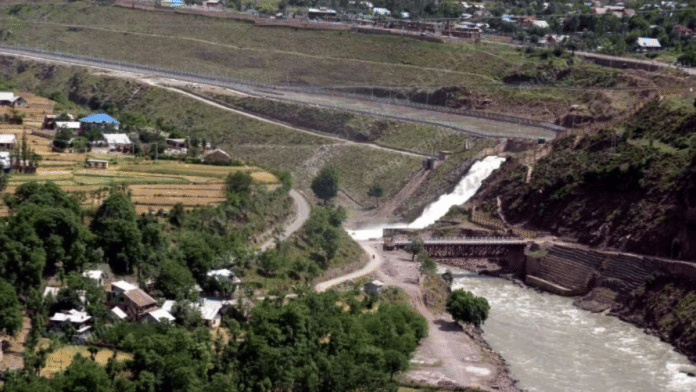
Furthermore, even before the treaty was held in abeyance, India has objected to the constitution of a CoA to resolve disputes over the Indus waters. Pakistan has taken issue with India’s decision to go ahead with two hydroelectric projects–Kishanganga and Ratle–both in Jammu and Kashmir.
The issue first surfaced in 2007 when Islamabad raised six objections to the 330 MW Kishanganga hydroelectric project on the Kishanganga river. Four of the six issues were technical, while two issues were legal. In 2009, Pakistan went to the CoA over the legal questions. The CoA in its award allowed India to divert the waters of the Kishanganga, albeit with strict conditions.
India pushed for a “neutral expert” to solve the differences with Pakistan over these projects. The Indus Waters Treaty, while still in force, allowed for both mechanisms to solve disputes. In 2015, Pakistan agreed to the appointment of a neutral expert, before backtracking. Islamabad continued to push for a resolution through the CoA mechanism, which New Delhi has consistently rejected.
The World Bank, a party to the treaty, started both mechanisms simultaneously. India has not participated in or recognised the proceedings in the CoA. Last year, India had won a victory when Michael Lino, the neutral expert, ruled that he had the competence to deal with the issue at hand.
However, with the treaty being held in abeyance by New Delhi, in effect the dispute resolution mechanisms are also likely to be held in abeyance.
(Edited by Tony Rai)
Also Read: How Pak weaponised Indus Water Treaty, & India’s long overdue reckoning