





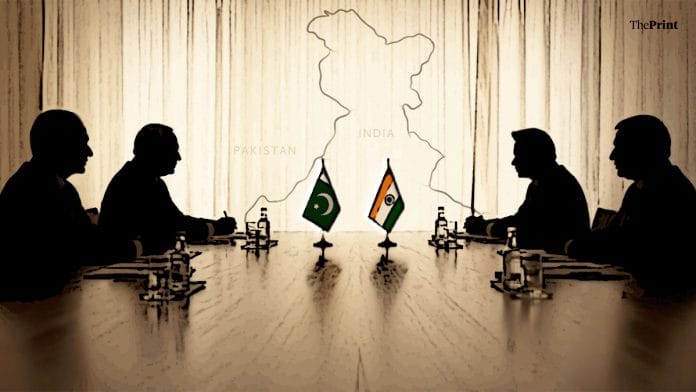


New Delhi: The Track II diplomacy between India and Pakistan has shifted gears post Operation Sindoor, with more structured discussions focused on conflict management rather than dispute resolution, which has been the cornerstone of such dialogues for decades.
At least three rounds of Track II dialogue have been held between delegations from the two sides since May 2025, sources in the know told ThePrint. These include a couple in West Asian nations in the last six months, and an older dialogue format in a capital city to India’s East.
At least two more are scheduled for later this year.
“In recent meetings, it has become clear that from the Pakistani side, the Pakistan Army has taken more formal control over Track II processes, the individuals who attend, and the messages they bring,” a person familiar with the matter and involved in one of the dialogues told ThePrint. “The India-Pakistan Track II network now works entirely within the framework of existing political realities, and is not driven by the objective of conflict resolution, but rather seeks conflict management.”
This was not always the case. More than a dozen dialogue formats have existed for years between New Delhi and Islamabad to maintain informal channels of communication. A few have government sanction, from which both sides receive reports on the negotiations themselves to understand what the other is thinking.
However, since Operation Sindoor, the dialogues have generally focused on conflict management, prevention of escalation, while other pending issues, such as Jammu and Kashmir and the Indus Waters Treaty—both of which have political ramifications—have moved lower on the agenda.
“Given the Pakistan Army’s own control of the Pakistani State, the mechanism also acts both as a sounding board as well as a courier, for New Delhi to be aware of the adversary’s thinking. It is this benefit which Track II meetings bring to the government, which remains aware of them but is not involved in them,” another person, who has been involved in these processes for a little over half a decade, told ThePrint.
The most recent meeting of eminent personalities—diplomats and former military officers included—from both countries was held on 2 February this year for two days in Doha, where a number of subjects were discussed. While the dialogue did have military presence in both delegations, there were more diplomats and other officers.
An earlier Track II dialogue was held in December 2025 in a capital city to India’s East focused on military-to-military relations, where former military officers engaged in discussions to identify reasonable methods to prevent conflict escalation.
Another dialogue was held in Muscat post Operation Sindoor, while a format led by an Ottawa-based think-tank was also held sometime last year.
Previous editions of known Track II systems have focused on larger issues between India and Pakistan, including managing the Line of Control and political matters.
In one of the more recent dialogues held post Operation Sindoor, the fate of the Indus Waters Treaty, for example, received minimal attention, despite both New Delhi and Islamabad publicly sparring over India’s move to hold the treaty in abeyance.
Similarly, all other discussions outside of effective conflict management, while may have been discussed, their priority and intensity have receded since General Asim Munir’s assumption of power over the Pakistani military.
“An institution, formerly involved in India-Pakistan Track II meetings, suggests that Track IIs between India and Pakistan have become strongly context-driven, and play a very specific role in conflict management,” the first person involved in the mechanism explained to ThePrint.
They pointed out that in the past, the Track II mechanism focused more “objectively”, which has changed in recent years. While the change in the formats may impact the larger successes of these dialogues, it allows New Delhi to gain perspective into Islamabad’s thinking as formal diplomatic mechanisms remain in deep freeze.
Findings from some of the dialogues are shared with India’s National Security officials, with delegations briefing senior officials.
(Edited by Mannat Chugh)
Also Read: Pondage, power and Pakistan—India versus ‘Indus’ court at The Hague
Good to read this. Talking to each other regularly to manage the conflict aspect of the relationship.