








Prime Minister Narendra Modi has long had to balance ties with Russia and the US as India sticks to its policy of strategic autonomy. That task has been more challenging this year amid pressure from the Trump administration to stop buying Russian oil.
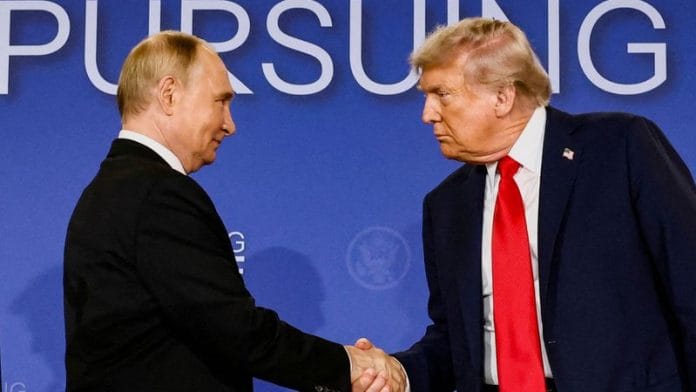
A December state visit to India by Russian President Vladimir Putin comes at a particularly delicate moment. The two countries hope to strengthen what they call a “special and privileged strategic partnership” and could potentially even discuss an arms deal. But new US sanctions are starting to hit Russia’s biggest export to India: crude oil.
At the same time, India is trying to repair its strained relations with the US, seal a trade agreement and secure relief from a bruising 50% tariff on its goods. Should the Trump administration succeed in brokering a peace deal that ends the war in Ukraine and lays a path to international sanctions on Russia being lifted, India could have more diplomatic room to maneuver.
What’s the relationship between India and Russia?
Since gaining independence from the British Empire, India has had a strong and stable relationship with Russia for more than seven decades. India’s External Affairs Minister Subrahmanyam Jaishankar has referred to these ties as the one constant in global politics over the last half century.
During the Cold War, India maintained cordial relations with the Soviet Union as the US moved closer to India’s arch-rival, Pakistan. Despite New Delhi’s avowed non-alignment with either of the era’s two superpowers, US backing of Pakistan in its 1971 civil war — that led to the independence of Bangladesh — drew India closer to Moscow.
India’s ties with Russia strengthened over the following decades as the two countries collaborated in critical areas such as space, nuclear energy and defense. In recent years, Modi has endeavored to preserve this long-standing relationship with Russia while also pursuing deeper links with the US, which India sees as a partner in standing up to a more assertive China.
India has adopted a cautious position on the war in Ukraine. It’s called for a halt to the fighting but has been reluctant to criticize Russia’s invasion and abstained from United Nations votes condemning the war. Putin’s two-day trip to India from Dec. 4-5 — his first visit to the country in almost four years — is an opportunity for him to show that Russia still has meaningful partners outside the West.
How much do Russia and India rely on each other for trade?
India and Russia have been among each other’s top five trading partners since 2022, when India stepped up its purchases of Russian oil.
Overall bilateral trade reached a record-high $68.7 billion in the year to March 31, and the two countries are aiming for this to expand to $100 billion by 2030. India’s exports to Russia totaled $4.9 billion in the last fiscal year and included pharmaceuticals and agricultural products such as rice and tea. This paled in comparison to its imports from Russia, which amounted to $63.8 billion and were primarily oil and petroleum products.
How much oil does India buy from Russia?
India, the world’s third-largest consumer of oil, used to source a negligible amount of crude from Russia. But as Western sanctions forced Russian oil exporters to offer deep discounts to replace the loss of European customers, Russia became India’s top supplier.
The Trump administration has applied pressure on India to stop buying Russian oil, introducing a 25% “secondary tariff” on US imports of Indian goods from late August. Even so, through the first 11 months of this year, more than a third of India’s oil imports were from Russia, according to data from Kpler.
New US sanctions on Rosneft PJSC and Lukoil PJSC – two of Russia’s biggest oil producers — appear to be having more of an impact. India’s crude arrivals from Russia could drop to around 1 million barrels a day in December, according to Sumit Ritolia, lead research analyst for refining and modeling at Kpler. That would be the lowest monthly level in three years.
Some Indian refiners are still scooping up cheap and non-sanctioned Russian barrels, but others are pivoting toward suppliers in the Middle East, including Saudi Arabia and Iraq, whose medium and heavy crude grades are similar to Russia’s Urals export blend. Indian refiners have also resumed imports from Guyana, which last shipped oil to India in 2021.
How much does India depend on Russia for weapons?
Russia has for decades been India’s largest supplier of weapons. The Indian military has more than 200 Russian-made fighter jets, as well as several S-400 surface-to-air missile defense systems that were used during the four-day conflict with Pakistan in May.
India is less reliant on Russia for weapons than it used to be. In recent years it has increased its arms purchases from the US, Israel and France, according to the Stockholm International Peace Research Institute, an independent think tank that studies global weapon sales.
A report from the US Congressional Research Service said that defense trade has become “a major pillar of the US-India security partnership” since 2008. India has contracted at least $24 billion worth of American military hardware, including attack helicopters, anti-ship missiles and howitzer cannons.
Russia and India haven’t signed a major arms deal for a few years, but Modi’s government plans to pitch a new agreement when Putin visits in December, Bloomberg reported. Discussions about procuring Russia’s Su-57 fighter jets and the advanced S-500 missile defense shield are expected.
There’s a risk this could complicate efforts to secure a trade deal with the US, which has pushed back against India’s weapons purchases from Russia. Indian Defence Secretary Rajesh Kumar Singh said in November that India had no intention of ending its long-standing defense cooperation with Russia, and that it would continue to buy military equipment from both Russia and the US.
Reporting by Shruti Srivastava and Rakesh Sharma
Disclaimer: This report is auto generated from the Bloomberg news service. ThePrint holds no responsibility for its content.