



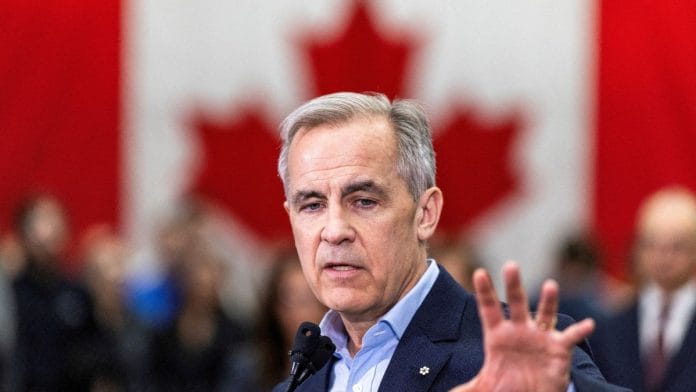
New Delhi: Canada has announced that it is pausing new applications under its Parents and Grandparents Program (PGP) amid a massive scaling back of immigration under the Carney government.
The move will significantly impact Indians, who make up the largest immigrant group in the country.
Immigration, Refugees and Citizenship Canada (IRCC) announced Wednesday that it will pause the intake of new sponsorship applications for parents and grandparents until further notice. Officials said they will instead focus on processing existing applications, planning to approve up to 15,000 people for permanent residence through the program in 2026 and 2027, aligning with the country’s 2026–2028 Immigration Levels Plan.
IRCC said the change is a part of an effort to responsibly manage the system and reduce wait times.
“Interest in the PGP Program continues to exceed the spaces available under the levels plan. “To manage this pressure responsibly, IRCC will not receive new interest to sponsor forms or invite potential sponsors to apply until further notice,” the online statement read.
Parents and grandparents of immigrants can still travel to Canada through the country’s Super Visa program, which allows eligible applicants to stay with their children or grandchildren for up to five years at a time and provides multiple entries over 10 years.
The decision reflects a broader shift in Canadian immigration policy after years of record admissions. Long regarded as one of the world’s most welcoming destinations for immigrants and refugees, Canada has begun tightening its immigration targets in response to growing concerns over housing affordability, strained infrastructure and pressure on public services.
Canada has 8.3 million immigrants; Indians lead the 2026 data for the largest immigrant group, totalling 3.6 million people, followed by the Philippines, China, and Cameroon.
The Trudeau government, which presided over the highest number of immigrants in its history in 2024—reaching a record high of over 483,000 new permanent residents—announced significant reductions to future admissions in late 2024. It later announced significant reductions to future admissions in late 2024.
In 2025, the Canadian government announced massive changes to reduce immigration after a spike in population by 3.2%. This was the fastest annual growth recorded since 1957.
According to Statistics Canada, much of that increase was driven by temporary foreign workers and international students. Without temporary residents, the government has said, population growth would have been roughly one-third as large.
Ottawa has since set a target of reducing the share of non-permanent residents to below 5 percent of Canada’s population by the end of 2027. To achieve that goal, the Carney led government tightened rules governing international students, scaled back temporary worker programs and reduced permanent immigration targets.
The suspension of new parent and grandparent sponsorship applications highlights a broader recalibration, as Ottawa seeks to slow growth while preserving its focus on economic immigration and family reunification.
One of the government’s key objectives is reducing the share of non-permanent residents, including international students and temporary foreign workers, from about 6.8 percent of the population to 5 percent by the end of 2027.
Canada further intends to maintain relatively stable permanent immigration levels. The government expects to admit approximately 395,000 permanent residents in 2025, followed by 380,000 in 2026 and 365,000 in 2027, Guardian reported.
Canada continues to admit permanent residents through four main pathways. Economic immigration accounted for roughly 58 percent of admissions in 2023 and was the biggest category for immigration. Most skilled immigrants enter through Express Entry, a points-based system that favors applicants with strong educational qualifications, work experience, language proficiency and employment prospects.
Family-sponsored immigrants made up about 23 percent of permanent admissions that year, while refugees and protected persons accounted for 16 percent. The remaining admissions fell under humanitarian and other special categories, according to a Council on Foreign Relations report.
Provincial nominee programs have also become an increasingly important route into Canada, allowing provinces to select immigrants who meet local labor market needs before receiving federal approval.
(Edited by Harini Ts)
Also read: Audience at Irish embassy’s music event became the choir themselves
US visa change – maximum affected are Indians!
Canadian visa changes – maximum affected are Indians!!
No wonder everyone hates us! We’re the maximum numbers everywhere! The government is happy that people are leaving the useless, jobless religious hindu country.