



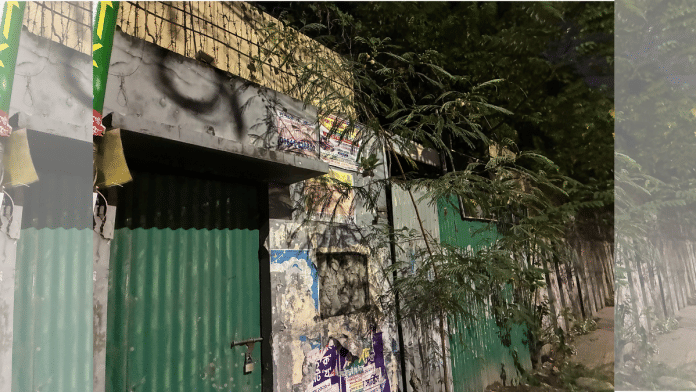
Dhaka: Two years since the Indira Gandhi Cultural Centre in Dhaka was vandalised by mobs, the diplomatic building remains locked, surrounded by under-construction commercial towers in Bangladesh’s Dhanmondi neighbourhood.
The Indian High Commission operated out of Dhanmondi in the 1970s, before moving its premises to Gulshan-2, and more recently to Baridhara. The Indira Gandhi Cultural Centre was built in India’s Dhamondi premises. A second branch of the cultural centre was opened in Gulshan-2 in 2021, repurposing the old India House, as the chancery moved to Baridhara.
Hidden behind steel hoarding panels, with walls in disrepair, there are no visible signs from the road of the existence of the building, which once held a library of some 30,000 books. One has to look to the remnants of the building through the construction site of the adjacent building.
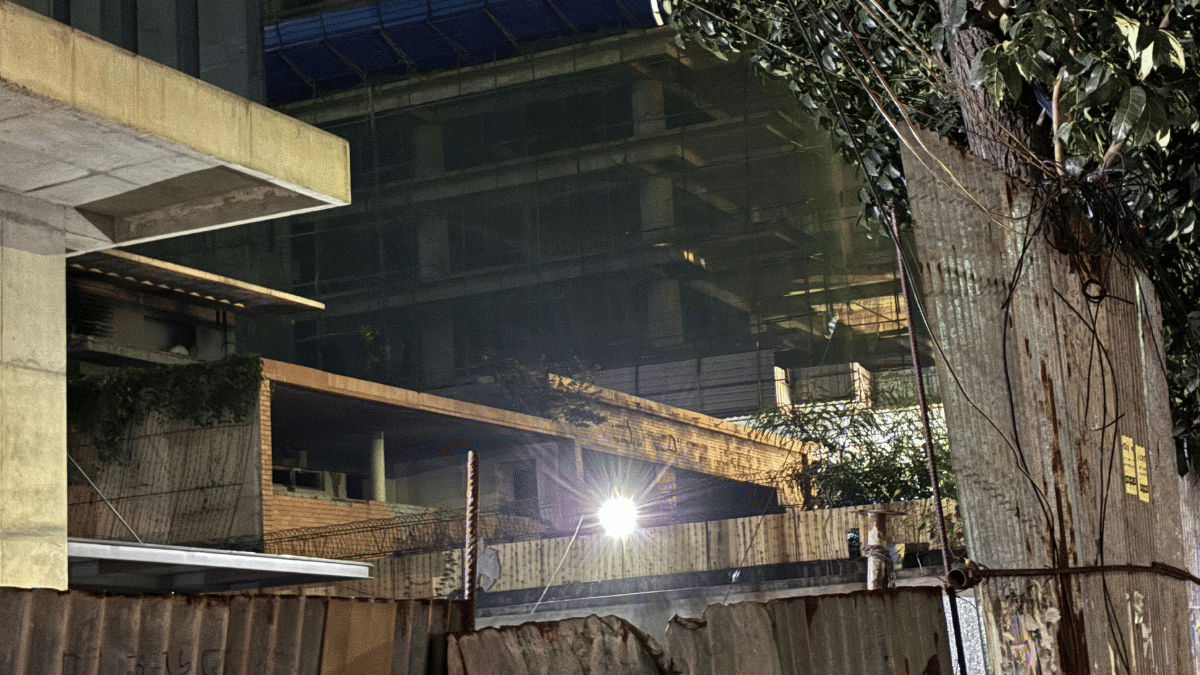
All that remains of property is a warning sign hung by the Government of Bangladesh on the steel hoarding panels, warning trespassers of prosecution. A lone tea-shop on the pavement in the front of the building remains open, while several passers-by when asked about the building, maintained that it was closed during the “Monsoon Revolution” and moved elsewhere.
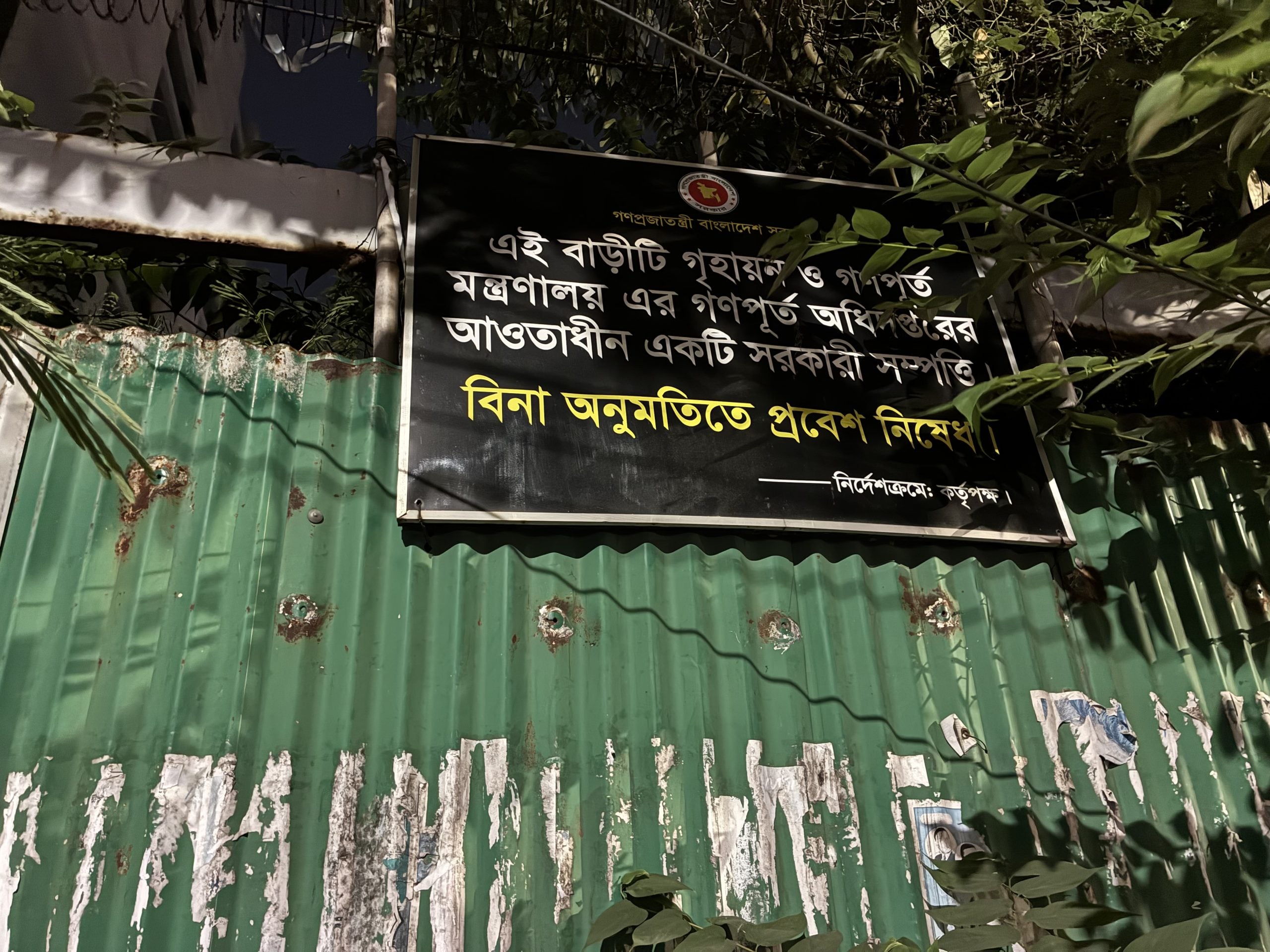
India has formally raised the issue with the previous Bangladeshi interim government repeatedly, to no avail. No acknowledgement, or an apology for the damage to a diplomatic building has been forthcoming so far from Dhaka.
Its future remains under a cloud, as India has continued its cultural activities from its old High Commission premises in Gulshan-2, despite the issues the centre has faced in a building not designed to host cultural programmes.
Sources confirmed that the issue has not been taken up with the current Tarique Rahman-led government, and there is no clarity on the future of the Indira Gandhi Cultural Centre in Dhanmondi.
Formally established in 2010, the Indira Gandhi Cultural Centre functioned out of the neighbourhood of Dhanmondi. On 5 August 2024, a mob attacked the centre, forcing the remaining staff to escape via the back door, while the premises were set ablaze. Traditional musical instruments, and the library in the centre were entirely lost.
The Gulshan-2 premises remain open, with the centre formally moving its entire operations to the premises in September 2024. However, the loss of the centre in Dhanmondi is keenly felt. The building was close to a number of other international cultural centres; the Alliance Française, Goethe-Institut and the Russian Cultural House are located in the neighbourhood.
In the 1970s, Dhanmondi was home to a number of diplomatic missions, as it remained a centre for culture in Dhaka. Sheikh Mujibur Rahman’s home was located at Dhanmondi 32, which was also damaged by mobs in the last couple of years. India’s own diplomatic missions in East Pakistan and the early days of Bangladesh’s independence were located in the neighbourhood.
In the years since, most diplomatic missions moved to Gulshan, and more recently to Baridhara, while the cultural centres continued to operate in Dhanmondi, given its more central location within Dhaka.
Impact of loss of Dhanmondi premises
The Indian centre offered classes in yoga, traditional music and held film screenings and exhibitions throughout the 14 years it operated in Dhanmondi. It developed as a centre for Indian cultural diplomacy, allowing greater access to residents of Dhaka.
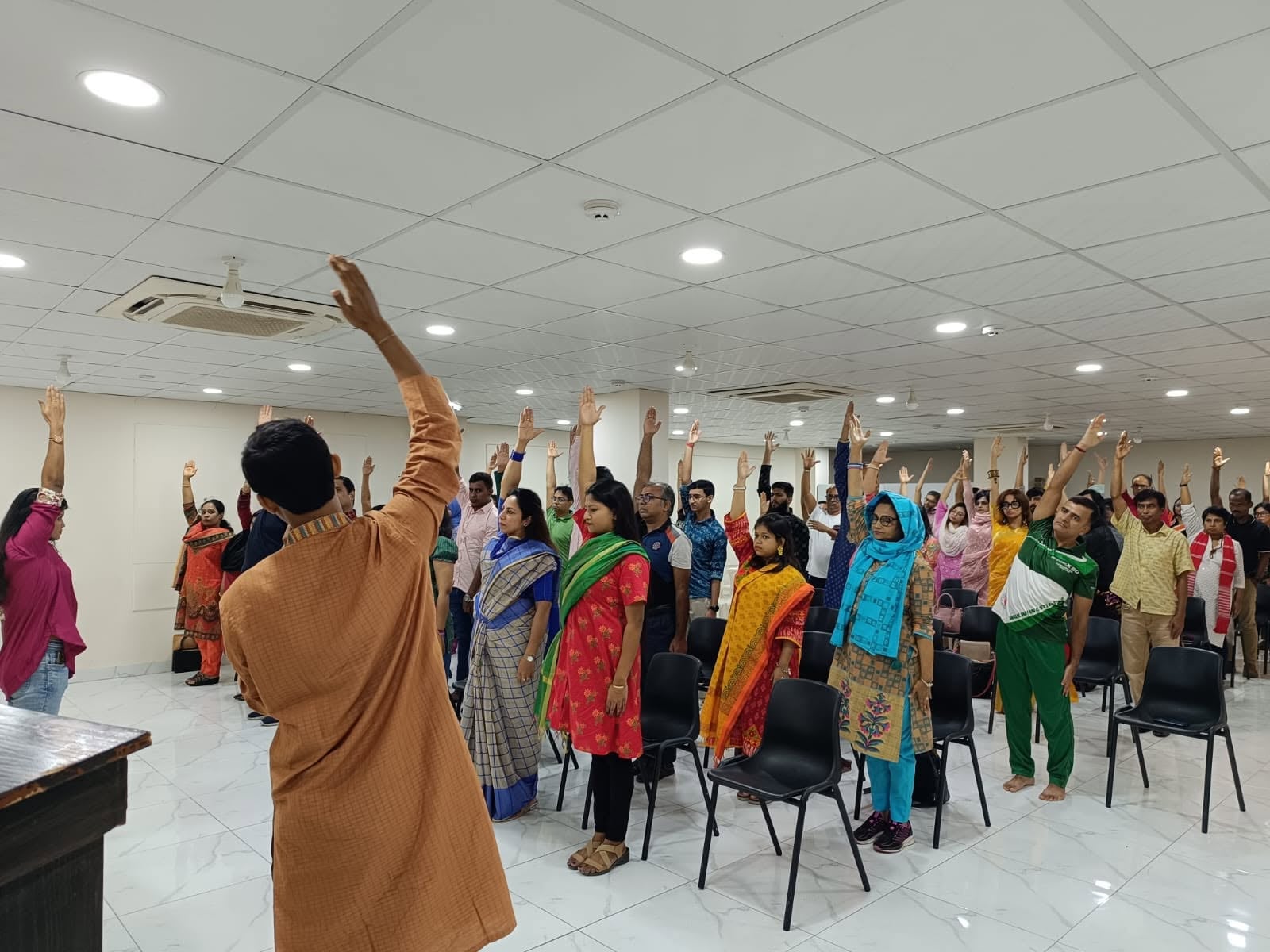
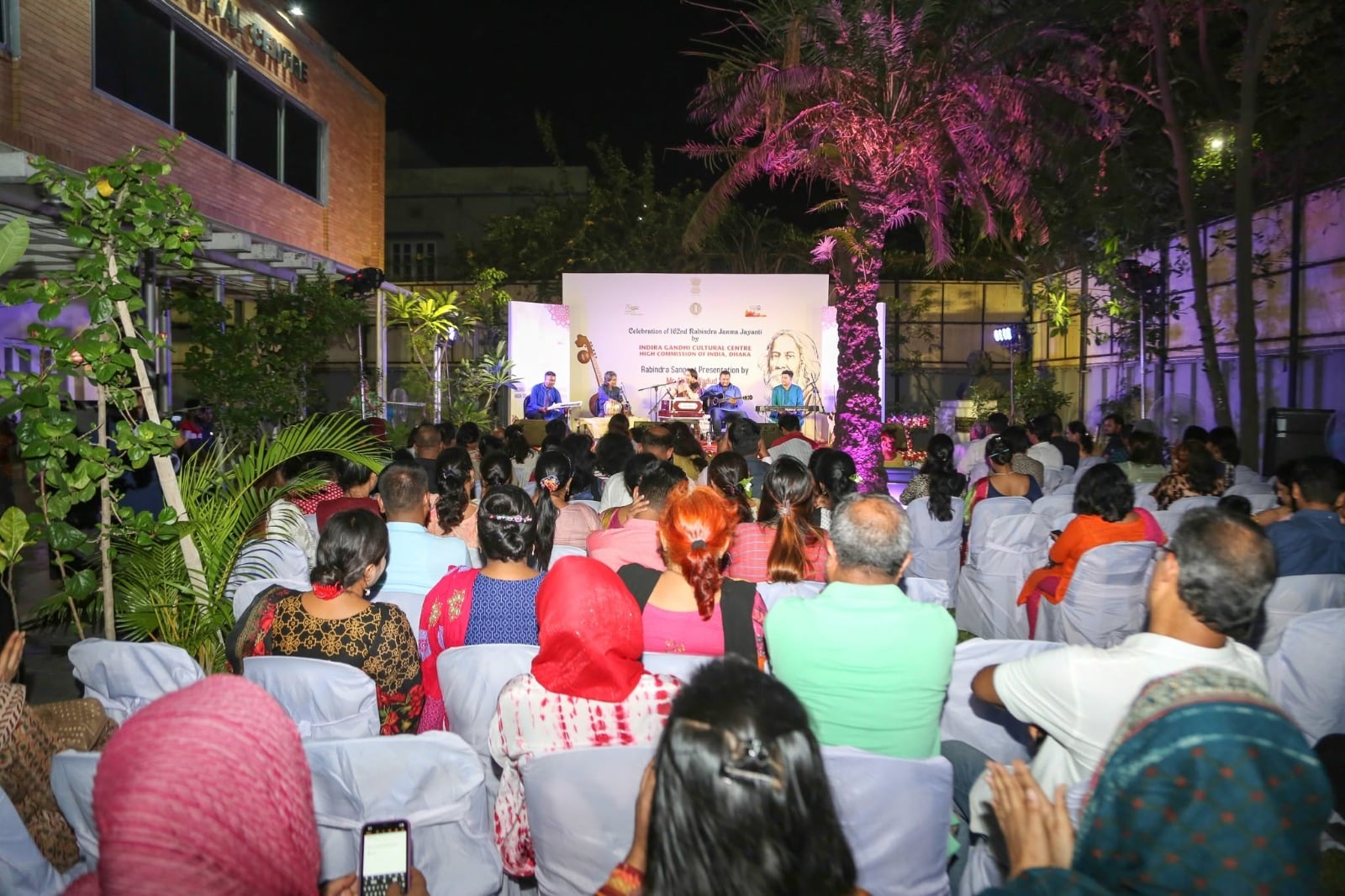
The newer location has seen interest slowly decline, given its distance. The cultural centre had in the past a permanent director appointed from the ICCR (Indian Council for Cultural Relations). However, since the attack on the premises, and the subsequent changes to India-Bangladesh ties, the current efforts are led by an Indian diplomat.
Ties between India and Bangladesh cratered following the ouster of former Prime Minister Sheikh Hasina from power on 5 August 2024. Hasina fled Dhaka for New Delhi, and remained in the Indian capital. The ouster was a result of the “July uprising” or the “Monsoon revolution” in Bangladesh, depending on whom one speaks to, led primarily by students.
The relationship has barely recovered, with Dhaka irritated by Hasina’s continued press statements and activities from India. Humaiun Kobir, the Minister of State for Foreign Affairs had Monday highlighted that Dhaka would never let a terrorist wanted by India use Bangladeshi soil for anti-India activities, and expected the same from New Delhi.
The anger on the streets in July-August 2024 extended against India, given the perception of the close ties between New Delhi and Hasina. It was at the end of August 2024 that India for the first time formally raised the issue of mob violence against its Dhanmondi centre with the interim government led by Chief Adviser Muhammad Yunus.
However, India received no formal apology or even an acknowledgement of the damage done to the property. It had been raised a few times during the last two years, with no answer. Ever since Tarique Rahman won the elections in February and assumed power as Prime Minister, the two governments have looked at steps to stabilise ties.
From engagement at various levels, to renewed hope for a visit by Rahman to New Delhi, the question surrounding the cultural centre in Dhanmondi has seemingly vanished from the conversation.
The fate of the premises remains one more issue on a long list of challenges facing the ties between New Delhi and Dhaka. The future of the building remains another conversation that is stuck, as are various other pending issues as the two governments continue to find the acceptable political space for taking forward the relationship.
(Edited by Viny Mishra)
Also read: ‘This struggle is not yours alone’: Bangladesh uprising student leaders back Delhi protesters