








New Delhi: In February this year, 28 defence journalists from as many countries arrived in India, many visiting the subcontinent for the first time. Over the next several days, they were given rare access to military exercises conducted by the Army, Navy and Air Force along with visits to state-run defence companies and Indian start-ups in the drone and small arms space.
The highlight of the visit, which included journalists from Israel, Armenia, Argentina, Egypt, Italy, Japan, Malaysia, Philippines among others, was briefings and interactions with the Directors General of Military Operations, Naval Operations and Air Operations, a level of access that domestic defence journalists seldom get.
The outcome—visiting journalists returned and reported first-hand accounts of India’s growing capabilities in defence and security, giving the country a rare, coordinated push in international media narratives. Sources said that an Armenian journalist went back and wrote about seeing Pinaka firing live. Armenia was the first international customer of the Indian system, so this was a major opportunity for the journalist, to be the only Armenian outside their military and government to see the multi-barrel rocket launcher in action.
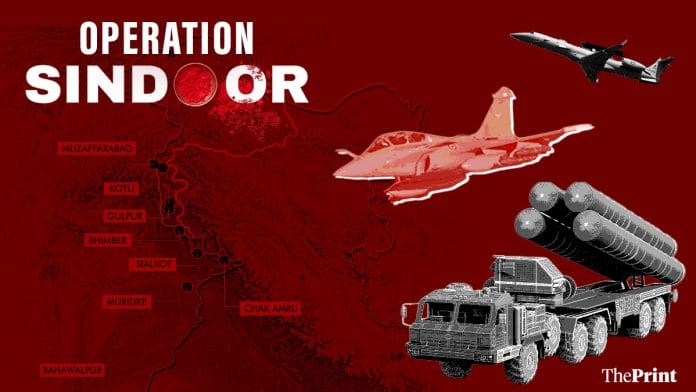
The initiative, unprecedented in scale and openness, is part of a broader shift in India’s foreign media engagement following Operation Sindoor. It is learnt that more such curated visits are in the pipeline. The planners and initiators of this radical idea were the Ministry of External Affairs, particularly its External Publicity Division, and spokespersons from the three arms of the military.
“There was an information vacuum when it came to foreign media,” one source said, adding that “Op Sindoor exposed how effectively Pakistan has shaped global narratives over the years through sustained engagement across multiple levels, not just the media”.
The brief three-day conflict between India and Pakistan, the source added, underscored the growing importance of information warfare as a critical domain alongside conventional military operations.
The shift has not come without internal hesitation, however. Most of the defence and security establishment has traditionally been wary of engaging with foreign journalists or granting them access to locations, even those not regarded as sensitive. These concerns are now being reassessed in light of evolving strategic communication needs.
At the government level too, there is an increased understanding that foreign media cannot be seen as an enemy and that it is important to engage with them, both in India and abroad. Sources said there was an issue with giving access to foreigners, let alone Indian journalists, even to locations where positive infrastructure development has taken place.
Also Read: IFS vs IIS officers. Who can do a better job with ‘Brand India’ in embassies?
MEA steps up
Last year, following Op Sindoor, the Ministry of External Affairs (MEA) along with other agencies accepted a request from The Economist’s Defence Editor Shashank Joshi to visit the northern front with focus on infrastructure development along the borders with China. He was given unprecedented access and the visit was facilitated by the Army without any curation or the usual ‘cut to the last line’ media bytes.
Sources said more trips are being planned for specialised journalists operating out of India and foreign correspondents posted in India. It is learnt that the concerned departments, including the MEA, have been told to have set protocols in place for foreign journalists to seek access and information, and to take the initiative. “There is an increasing understanding that one has to open up to foreign journalists and cannot keep them at arm’s length and also expect them to understand the Indian point of view at the same time,” a source said.
During Op Sindoor, the MEA remained active; ambassadors posted in major countries interacted with local media and gave TV interviews to highlight the Indian narrative. However, the Delhi-driven narrative failed to cut ice beyond what the ambassadors spoke because fact-checking or counter-narrative development was not happening at real-time speeds.
The government has now imparted thrust to a multi-agency information warfare group through which several programmes are planned and executed. The MEA has since then fully activated their fact-check handle which has gathered momentum and is now regularly seen as faster and credible than similar government initiatives. Over the past three years, the MEA has brought in journalists and influencers from 143 countries with increasing intensity.
Interestingly, the Ministry of Information and Broadcasting has sent a proposal to deploy not just its officers at embassies abroad but also take over the media and information wings there, a move that has surprised many within diplomatic circles.
Sources pointed that there is a reason why diplomats are posted as spokespersons by all countries at the missions abroad. Incidentally, many of the Indian diplomats in charge of the media and information wing are those with local language skills. For example, in Iran, Japan, China, Moscow among others, officers posted are fluent in the local language.
“The media wing at any Embassy is not just a spokesperson but acts as the eyes and ears of the ambassador. There is a reason why all spokespersons of foreign embassies in India are diplomats and media wing is headed by career diplomats,” sources said.
Incidentally, the I&B Ministry proposals talk about giving ads in foreign dailies, mentioning The New York Times by name even though it has a position on not taking foreign government ads or those with images of foreign leaders. The proposal also talks about entering into partnerships with media houses like the BBC and Al Jazeera.
Interestingly, the proposal states that the Information Service officers posted abroad will work closely with the MEA and the Ministry of Overseas Indian Affairs, a ministry that was shut down in 2016. Sources said that building Brand India is what every diplomat does, and that this brand building cannot be seen through the prism of giving ads, if at all.
“The job of every ambassador and every diplomat of India or other countries is to put their countries’ perspective forefront. These include not just what the government is doing locally but also the country’s stand on international issues, including trade negotiations,” a source explained. The proposal is currently under discussion between the two ministries concerned and it has undergone multiple iterations, he added.
(Edited by Nardeep Singh Dahiya)