



New Delhi: With over 100 aircraft serving the IAF, the Antonov AN-32 forms the core of India’s military transport fleet.
A Soviet-era twin-engine turboprop military transport aircraft, it made its maiden flight on 9 July, 1976 and was inducted into the IAF in 1984.
While it is the backbone of the military transport, the fleet has seen several crashes and accidents over the decades.
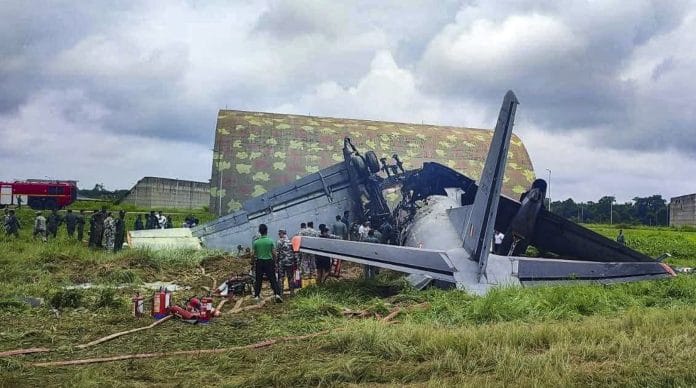
The recent crash of the IAF AN-32 at Jorhat airport has brought renewed attention on the service history of this old and rugged aircraft.
Here is a list of major incidents involving it, recorded both nationally and internationally.
13 June, 2026
An IAF AN-32, registration number KA2678, crashed in Assam’s Jorhat Air Force Station during a routine sortie while landing. It took the lives of 5 personnel— Squadron Leader Prashant Singh, Flight Lieutenant Shubham Kumar, Sergeant Jitendra Sharma, Agniveervayu Danish Alam and Agniveervayu Khemaram Kumawat.
The IAF has set a court of inquiry to determine the causes behind the tragedy.
Also Read: Airbus & Embraer in the mix, IAF plans revamp of military transport fleet with MTA as new workhorse
7 March, 2025
Another AN-32 crashed at Bagdogra airport in West Bengal during landing phase barely 10 km from the airport.
There were no casualties, making it a rather rare exception in the typical trend of serious AN-32 crashes that result in loss of life.
3 June, 2019
Within half an hour of takeoff from Jorhat airport, all contact was lost with an AN-32, registration number K2752, carrying 13 people to Arunachal Pradesh’s Mechuka airport.
An extensive joint search operation by the Indian Air Force and the Indian Army followed, assisted by the ISRO in the use of satellite imagery. The wreckage was finally spotted about a week later, on 11 June 2019, by an IAF Mi-17 helicopter. The accident claimed the lives of all 8 crew and 5 passengers.
22 July, 2016
An Antonov aircraft, registration number K-2743, abruptly went missing along with its crew of 29 members as it flew over the Bay of Bengal. It was en route from the Tambaram Air Force station in Chennai to Port Blair in Andaman and Nicobar Islands.
As part of search efforts, the National Institute of Ocean Technology deployed an Autonomous Underwater Vehicle (AUV) which had advanced SONAR sensors and high-resolution photography.
It was only in January 2024 that the AUV succeeded in identifying the debris of the crashed aircraft on the seabed approximately 310 km from the Chennai coast.
20 September, 2014
Adding to the series of crashes during landing, an IAF AN-32, registration number K2757, hit its right wing on the ground while landing at Chandigarh. As the aircraft rolled over and became inverted, both of its wings were severed and the number one propeller broke away from the engine.
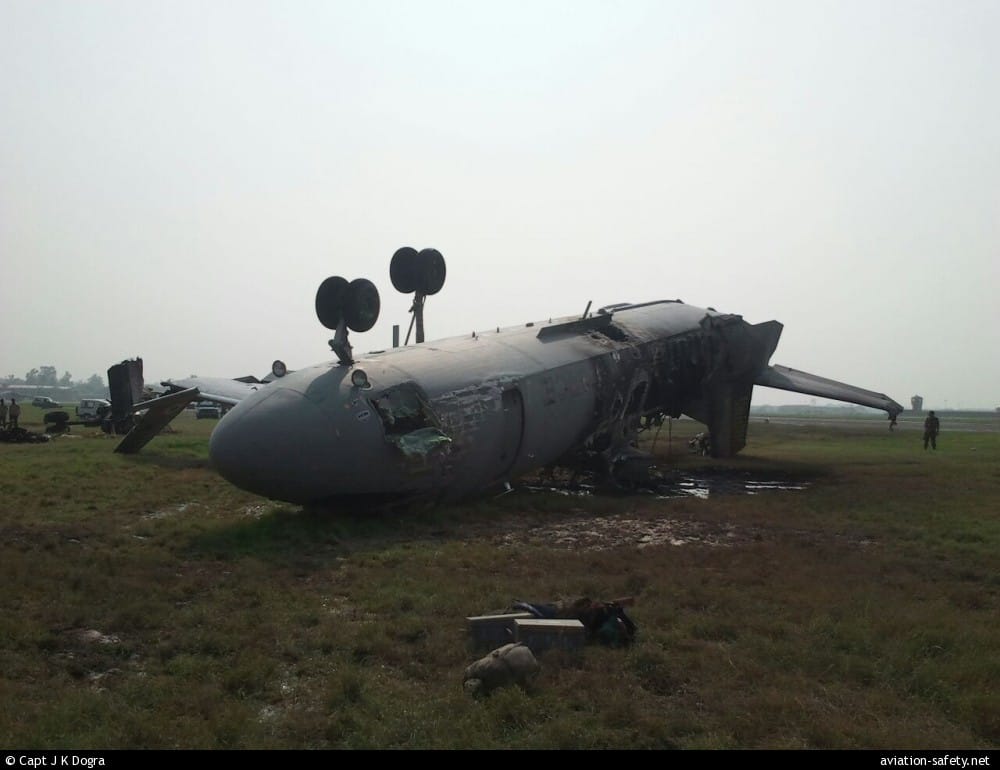
Though all 9 passengers aboard the plane survived with minor injuries, the aircraft was damaged beyond repair.
8 June, 2009
Soon after taking off from Arunachal Pradesh’s Mechuka Advanced Landing Ground, an Antonov aircraft, registration number K3062, crashed in a mountainous area near Rinchi village.
The wreckage was found after two days in the mountainous area near Rinchi hill with none of the 13 personnel surviving the crash.
23 February, 2000
An IAF An-32, registration number K2690, crashed while approaching Bengaluru’s Hindustan airport. It went down in the state’s Vijayanagar district while on scheduled flight, about 13 km short of the runway threshold.
Though the crash was serious, there were no casualties.
7 March, 1999
An IAF AN-32, registration number K2673, crashed in New Delhi’s Pappankalan district during the final phase of landing barely 1.5 miles from the runway of Indira Gandhi International Airport.
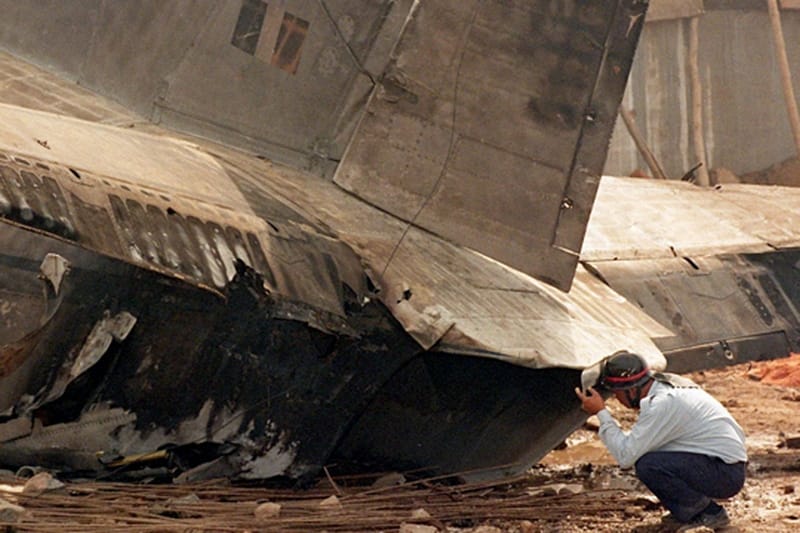
Caused by poor visibility due to fog, the aircraft struck, successively, a concrete water tank and power cables before crashing.
18 personnel on board and 3 people on the ground were killed as the crash also destroyed a building in the suburb.
1 April, 1992
During a flight formation exercise in Punjab, two AN-32s collided with each other mid-air. As a formation of 9 planes took off, the third aircraft mistook the first to be the second. In a bid to cover up the distance, the pilot tried to fly into what he thought was his position, colliding with the aircraft right above.
One of the aircrafts broke up and crashed while the other lost control and veered into a field nearby.
With each aircraft carrying a crew of 4 personnel each, the accident resulted in a death toll of 8.
15 July, 1990
En route from Tambaram air force station to Thiruvananthapuram airport in Kerala, an AN-32, registration number K2705, aircraft lost altitude during descent and hit the tree canopy. It resulted in a fatal crash near Ponmudi mountain, about 37 km from the Thiruvananthapuram airport, where all 5 crew on board lost their lives.
4 October, 1988
In Uttar Pradesh, an AN-32 aircraft encountered heavy cumulonimbus clouds, causing its control surfaces to freeze. Subsequently, all control of the plane was lost and it crashed near Shivrajpur. All 10 passengers aboard were killed in the accident.
25 March, 1986
On a ferry flight from the former Soviet Union to India via Muscat-Seeb airport in Oman, an AN-32, registration number K2729, disappeared while flying over the Arabian Sea.
The plane was last contacted 1 hour and 18 minutes after takeoff. It had 7 people on board.
22 March, 1986
An IAF AN-32, registration number K2702, crashed near Kishtwar in Jammu while on a resupply flight from Punjab’s Pathankot air base. The aircraft crashed in the mountain slope during landing. All 17 personnel on board—3 crew and 14 passengers, lost their lives.
(Edited by Niyati Kothiyal)
Also read: Yet another AN-32 crash. Replacement of aging fleet planned since mid-2000s could see movement soon