


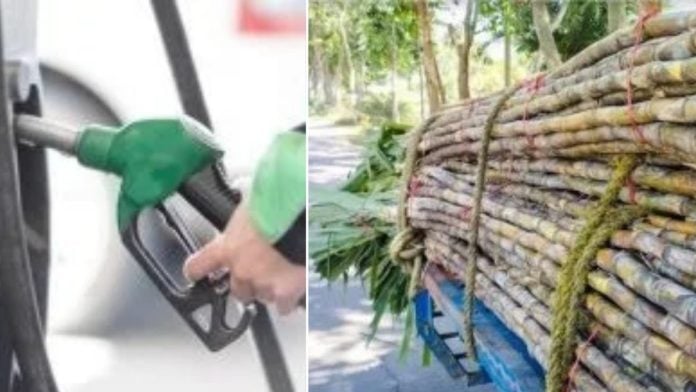
India’s ethanol-blending initiative began in 2001 with pilot projects, followed by the formal launch of the Ethanol Blended Petrol (EBP) Programme in January 2003, initially targeting 5 percent blending in nine states and four Union Territories. In September 2006, the programme was expanded to 20 states and four Union Territories. However, implementation remained limited, with average ethanol blending ranging between 0.1-1.5 percent until 2013-14.
In January 2013, the UPA government notified a policy framework mandating 5 percent ethanol blending in petrol across the country. The NDA government subsequently introduced the revised National Policy on Biofuels in May 2018, replacing the earlier 2009 policy and setting a target of 20 percent ethanol blending by 2030. In May 2022, the government amended the policy to advance the deadline for achieving the target by 2025-26.
The government claims that ethanol blending has resulted in foreign exchange savings of Rs 1.97 lakh crore. It also says that approximately Rs 1.6 lakh crore has been transferred to farmers for producing ethanol feedstock, while greenhouse gas emissions have been reduced by around 27 lakh metric tonnes. Although ethanol blending leads to a 3–5 percent reduction in vehicle fuel efficiency, the Society of Indian Automobile Manufacturers (SIAM) maintains that the programme has not caused any major issues for vehicles.
Distillers Dried Grain with Solubles (DDGS), a by-product of ethanol production, contains 27–32 percent protein and is priced 10–15 percent lower than soybean meal. DDGS accounts for 30–40 percent of the protein market. India is expected to produce 2.45 million metric tonnes of DDGS in 2025-26.
On the other hand, sugarcane and rice together account for 70 percent of irrigation water used in agriculture. Producing one litre of ethanol using first-generation (1G) technology requires around 2,860 litres of water. The figure rises to 10,790 litres when ethanol is produced from rice. Ethanol mills also generate large volumes of wastewater (vinasse), which can pollute surface water and groundwater.
According to NITI Aayog’s Composite Water Management Index, 21 major cities, including Delhi, Bengaluru and Chennai, could run out of groundwater by 2030. Around 40 percent of India’s population may also lack access to drinking water. The country accounts for almost 18 percent of the world’s population but has only 4 percent of its freshwater resources.
Maharashtra has the largest concentration of ethanol plants, with a combined capacity of around 396 crore litres. Meanwhile, farmers in the state’s Vidarbha and Marathwada regions continue to struggle with water shortages, including access to drinking water. Sugarcane is cultivated extensively in states such as Maharashtra and Uttar Pradesh, where groundwater stress is already severe, raising further concerns about the sustainability of ethanol production.
Sugar stocks have also fallen to a nine-year low, prompting the government to allow imports of 10 lakh metric tonnes of sugar at zero customs duty until 31 October 2026.
India imports 85 percent of its crude oil, which accounts for around 25–27 percent of its total import bill in a financial year. In FY2024-25, India ranked third globally among crude oil importers, importing around 232 million tonnes. Analysts say that ethanol production reduces total crude oil imports by only 3 percent. Petrol accounts for 15–16 percent of total crude oil consumption, while diesel accounts for around 40 percent.
If ethanol production reduces overall crude oil imports by only 3 percent, it is worth examining whether the programme is contributing to higher imports of other agricultural commodities. Maize imports have increased in 2025-26, while imports of oilseeds, which account for 56 percent of total imports, have also risen. Pulse imports have increased since FY2021-22, while cotton imports have also grown.
India has also shifted from being a net exporter of maize to a net importer in recent years. In 2024, it was the world’s fifth-largest maize producer, with an output of 40.23 million metric tonnes, accounting for around 3.30 percent of global production. India exported maize worth $374.70 million. However, around 439.09 lakh metric tonnes of maize were diverted towards ethanol production. Nearly 60 percent of domestic maize consumption is used by the poultry industry, and the diversion of supplies towards ethanol production has contributed to concerns about rising feed costs and higher prices of poultry products, including eggs.
Maize production in 65 districts declined by 10 percent due to El Niño-related effects. Between 2022-23 and 2025-26, the area under maize cultivation increased from 10.74 million hectares to 14.41 million hectares, accounting for around 8.77 percent of India’s total agricultural land. Maize has displaced traditional rain-fed crops, including millets and certain oilseeds and pulses such as soybean and ragi. In Karnataka, maize cultivation has replaced crops such as ragi, sorghum, groundnut and other millets. In central India, particularly Madhya Pradesh, it has displaced soybean cultivation.
Despite India’s position at 102 out of 123 countries in the Global Hunger Index, government policies continue to promote water-intensive crops such as sugarcane, rice and maize over less water-intensive alternatives.
In comparison, around 80 percent of Brazil’s ethanol is produced from sugarcane. Despite being the world’s largest sugarcane producer, Brazil took decades to achieve its current ethanol-blending levels, with blending reaching around 27 percent. The country also benefits from substantial rainfall, particularly in the Amazon basin, which contains the world’s largest tropical rainforest. India, by contrast, faces the risk of drought in several regions due to El Niño conditions in 2026. India also imported $403 million worth of ethanol from the US in FY2026. Meanwhile, the US mandates E10 blending and permits E15 for newer vehicles, despite being the world’s largest oil producer.
By 2047-48, India’s annual pulse requirement is projected to reach 49–57 million tonnes, compared with current production of around 47 million tonnes. The country will also need 31–33 million tonnes of edible oil annually. India already imports around 56 percent of its edible oil requirements, equivalent to approximately 16 million metric tonnes. Fallow land in eastern India, which could potentially be allocated to oilseed cultivation, is increasingly being used for maize.
Agriculture accounts for around 85 percent of India’s freshwater consumption. However, productivity remains relatively low. While the US produces around 11 tonnes of maize per hectare, India’s average yield is only around 3.5 tonnes per hectare.
Harsh Yadav is a student of Central Hindu Boys School, Varanasi. Views are personal.