



PNN
New Delhi [India], October 27: With the visionary goal of transforming India into a fully developed nation by 2047, Hon’ble Prime Minister Narendra Modi’s Viksit Bharat mission stands tall on multiple pillars of growth. The prestigious Outlook report, “Pillars of Viksit Bharat 2026”, honours a select group of changemakers whose work is actively shaping India’s journey towards becoming a developed nation by 2047 under the Viksit Bharat vision of Hon’ble Prime Minister.
Education and healthcare are critical pillars of India’s development. The journey towards Viksit Bharat 2047 depends on institutions that combine academic excellence, professional orientation, industry-specific learning, and inclusive growth. The healthcare sector too is transforming across geographies by advancing clinical excellence while ensuring accessible, affordable and world-class healthcare.
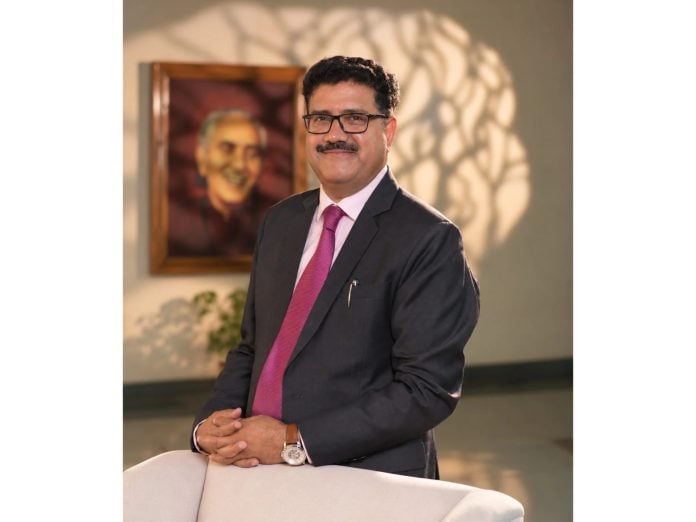
The Outlook recognition highlights Dr. Vijay Dhasmana, President of Swami Rama Himalayan University, for advancing an integrated model of education, healthcare and community development, expanding opportunities for young people and underserved communities across Uttarakhand. Dr Dhasmana holds a Ph.D. from Rohilkhand University and master’s degrees in Mathematics and Computer Sciences from the University of London. A former Vice Chancellor of SRHU and HIHT University, he has served as Chairman of CII Uttarakhand. His honours include the Dr B.C. Roy Award and Uttarakhand Ratna.
“As India moves through a period of extraordinary technological, economic and social transformation, higher education must evolve. Our responsibility is to ensure that students are prepared for this change—confident, capable and compassionate,” says Dr. Dhasmana.
For him, progress is about embracing knowledge and innovation without losing sight of integrity, empathy and service. This philosophy has shaped his association with the Himalayan Institute Hospital Trust (HIHT) and its institutions for more than three decades.
Guided by Swami Rama’s ideals, Swami Rama Himalayan University (SRHU) advances a model in which education and healthcare serve as instruments of social transformation. Its guiding principle is simple: institutional excellence matters most when it improves lives and creates opportunities for underserved communities.
At SRHU, education extends beyond academic qualifications to developing professionals equipped to navigate complex challenges and serve society. Its multidisciplinary ecosystem spans Medical and Allied Sciences, Nursing, Pharmaceutical Sciences, Biosciences, Yoga Sciences, Science and Technology, and Management. Through academic programmes, research and collaborative learning, the university prepares students for responsible leadership and lifelong learning. Real-world engagement and interdisciplinary thinking complement classroom instruction.
“A degree may open a door, but it is values, character and the ability to serve that determine how one walks through it,” Dr. Dhasmana observes.
As artificial intelligence and digital technologies reshape the workplace, SRHU emphasises the need to equip students with relevant skills while keeping human advancement at the centre of innovation.
Building on the legacy of Himalayan Hospital and the Himalayan Institute of Medical Sciences, the university brings healthcare, medical education and community engagement into a complementary institutional framework.
A longstanding concern for Dr. Dhasmana has been the migration of young people from Uttarakhand’s hill villages in search of education and employment. Addressing this requires locally relevant skills, entrepreneurship and sustainable livelihoods that enable young people to build viable futures closer to home. SRHU established the School for Vocational Studies and Skill Development to strengthen employability and entrepreneurship. Dr. Dhasmana also initiated homestay projects to help local youth develop livelihood opportunities linked to tourism and the region’s cultural and natural assets. These initiatives connect education with local economic development, enabling communities to build on their own resources and capabilities.
The university’s outreach also encompasses healthcare, education, adolescent development, water and sanitation, livelihoods, disaster relief and rehabilitation, and support for persons with disabilities. Through these initiatives, its work has reached more than 2,000 villages across Uttarakhand and Uttar Pradesh.
Dr. Dhasmana believes universities must prepare young people not only for current employment needs but also for the challenges and opportunities ahead. SRHU is strengthening research, interdisciplinary learning, industry partnerships and global collaborations to support this objective. His approach aligns with a central ambition of Viksit Bharat 2047: to make innovation and professional excellence drivers of inclusive, socially responsible development.
Through his leadership at SRHU and its wider institutional ecosystem, Dr Dhasmana advances a development philosophy that brings education, healthcare and community empowerment together—placing human wellbeing at the heart of India’s journey towards becoming a developed nation.
(ADVERTORIAL DISCLAIMER: The above press release has been provided by PNN. ANI will not be responsible in any way for the content of the same.)
This story is auto-generated from a syndicated feed. ThePrint holds no responsibility for its content.