



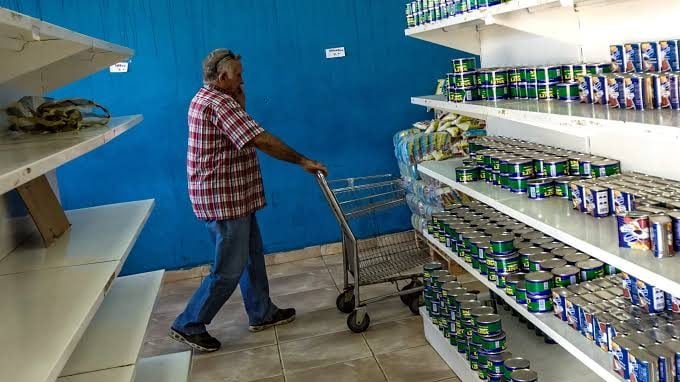
These are the best of times for Americans — at least economically and at least on paper (in the metaphorical sense of course, since no one uses paper anymore). We’ve never been richer or more prosperous as a nation. Living standards and life expectancy are at all-time highs. Yet, it feels like the economy is broken.
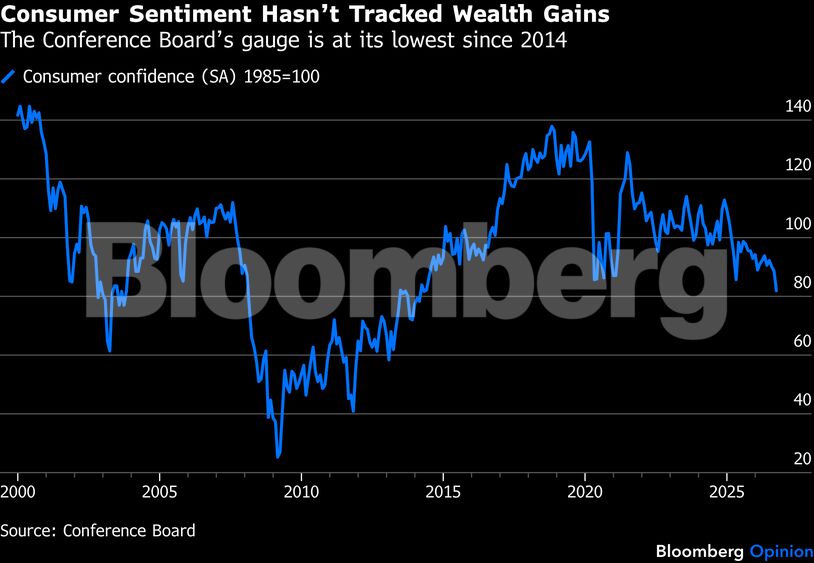
What explains this anomaly? Consider how few of the things we own are physical anymore. Our economy is increasingly built on intangibles, and it may be hard to feel satisfied when so much of what we have is no longer in the physical realm.
Take our wealth. I wrote a few months ago that more young people are investing in the stock market instead of housing. It’s been a wise choice: The stock market has offered a higher return and less risk for the past decade. Stock investing doesn’t require a down payment or tie the buyer to a single place in their prime skill-building years. Rising stock values are a big reason why Gen Z is the richest generation for their age.
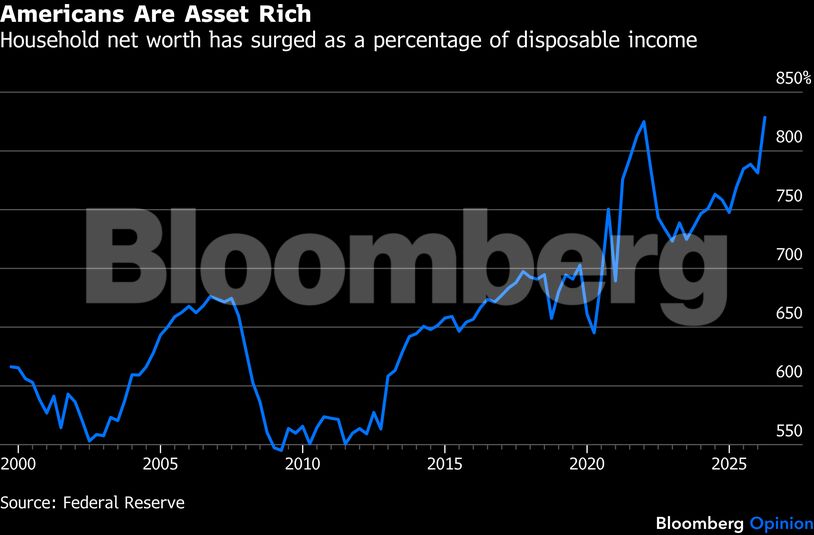
But owning stocks is an intangible form of wealth. You own a share of the American economy, but it is hard to look at Amazon.com Inc. and feel as though part of it is yours. More of the American stock market, too, is made up of companies whose value is their intellectual property, another intangible.
Compare this to owning a home. You physically own property. You can put money or even your own labor into renovating your kitchen. You know your neighbors, feel part of a community and have an interest in investing in both. I don’t look at fellow S&P 500 Index owners and feel a common sense of purpose, though theoretically I should.
The sense of community and belonging has been replaced with social lives that are less tangible as well. More socialization takes place in the virtual world. We spend less time with other people in person or even on the phone. We buy more online rather than see people and merchandise when we shop. This may leave us feeling more disconnected and lonely, even if we have more connections and can communicate with people all over the world.
Our human capital has also become more intangible. More of us work in the services sector and build skills relevant to it, rather than making things. Service jobs often earn more and are less physically arduous, but there is no output from our labor. Even in my own profession, journalists rarely see their ideas on the printed page anymore. The premium placed on knowledge work, meanwhile, has contributed to income and wealth inequality (though AI may shrink that). Wages are lower in a physical economy but also less disperse.
These shifts may help explain the backlash to data centers. Building factories tends to be popular and seen as a political triumph. Data centers also bring economic benefits to a community as they create construction jobs and are associated with growth. Yet, they have only been met with suspicion.
Some of the distrust springs from the belief that they will cause pollution and drive up electricity bills, though there is not much evidence that’s true. Another point of friction is their newness and the difficulty of understanding what they produce and to whose benefit, particularly when the fear of job loss to artificial intelligence looms large. It’s not like making a toaster, even if data centers are a sign of a much more advanced and wealthy economy.
Before we go full luddite, quit our jobs and live off the land in Alaska, it is important to remember that the intangible economy is why we are richer and live longer lives. Today’s technological innovations reward knowledge and expertise much more than the tangible world ever valued physical labor. We also do much less physical labor, which is one reason we live longer and healthier lives.
So why are the benefits harder to feel good about? We are social creatures who evolved to compete for finite resources. This new world is less zero sum, since knowledge is infinite, but it leaves us completing for status and attention instead, which can be less satisfying and more ephemeral than a big house or a chunk of gold. It creates new status games, for example on social media, that we can’t ever really win.
We also just like stuff. A large, beautiful house may bring more satisfaction than a one-bedroom rental apartment and a $2 million brokerage account balance.
Yet I am optimistic we aren’t doomed to a life of misery that’s devoid of meaning. It just takes time for norms to change. Growing your own food once felt like the most honest work compared to having a boss and working in a factory. We may still have a romantic attachment to the idea of farming, but few people want to be subsistence farmers.
What we consider valuable and meaningful is always evolving and sometimes the transition takes time because the economy moves faster than our norms and culture do. This process can be destabilizing and isolating. But eventually we find ways to connect and rebuild community in new ways. Perhaps we will get to the point where owning nothing tangible will be enough, if we own a lot on paper. (You know what I mean!)
Disclaimer: This report is auto generated from the Bloomberg news service. ThePrint holds no responsibility for its content.