



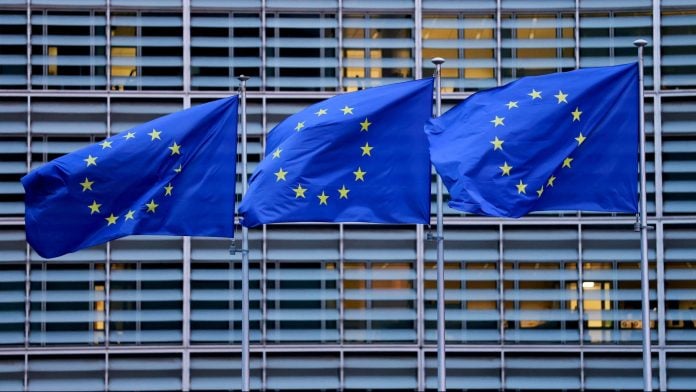
Spain and France may be projecting joy at the prospect of a UK homecoming, but officials are cautioning that unwinding Brexit will involve costs and sacrifices it’s not clear either side wants to bear.
New UK Prime Minister Andy Burnham touched off a flurry of speculation on Tuesday that he may campaign to reenter the EU, before confirming he would discuss the prospect at an upcoming summit with the bloc’s leaders. Europe’s heavyweights quickly jumped on the opening.
“Welcome back,” French President Emmanuel Macron quipped in English, smiling while speaking alongside Spanish Prime Minister Pedro Sanchez. Spain, Sanchez added, would “open its arms” to a UK reunion.
The behind-the-scenes reality is less rosy, according to people familiar with the relationship, speaking anonymously to describe private talks. There is lingering concern in Brussels about British flip-flopping, given the country’s revolving-door prime ministers of late. And for the UK, rejoining would also reopen debates over prior EU exemptions and deals that may no longer be available.
The wariness reflects the suspicion and hurt that remain 10 years after the UK voted to leave the EU. The two sides frequently make stop-start progress on all kinds of negotiations — and that’s when talks don’t break down amid recriminations.
Still, EU officials have been pleased by Burnham’s new message, the people said, even as they caution that they’ll wait to see what action actually follows. Burnham said he would also raise with EU leaders the possibility of the UK rejoining the bloc’s single market or entering a customs union.
“The UK is a close and valued partner of the European Union,” Balazs Ujvari, a spokesperson for the European Commission, the EU’s executive arm, said in a statement on Wednesday. “It is for the UK government to set out how it wishes to develop its relationship with the EU going forward.”
Former Labour officials who worked under Keir Starmer, Burnham’s predecessor, expressed skepticism about a complete remarriage. They warned that the EU would likely impose significant costs on Britain to rejoin, adding that was one reason why Starmer’s team had been reluctant to pursue the option.
One said that when they previously talked informally to EU counterparts about the costs of rejoining, they were told there would need to be a renegotiation of a UK budget rebate agreed to under Margaret Thatcher. That could mean extra costs of roughly £5 billion ($6.6 billion) a year to return.
The person added that they didn’t think the EU would insist on Britain joining the Schengen Area, the EU’s passport-free travel zone, or adopting the euro currency. But accepting freedom of movement would be non-negotiable.
Another former Labour aide said that either rejoining or entering a customs union with the bloc would mean Britain would have to void the free trade agreements it had signed since Brexit, most notably with India.
For now, the two sides are expected to remain focused on more low-hanging fruit heading into the summit next month.
The gathering — which was postponed after Starmer resigned — will likely focus on three smaller elements: linking the EU and UK carbon markets, agreeing on food and agriculture trade and a youth mobility program for both travel and work.
The limited ambition reflects the headwinds still facing the EU-UK relationship, despite ties improving since a center-left Labour government took over in 2024.
The two sides have split over forthcoming “Made in Europe” legislation from Brussels, which would prioritize EU sources when public money and investment decisions are made. The UK has joined other allies like Japan and Switzerland to protest the planned rules given their close investment relationship.
Another point of tension is the EU’s flagship €150 billion defense loan program, which offers countries funding for military purchases. Talks for the UK to join the program fell apart last year, reducing the amount of money that could go to British firms.
Bloomberg also previously reported that the EU pushed back on UK efforts to attend key meetings.
Specifically, the UK expressed interest in joining committees fine-tuning regulations on farming and food standards, as well as the bloc’s carbon and electricity markets — all areas where London is trying to align its rules with the continent.
The commission told member states the UK had no right to such participation under its current arrangement, while several countries opposed giving the UK any involvement in EU decision making.
Disclaimer: This report is auto generated from the Bloomberg news service. ThePrint holds no responsibility for its content.