




By Matthias Williams and Andreas Rinke
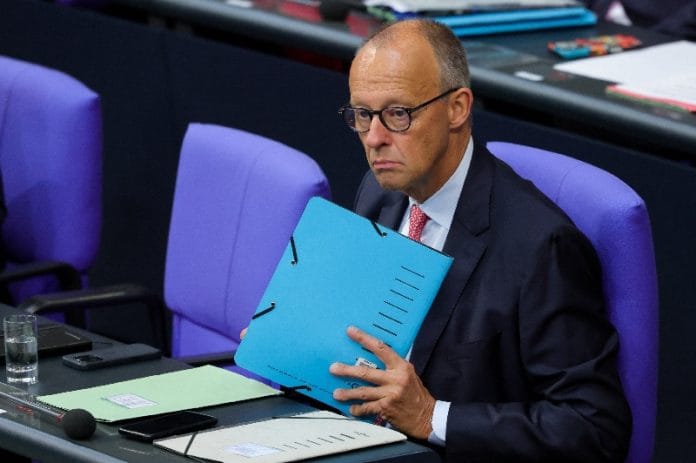
Sept 14 (Reuters) – Germany’s under-fire Chancellor Friedrich Merz won some respite on Monday after his CDU conservatives topped municipal polls in the state of Lower Saxony, provisional results showed, with the far-right Alternative for Germany also making strong gains.
The CDU won 27.2% of the vote at the weekend, with its coalition ally the Social Democrats on 24.6%, while the AfD climbed to third place with 15.9%, 11.3 points more than its result in 2021.
The results offer some relief for Merz a week after his party was trounced by the AfD in state elections in eastern Germany, jolting the government and putting his political future and reform programme in question.
The CDU’s leader in the northwestern state of Lower Saxony, which is home to car firm Volkswagen and steelmaker Salzgitter among others, welcomed the result but called for change.
“I believe a political shift is needed in Berlin. We need to ease the burden on people. Energy prices are too high, and housing costs are too high,” Sebastian Lechner said in Hanover, according to Die Zeit newspaper.
“We, too, have sensed the dissatisfaction with Berlin.”
The CDU won the mayoral vote in Wolfsburg, the city where Volkswagen, one of the world’s largest automakers and the state’s largest private employer, is headquartered. The AfD’s co-leader Alice Weidel had held up the troubles at Volkswagen, which is set to shed tens of thousands of jobs, as an example of the government’s failings.
However, in the industrial city of Salzgitter, where the company bearing its name is headquartered, the CDU failed to win enough votes, meaning there will be a mayoral run-off with the AfD.
MORE STATE ELECTIONS TO COME
Merz will face a sterner test in two more state elections this coming weekend, where the AfD is set to top the polls again in the eastern state of Mecklenburg-Western Pomerania.
The capital Berlin will also hold a state election, where the far-left Die Linke could come out on top.
In an increasingly polarized political system, Merz, whose personal approval ratings have sunk to record lows, has been one of the main targets of voter ire over the cost of living, pensions and economic insecurity.
Last week, the AfD came within touching distance of winning the election in Saxony-Anhalt outright and could yet form a government there, the first time a far-right party would do so in postwar Germany.
The results put the focus on whether Merz is now an electoral liability, and also whether he will be forced to change course on a reform programme that he says will revive sluggish growth in Europe’s largest economy.
A poll by INSA over the weekend said 78% of people do not think Merz should be chancellor. Among his own party, 58% of voters no longer want Merz in charge, with 36% still backing him. Some 46% also thought the so-called “firewall” strategy, which rules out any sort of political accommodation with the AfD by mainstream parties, no longer served its purpose.
A jump in oil prices as hostilities worsen in the Middle East could also bring more domestic pain for Merz.
Clara von Nathusius, the treasurer of the CDU’s youth wing, said the firewall policy had failed and that the CDU had a credibility problem.
“It doesn’t hinge solely on Friedrich Merz, though it does play a part,” she told the ARD broadcaster. “And that is why, unfortunately, I believe no more elections can be won with this Chancellor.”
(Writing by Matthias Williams; Editing by Andrew Cawthorne)
Disclaimer: This report is auto generated from the Reuters news service. ThePrint holds no responsibility for its content.