







By Vivian Sequera and Mayela Armas
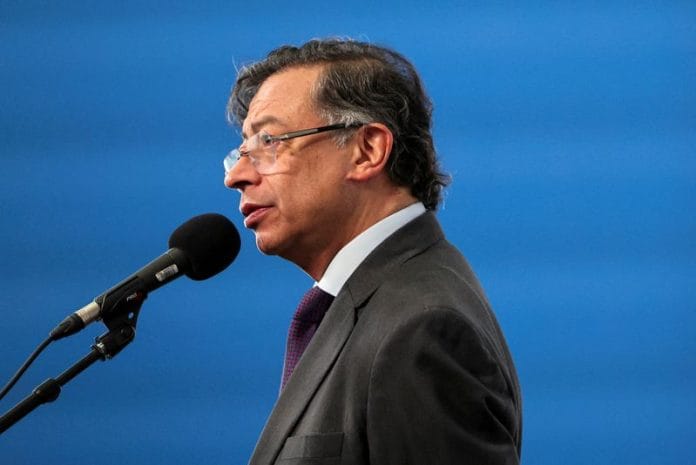
CARACAS/BOGOTA, April 24 (Reuters) – Colombian President Gustavo Petro and his Venezuelan counterpart Delcy Rodriguez agreed intelligence-sharing measures to combat crime on their shared border at a meeting on Friday, as well as increases in trade and bilateral efforts to ensure electricity provision to western Venezuela, which suffers frequent black-outs.
Both leaders have come under intense pressure from U.S. President Donald Trump, in Rodriguez’s case to open her country’s economy to foreign investment and in Petro’s to do more to combat drug trafficking.
The meeting at the presidential palace in Caracas was Rodriguez’s second with a fellow head of state, after she traveled briefly to Grenada earlier this month.
“It makes no sense for Colombia or Venezuela to look toward other latitudes, another hemisphere, for what we can get in our own territories,” Rodriguez said in joint remarks with Petro, adding the two governments would increase bilateral trade and look to cooperate on energy. “Electrical interconnection is already a step forward, and so is gas interconnection, through which we can not only supply gas to Colombia but also jointly export gas to other countries.”
Colombia and Venezuela have deep historical and cultural ties, especially along their shared 2,200-kilometer (1,370-mile) border, where many families are bi-national. Nearly 3 million Venezuelan migrants have settled in Colombia in recent years, fleeing economic collapse in their home country.
Though the border region is a hub for more than $1 billion in annual trade, it is also home to drug trafficking, smuggling and other illegal activity carried out by armed groups including criminal gangs and Colombian guerrilla organizations.
Human rights groups and previous Colombian governments have alleged the armed groups work with the support or complicity of the Venezuelan military, an accusation Caracas has long denied.
Petro and Rodriguez’s predecessor, Nicolas Maduro, who was removed in a U.S. operation in January, have previously increased the number of troops stationed at the border to combat drug trafficking.
The two countries are taking “a very serious, very comprehensive approach” to fighting crime along the border, Rodriguez said, and will immediately establish “mechanisms for sharing information and developing intelligence” to fight drug and fuel smuggling, among other crimes.
Petro said the border must belong to the citizens of the two countries, and not to criminal groups.
Rodriguez, formerly vice president, has been seeking to attract investors in oil and mining under the close supervision of the Trump administration. Trump himself has repeatedly praised her, and she has welcomed U.S. officials and potential investors to Caracas.
She has vociferously urged the U.S. to lift sanctions on her country, saying special licenses and waivers are not enough for investors to feel secure or for the economy to recover.
Petro has had numerous squabbles with Trump, who has repeatedly demanded more cooperation from Colombia in the fight against drug trafficking, while Petro says there have been record drug seizures during his tenure.
Despite personal sanctions imposed on Petro by Washington, the two men were each positive after a face-to-face meeting earlier this year. In March they had a friendly call to discuss the economy along the Venezuelan-Colombian border, Petro’s office said at the time.
(Reporting by Vivian Sequera and Mayela Armas in Caracas, additional reporting by Luis Jaime Acosta in Bogota, Writing by Julia Symmes Cobb, Editing by Nia Williams)
Disclaimer: This report is auto generated from the Reuters news service. ThePrint holds no responsibility for its content.