



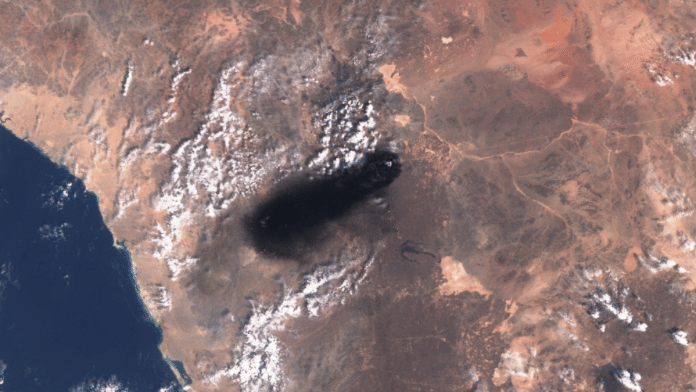

New Delhi: Saudi Arabia and Iraq confirmed Saturday that the drone strikes on Riyadh’s East-West oil pipeline were launched from Iraqi territory.
Riyadh later shut down the pipeline as a precautionary measure. Iraq Prime Minister Ali al-Zaidi removed the regional operations commander responsible for security in Maysan Province, which borders Iran.
The Saudi Foreign ministry said it chose not to retaliate on the request of the Iraqi Prime Minister. “The Kingdom states that, in response to the request by the Iraqi Prime Minister to allow the government of brotherly Iraq the opportunity to take measures to prevent attacks launched from Iraqi territory against the Kingdom and neighboring countries, the Kingdom has chosen not to retaliate at this stage and to support the efforts of the Iraqi government,” a Saudi official press release noted.
Following a July meeting with the US president, Zaidi had pledged to disarm the powerful armed groups by 30 September—the same date set for the withdrawal of the remaining US-led international coalition forces from Iraq.
The East West pipeline, stretching from Saudi Arabia to the Red Sea port of Yanbu, was built as an alternative to shipping crude through the Persian Gulf.
Around 6-7 million barrels per day of crude go through the Bab el-Mandeb Strait. Roughly half of this is Saudi crude loaded from Yanbu on the Red Sea coast, while the rest are Russian cargoes bound for India, with smaller shipments heading to China.
The pipeline attack came as the Iran-aligned Houthi movement launched an offensive against Saudi-backed forces, capturing the Red Sea islands in entirety and advancing toward the Bab el-Mandeb Strait, an important maritime chokepoint.
The attacks and the Houthis’ control over Yemen now effectively bring Iran and its proxies closer to gaining control of two chokepoints for western shipping on opposite sides of the Arabian peninsula: Bab el-Mandeb at southern end of Red Sea and Strait of Hormuz.
The Strait of Hormuz is the more consequential of the two for Gulf energy exports. Iran has previously taken steps that have sharply restricted commercial traffic through the waterway, adding to concerns that a prolonged confrontation could disrupt a substantial share of the world’s oil supply.
Saudi Arabia has increasingly relied on Yanbu as tensions in the Gulf have grown. In June, exports from the Red Sea terminal reached about 4.14 million barrels a day, according to Kpler data representing a substantial diversion of volumes that had traditionally been shipped from Ras Tanura on the kingdom’s eastern coast.
Houthi officials have sought to distinguish their military campaign from a broader attack on international commerce. Mohammed Abdulsalam, a spokesperson for the movement, said on X that navigation and international trade through the Red Sea and Bab el-Mandeb remained safe, while maintaining that Houthi attacks would continue against what the group calls aggression against Yemen.
Saudi-flagged and Saudi-linked vessels, however, remained subject to a previously announced Houthi ban. This has effectively opened a new warfront in West Asia amid the escalating US-Iran conflict.
A Reuters report said that Iranian officials had directly asked the Houthis to increase attacks against Saudi Arabia and promised additional funding, weapons and senior military personnel in return. Officials of Islamic Revolutionary Guard Corps (IRGC), it said, travelled to Yemen to oversee military operations.
Saudi Crown Prince Mohammed bin Salman then called US President Donald Trump twice after the Houthis captured the Yemeni port city of Mocha and sought American strikes on Houthi positions. However, Trump declined, Axios reported.
(Edited by Tony Rai)
Also Read: Saudi’s East-West pipeline hit? Houthis seize key Red Sea port, inch closer to Bab el-Mandeb