





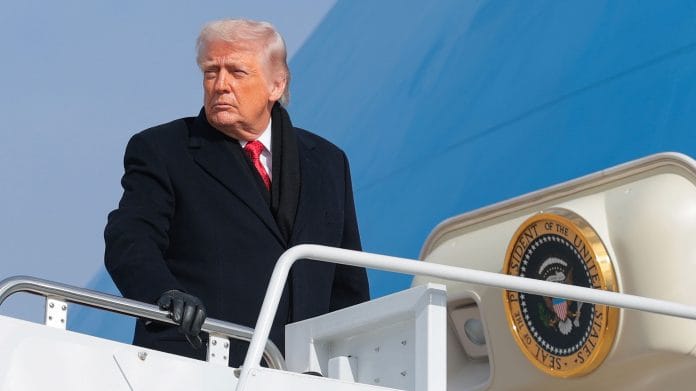



In his bid to gain control over Greenland, a semi-autonomous territory of Denmark, US President Donald Trump threatened to impose fresh tariffs on imports from eight European countries. The drama sent stocks sliding as investors flocked to gold and other safe-haven assets.
It didn’t take long for Trump to relent. Less than 24 hours after the S&P 500 Index dropped 2% on the initial tariff escalation with Europe, the US president said he and NATO Secretary General Mark Rutte had formed “the framework of a future deal” on Greenland. In no time, stocks were soaring again.
Wall Street pros have learned to capitalize on Trump’s tendency to reverse himself when markets appear to be rejecting his policies, buying stocks when the market first drops and awaiting the inevitable rally. Analysts call this gamble the “TACO” trade, which stands for Trump Always Chickens Out.
The pattern has emerged repeatedly in the past year, beginning in April when the White House rolled out its global tariff framework but then paused its implementation after financial markets tumbled. In October, Trump ramped up tariff threats against China over rare earths and other critical minerals, before a swift U-turn. The policy reversals have become so predictable that investors and analysts are growing comfortable betting on them and wonder how much longer the opportunity can last.
What’s the origin of the ‘TACO’ label?
The acronym was coined by Financial Times columnist Robert Armstrong in 2025. It has since been adopted by traders attempting to navigate the dozens of changes to tariff policy Trump has announced over the early months of his presidency. “TACO” achieved mainstream buzzword status when a reporter asked Trump for his thoughts on the concept during an Oval Office event in May.
“It’s called negotiation,” Trump responded, emphasizing that his policy moves were strategic and he deliberately sets “a ridiculous high number” and then lets it “go down a little bit.”
How has the TACO trade worked in practice?
Investors who deployed the strategy in early April — buying stocks on the expectation that Trump would back down on his biggest tariffs — profited when the president paused the levies for 90 days and markets jumped.
Traders using this approach were also rewarded in late May when Trump announced a 50% tariff on European goods before soon relenting. They profited again a few days later, when Trump accused Chinese President Xi Jinping of breaking a trade truce — briefly sending stocks tumbling — only to spark a rebound hours later by signaling plans to speak with the Chinese leader.
Something similar unfolded in October, when a brief trade dispute between China and the US involving rare earths provoked a swift drop on the stock market followed by a rapid turnaround.
The pattern was on full display once again in mid-January when Trump threatened Europe over Greenland before softening his tone.
Why have markets reacted negatively to Trump’s trade policies?
Trump’s tariffs run the risk of reigniting inflation and slowing economic growth by increasing the cost of imports. Tariffs also drive up consumer prices, damaging confidence and reducing consumers’ spending power.
When Trump threatens tariffs, investors tend to sell stocks over concerns the tariffs could spur an economic downturn. When he reduces, delays, or removes them, they buy stocks on the expectation that the trade war is deescalating.
How valuable is the TACO trade?
The trade is consistent with a well-trodden investment strategy: buy the dip when stocks fall on expectations they will eventually rebound.
In a study published in 2025, Charlie McElligott, a strategist at Nomura Holdings Inc., quantified the TACO trade. In his analysis, he found that shorting — or betting against — S&P 500 futures every time Trump escalated trade rhetoric and buying them five days later would have yielded a 12% return since the beginning of February 2025. By contrast, just holding and not doing anything would have left an investor’s portfolio virtually unchanged over the same period after a series of stomach-churning stock swings.
But as investors grow comfortable with the TACO blueprint, they could be more inclined to wait out tariff threats, meaning there might not be enough market reaction to prompt Trump to back down.
Disclaimer: This report is auto generated from the Bloomberg news service. ThePrint holds no responsibility for its content.
Also read: Carney’s hope for a middle power partnership is silly. He ignores geography in the power math