


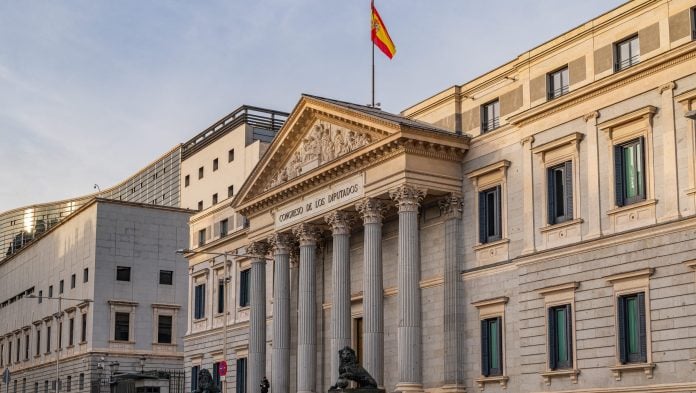
Spain is gearing up for its fifth general election in just over a decade after Socialist Prime Minister Pedro Sánchez called a snap vote, arguing that his minority government needs broader support to pass pending reforms.
Sánchez entered the election campaign on the back foot, although he’s no stranger to making unlikely comebacks. The Nov. 29 ballot could be his biggest uphill battle yet. The final pre-election polls released on Nov. 23 — the last day they could be published under Spanish law — suggested that a right-wing bloc, including the far-right Vox party, is on track to win a clear parliamentary majority. Center-right leader Alberto Núñez Feijóo could be on the cusp of ending Sánchez’s eight-year run in power.
That outcome would reverberate beyond Spain’s borders. It would reshape the political balance of the European Union, which would lose the last left-wing government among its largest economies, as well as a leader who has been one of the EU’s fiercest critics of US President Donald Trump.
How is the vote shaping up?
As of Nov. 23, polls pointed to Feijóo’s People’s Party becoming the biggest group in the 350-seat parliament, ahead of Sánchez’s Socialists. Those surveys indicated that the People’s Party alone will most likely fall short of a majority, although it could form a ruling coalition with the backing of Vox. That would mark the first time the far right has been in Spain’s government since the death of dictator Francisco Franco in 1975. While the two parties haven’t officially said they would govern together at the national level, they already share power in four regions of Spain.
The Socialists are hoping to close the gap with the People’s Party by mobilizing voters in the final days before the election, as they did in 2023. In that ballot, Sánchez defied those who had written him off, including most polls, and remained in power after striking complex agreements with more than eight parties.
This time around, even if the Socialists manage to finish in first place, they’re highly unlikely to be able to gather enough support to form a government. The fragmented parties to their left failed to agree to a joint list of candidates to pool their votes. Spain’s proportional electoral system disadvantages smaller parties that run separately, particularly in less populous provinces.
Why did Sánchez call the election?
Sánchez called the snap vote in October after parliament rejected the government’s package of emergency housing affordability measures. The reforms were proposed in response to nationwide protests over housing costs. Public anger boiled over after an 87-year-old woman died after being evicted from her apartment in Madrid because she couldn’t afford a rent increase.
Housing has been Spaniards’ top concern for months and has also become a symbol for broader worries about the cost of living and inequality. Sánchez is hoping to tap into the frustration and punish the opposition parties that voted against the bills designed to alleviate the real estate crunch. But having held power for the last eight years, he may struggle to convince voters that he bears no responsibility for the housing crisis.
Why is Sánchez in a vulnerable position?
His political capital has been worn away in recent years. He came to power in 2018 and, without a stable parliamentary majority, has spent much of his tenure navigating a succession of crises. That includes the Covid-19 pandemic, deadly floods in the Valencia region and an unprecedented electricity outage last year.
Sánchez’s latest term as prime minister, which began in 2023 and had been due to end in 2027, has been particularly difficult. His government has failed to secure a single budget, while corruption cases have ensnared both his party and family. Over the summer, the arrival of about 80,000 undocumented migrants from Morocco to Ceuta, a Spanish exclave in North Africa, fueled a fresh wave of social discontent and helped make immigration a central political issue.
Sánchez’s position was further weakened by Spain’s deadliest train crash in more than a decade, which killed 69 people in late October. The accident, which followed another major collision in January, exposed deteriorating public infrastructure and led to the resignation of Transport Minister Óscar Puente, one of Sánchez’s closest allies.
The political troubles of Sánchez contrast Spain’s strong economic performance. The country is the fastest-growing major euro-area economy, the national debt and deficit are under control, and unemployment is at its lowest since the financial crisis. But those numbers don’t capture reality for many Spaniards, especially the younger generation, who say they’ve been left behind by the boom.
How do the main parties differ on policy?
➤ Housing
The government reforms rejected by parliament in October would have frozen rents, made rental contracts indefinite, banned the eviction of vulnerable tenants and regulated short-term tourist rentals. The Socialists’ election platform includes a proposal to allocate the equivalent of 1% of gross domestic product annually to ensure access to housing and to increase the amount of public and protected housing.
The People’s Party has pledged to build 1 million houses by making public and private land available for development “in cooperation with regional and local authorities.” Vox has said it wants to “urgently” boost the construction of protected housing “for Spanish families.”
➤ Immigration
Sánchez has taken a liberal approach to immigration, which has helped fueled Spain’s economic growth but has also caused tensions over how the spoils are shared.
One flash point has been the government’s decision to regularize the legal status of a million undocumented workers. The People’s Party strongly criticized this move. It has toughened its rhetoric on immigration in a bid to lure voters away from the far-right Vox, which wants to start expelling people who it considers shouldn’t be living in Spain.
➤ Taxation
The People’s Party has proposed sweeping tax cuts across income, consumption and investment. It will also seek to scrap a post-pandemic windfall tax on banks — a levy Sánchez has said he will extend and use the funds to invest in housing. Sánchez has also floated a new wealth tax on fortunes above €100 million ($110 million).
➤ Energy
A government led by the People’s Party would be supportive of nuclear power, contrasting the Socialists’ commitment to gradually phase out Spain’s seven reactors by 2035.
And whereas the Socialists have reaffirmed the government’s goal for 81% of electricity generation to come from renewables by 2030, the People’s Party has said it will not favor any particular energy technology and Vox has called for preventing the “uncontrolled” development of large-scale solar and wind farms on agricultural land and natural heritage sites.
➤ Trade with China
Sánchez has been outlier in the EU when it comes to relations with China, bucking the bloc’s broader push to adopt a more protectionist stance on trade. He’s stepped up his visits to Beijing in recent years and has argued that the EU can’t afford a trade war with China. The People’s Party has said it would back a more hawkish approach to trade with China.
➤ Defense
Sánchez has resisted lifting Spain’s defense spending to 5% of GDP — a target that the North Atlantic Treaty Organization set last year amid pressure from Trump. He’s shown a willingness to go toe-to-toe with Trump on a variety of issues, including immigration, the Iran war and accusing US ally Israel of undertaking a genocide in Gaza.
Sánchez’s government has insisted that it will only raise defense expenditure to as high as 2.1% of GDP. Feijóo has criticized that policy, although his People’s Party’s manifesto only includes a pledge to equip Spain with the “means for its defense” and to “make transparent the commitments” undertaken with international allies, without specifying a spending figure.
Disclaimer: This report is auto generated from the Bloomberg news service. ThePrint holds no responsibility for its content.