



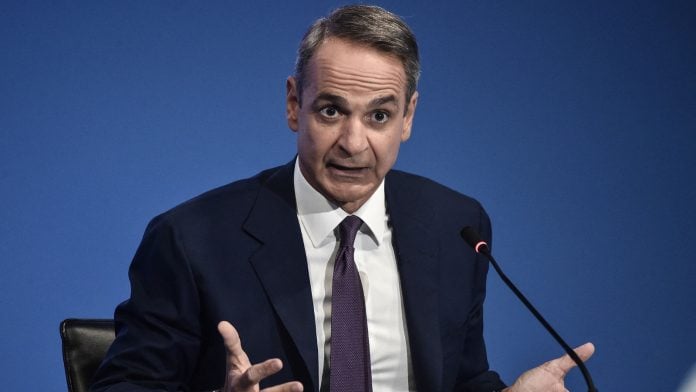
Greek Prime Minister Kyriakos Mitsotakis called on the European Union to allow for greater fiscal flexibility in order to help households and businesses cope with rising energy costs.
“It is time for bold and joint solutions that will go beyond the general exhortations we have heard from the European Commission regarding the reduction of energy consumption,” Mitsotakis said, speaking ahead of a cabinet meeting on Wednesday. He added that he sent a letter to commission president Ursula von der Leyen on the matter.
In his letter, the Greek premier said Europe could consider excluding from relevant fiscal calculations the temporary measures taken by EU members up to a certain point, according to a person familiar with its content. Mitsotakis also suggested that the bloc’s nations could use additional value-added tax revenues generated by the unanticipated increase in general prices to help households and businesses, the person said.
The Greek premier’s comments come as governments across the EU have come under pressure to do more to support voters squeezed by ballooning bills. Earlier this week, the EU warned its member states about a potential energy price crisis driven by the Middle East conflict, asking them to consider measures to cut demand and to continue filling gas storage ahead of winter.
European gas prices have more than doubled since the start of the US-led war on Iran in late February, reaching their highest level since late 2022 earlier this month. Rising costs have been elevated to the top of the EU’s political agenda, with companies across the bloc blaming them for undermining Europe’s competitiveness. The issue is set to be central in the debate about competitiveness during a summit of EU leaders on Oct. 15-16.
Greece is already taking measures to mitigate high energy prices. The government’s subsidy for diesel fuel will be extended in October and increase to 15 cents from 10 cents of euro. The government also plans to announce by mid-October measures to hold the price of heating oil price below the €1.75 per liter level it was at in April.
Disclaimer: This report is auto generated from the Bloomberg news service. ThePrint holds no responsibility for its content.