






Efforts to develop a vaccine against the strain of Ebola driving the deadly outbreak in Democratic Republic of Congo are expanding, with an experimental shot developed by an Egypt-based pharmaceutical company set to advance toward human testing.
Minapharm Group will receive as much as $16.5 million to move its Bundibugyo Ebola virus vaccine through preclinical development and into an early-stage clinical trial expected to take place in Africa, the Coalition for Epidemic Preparedness Innovations said Thursday. It becomes the fifth Bundibugyo-specific vaccine candidate backed by CEPI since the outbreak began.
The investment adds to an accelerating effort to develop vaccines against Bundibugyo, a comparatively rare Ebola species for which there is no approved vaccine. CEPI is aiming to advance at least two candidates to emergency authorization and World Health Organization prequalification for use in the current outbreak and any future Bundibugyo epidemics.
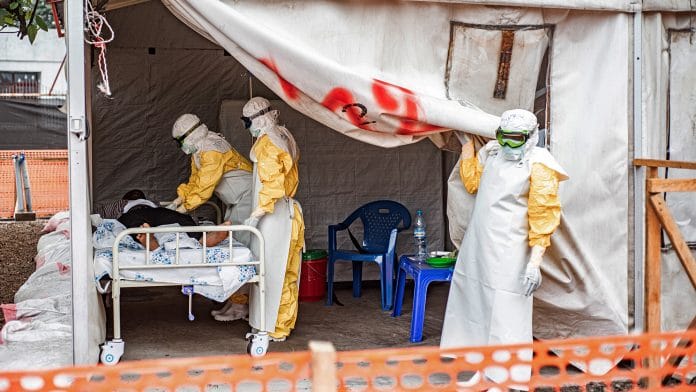
The outbreak’s unprecedented scale is forcing health authorities to search for ways to protect people against a virus for which no proven shot exists. It has swelled to 5,713 confirmed cases and 2,744 deaths since it was declared in May.
Minapharm’s candidate uses a modified vaccinia Ankara, or MVA, platform developed by its Berlin-based subsidiary ProBioGen. The technology uses a weakened poxvirus to deliver Ebola proteins that train the immune system to recognize the pathogen.
The vaccine is designed to stimulate both antibody-producing B cells and T cells, according to CEPI. An initial phase 1 trial would assess its safety and ability to generate an immune response rather than determine whether it protects people from Ebola.
If the early-stage study is successful, CEPI said it expects to support later trials intended to generate evidence of efficacy.
CEPI is already supporting Bundibugyo vaccine candidates using mRNA technology from Moderna Inc., an adenovirus platform from the University of Oxford and Serum Institute of India, and rVSV technology from IAVI and Public Health Vaccines.
Health officials are also preparing to study whether Merck & Co.’s existing Ervebo vaccine, designed to protect against the Zaire species of Ebola, could offer some protection against the virus driving the current outbreak.
Researchers who followed more than 1,000 people vaccinated with Ervebo during previous Ebola outbreaks in Congo found that the vaccine produced antibodies that also recognized the Bundibugyo virus, with some responses persisting for years, according to a study published Tuesday in The Lancet. The study didn’t show whether those antibodies actually protect against Bundibugyo infection or disease, and the authors said clinical testing is needed.
Disclaimer: This report is auto generated from the Bloomberg news service. ThePrint holds no responsibility for its content.