





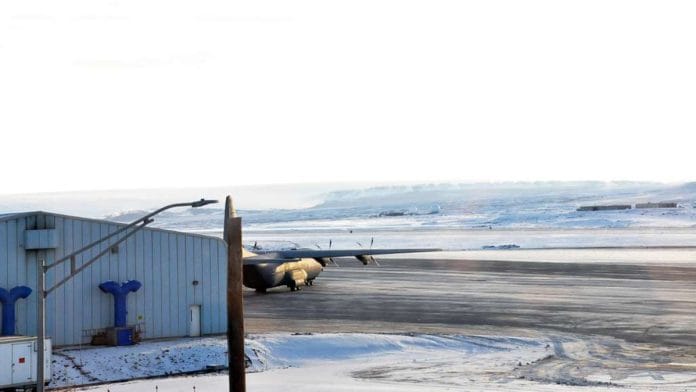



New Delhi: The Danish government last year drew up plans to bomb airfields in Greenland in the case of a possible military invasion by the US, a report by the Danish state broadcaster DR has revealed.
According to the report, the Danish government and military leadership were on the same page about pursuing such a plan if the US were to follow through on President Donald Trump’s rhetoric.
This strategy was developed in response to threats from Trump to take over Greenland through “the hard way”. Trump had expressed the desire to acquire the autonomous territory of Denmark due to its rich deposits of rare earth minerals. The possible acquisition was also being seen as a bid by the US to strengthen its position in the Arctic.
To brace for a possible invasion, Copenhagen also flew explosives and blood supplies into the autonomous Danish territory after US forces invaded Venezuela to capture then-president Nicolas Maduro and his wife.
This marked one of the most significant fractures between NATO allies, with a Danish defence official telling the public broadcaster, “We have not been in such a situation since April 1940.”
In the days that followed no concrete proof emerged of a US government plan to take over Nuuk. And on 19 January, the Danish government launched a massive military exercise in Greenland under the cover of Operation Arctic Endurance. The operation was aimed at establishing a reserve for live ammunition, explosives, and blood from Danish blood banks in the capital Nuuk and a strategic hub in Kangerlussuaq in western Greenland.
Also Read: Why Trump wants Greenland: Minerals, Monroe Doctrine 2.0 and countering China
Strategic calculus
The Danish government planned this strategic move to increase the stakes for the US to invade Greenland. As one high-ranking Danish official told DR: “The cost to the US would have to be raised. The US would have to carry out a hostile act to get Greenland.”
To bolster the multinational coalition of forces, the Danish government deployed a force that consisted of French, German, Swedish, and Norwegian soldiers. This advanced command was also integrated with Greenland’s defence infrastructure. Eventually, they were also accompanied by Danish elite Jægerkorps troops, soldiers from the Dragoon Regiment, and French specialists trained for high-altitude, cold-weather warfare.
The Keir Starmer-led British government also provided the Danes with a reconnaissance officer to support the multinational coalition.
The presence of European troops was designed to create a scenario where the US would have to attack its NATO partners to achieve its objective. A top German official involved in this operation told DR, “If the US attacked Greenland, with Nato soldiers present, then you would have to put the biggest question mark on everything we believed in.”
The Venezuela effect
The urgency for this operation by Denmark was reportedly triggered when the US attacked Venezuela. “When Trump keeps saying he wants to take over Greenland, and then what happened in Venezuela happened, we had to take all scenarios seriously,” a high-ranking source told the Danish public broadcaster.
Though the White House was dismissing concerns about tensions with Denmark over Nuuk, the Danish government was deploying its F-35 fighter planes towards the North Atlantic, accompanied by French naval vessels, to underline a clear signal of resistance.
The crisis finally culminated when Trump ruled out the possibility of military action in his speech on 21 January during the Davos summit. The ripple effect of the crisis was significant for Danish Prime Minister Mette Frederiksen who called for an early election on 24 March, anticipating support for her refusal to back down under Washington’s pressure.
The crisis also forced a broader realisation within Europe about its overdependence on the US for its defence. A top French official told DR: “With the Greenland crisis, Europe realised once and for all that we need to be able to take care of our own security.”
(Edited by Amrtansh Arora)
Also Read: Trump’s fight for Greenland has shaken his most committed European allies—the Far-Right