







By Francois Murphy
VIENNA, May 16 (Reuters) – Bulgaria won the Eurovision Song Contest for the first time on Saturday in a final overshadowed by five countries’ boycott over Gaza, claiming a dramatic victory despite another big public vote for Israel that secured it second place.
The garish and usually good-natured competition involving pop acts from countries across Europe and beyond, now in its 70th year, has been plunged into crisis by a dispute over Israel’s military offensive in Gaza, a response to the Hamas-led attack on October 7, 2023.
The public broadcasters of heavyweights Spain, the Netherlands and Ireland, as well as Iceland and Slovenia, are not taking part in protest at Israel’s participation.
Israel has alleged a global smear campaign against it. Its performance at the final was not, however, marred by any obvious protests, unlike Tuesday’s semi-final.
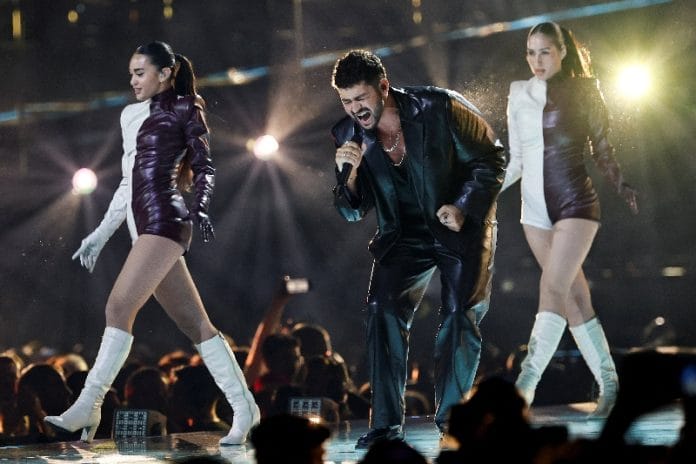
Bulgaria’s “Bangaranga”, sung by female artist Dara, a thumping, crowd-pleasing dance track, avoided politics altogether, touching on themes of empowerment and surrendering to the night.
Israel’s effort, trilingual love song “Michelle”, was notable for courting less controversy than its entry last year, which was sung by a survivor of the October 7 attack.
Some booing from the audience was audible when Israel’s massive points haul from the public vote sent it surging up the table, as it did in 2025, when the country also finished second.
Finland’s entry, “Liekinheitin,” or Flamethrower, a love song in Finnish featuring violinist Linda Lampenius and pop singer Pete Parkkonen on a burning set, was the favourite this year, followed by Australia’s “Eclipse”, a celestially themed love ballad sung by national pop star Delta Goodrem.
In the end, Australia came fourth and Finland sixth.
(Reporting by Francois Murphy, Editing by Rosalba O’Brien, Rod Nickel and Cynthia Osterman)
Disclaimer: This report is auto generated from the Reuters news service. ThePrint holds no responsibility for its content.