





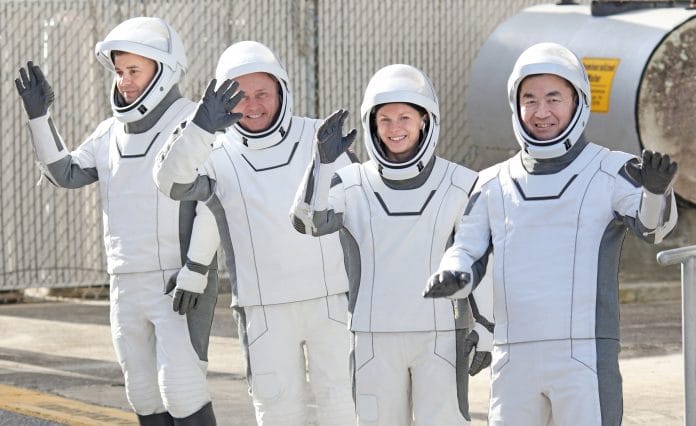



NASA will conduct a medical evacuation in the coming days of an astronaut suffering an undisclosed ailment aboard the International Space Station, agency officials said.
The early return will mark the first time in NASA’s history that the agency has cut short a crewed mission already in space for medical reasons.
“The astronaut is absolutely stable,” James Polk, NASA’s chief health and medical officer, told reporters on Thursday. “We’re not immediately disembarking and getting the astronaut down, but it leaves that lingering risk and lingering question as to what that diagnosis is.”
The astronaut will return with the three other members of their mission, called Crew-11, which launched to the International Space Station in August. The mission was slated to last six months, like most of NASA’s astronaut missions to the ISS, but the emergency return will cut roughly more than a month from their trip.
The team on the mission consists of NASA astronauts Zena Cardman and Mike Fincke, Japan Aerospace Exploration Agency’s Kimiya Yui and Roscosmos cosmonaut Oleg Platonov.
NASA first acknowledged the medical episode on Wednesday, when the space agency abruptly postponed a Jan. 8 spacewalk in light of the emerging health concern.
“The capability to diagnose and treat this properly does not live on the International Space Station,” NASA administrator Jared Isaacman told reporters. “And I think there’s pretty broad agreement across our experts here on the ground, as well as the crew members in space.”
NASA officials would not disclose the name of the astronaut, nor the specific medical condition, citing privacy reasons. However, Polk said the ailment was unrelated to any of the operations happening on the ISS.
“This was not an injury that occurred in the pursuit of operations,” Polk said.
In light of the Crew-11 change, NASA and SpaceX are now looking at ways to expedite the launch of the next crewed mission to the ISS, called Crew-12. The flight was originally slated to launch on Feb. 15 at the earliest, the space agency said previously.
Typically, NASA prefers to have new astronauts arrive at the space station before crews living on board depart for Earth, so there can be a handover of operations between the two groups. But with Crew-11 leaving early, the ISS will have two Russian cosmonauts and a lone NASA astronaut, Christopher Williams, living on board until Crew-12 arrives.
“Chris is trained to do every task that we would ask him to do on the vehicle,” Amit Kshatriya, NASA’s associate administrator, told reporters Thursday.
Astronauts have dealt with medical episodes in space before that have interrupted work assignments. In 2021, NASA astronaut Mark Vande Hei suffered a pinched nerve that forced the space agency to postpone a planned spacewalk.
And in 2020, a case study revealed that an unidentified astronaut developed a blood clot in the jugular vein while living aboard the International Space Station.
The astronaut landed safely at the end of their sixth month mission following prescribed treatment from NASA and doctors.
Disclaimer: This report is auto generated from the Bloomberg news service. ThePrint holds no responsibility for its content.
Also read: With only 5 launches in 2025. What’s behind ISRO’s project delays