





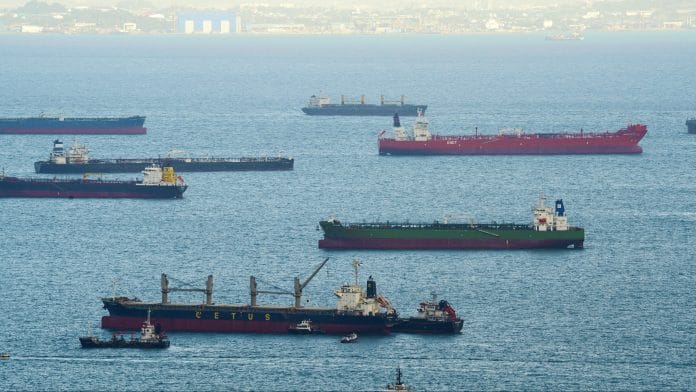



Countries across Asia are jockeying for leverage and adopting splintering approaches as they respond to US President Donald Trump’s call to open the Strait of Hormuz by themselves, amid mounting economic disruptions.
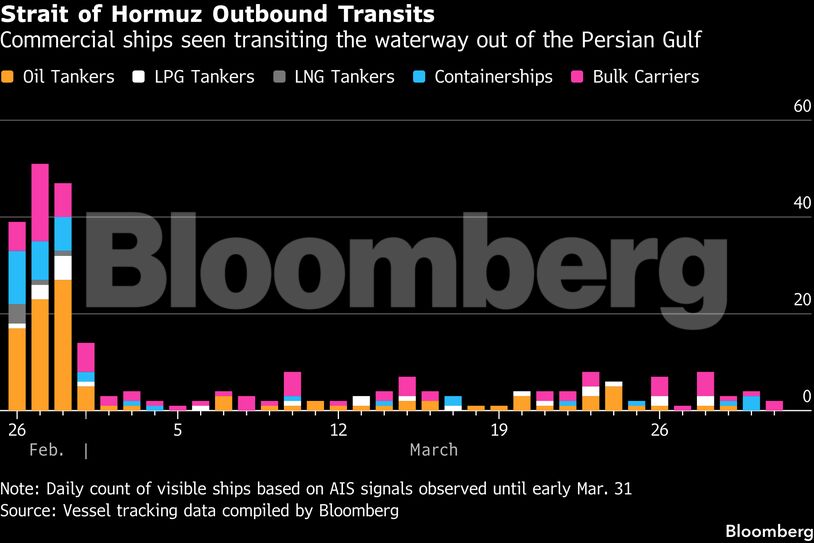
As the conflict enters its second month, governments from India to the Philippines are negotiating with Iran for the safe passage of vessels, while forming small circles to seek a diplomatic solution — and even bartering deals. Some US allies such as Japan are looking at a 35-country effort led by London to restore freedom of navigation to a waterway that weeks ago handled about a quarter of the world’s seaborne oil trade.
Other countries like Pakistan and China are proposing their own multi-point plan for peace, as the Islamic Republic keeps a tight grip over the shipping artery. Trump suggested in a rare address to his nation Wednesday evening that trade would get easier in the coming weeks, claiming the strait would open “naturally” so the Iranian regime could sell more oil.
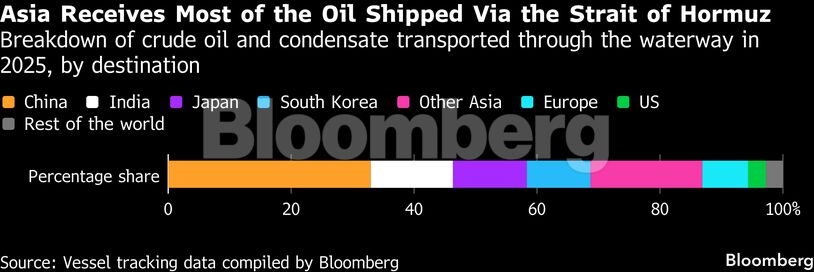
“The countries of the world that do receive oil through the Hormuz Strait must take care of that passage,” Trump added, stopping short of saying America would abandon efforts to assist such efforts. “We will be helpful, but they should take the lead in protecting the oil that they so desperately depend on.”
Following Trump’s earlier suggestion the war could end with the waterway closed, British Foreign Secretary Yvette Cooper will chair a virtual meeting Thursday with counterparts from countries including France, Canada and the United Arab Emirates to discuss a plan for opening the strait. A Japanese government spokesman said Tokyo was considering taking part. Other US partners in Asia including South Korea and Australia are expected to join.
That meeting will consider a shared diplomatic approach to the challenge, as well as economic leverage such as sanctions, and could also set conditions for potential military options, if needed. It’s unlikely that Asian nations will play any major role in using force, including Japan, which has a constitutional ban on deploying its military to a foreign conflict.
So far, there’s been no Asia-wide response, with coordination limited to clustered calls for an end to hostilities. That’s partly because while European nations have consulted closely on the Iran War, a lack of trust across Asia — notably between its largest economies, China and Japan — is constraining prospects for joint action.
India, which has been negotiating directly with Iran for the safe passage of its ships, doesn’t support the Islamic Republic controlling the strait, but wants to use multilateral forums such the United Nations to nudge Tehran to open the waterway, according to people familiar with the government’s position. Officials in New Delhi are concerned about a possible escalation in tensions if Trump follows through with a threat to seize Kharg island, the people said.
Negotiating with Iran on shipments might work as a temporary solution, but nobody is comfortable with one country — especially Iran — controlling the Strait of Hormuz indefinitely, said William Klein, who worked for more than two decades as a US diplomat.
“Many countries might support a ceasefire that allows the Strait to reopen, even if Iran maintains the de facto ability to control it,” said Klein, a Berlin-based consulting partner at FGS Global. “In the longer term, however, we can expect coordinated efforts to create high thresholds to deter Iran from exercising its leverage over traffic in the waterway.”
As the crisis drags on, many Asian countries are pledging deeper energy cooperation with diplomatic friends. India is providing fuel to neighbors such as Sri Lanka and Bangladesh, while China in recent days has exported cargoes of diesel and other fuels to energy-starved countries across Southeast Asia.
One Japanese government-backed oil and gas producer is discussing a barter deal with India to swap LPG for naphtha and crude oil, according to a Reuters report that cited an internal Japanese government document.
Japanese Prime Minister Sanae Takaichi has also had phone calls with the leaders of the Philippines, Malaysia and the Marshall Islands. “International cooperation is vital to ensure safe navigation in the Strait of Hormuz and to deescalate the situation as early as possible,” she told parliament in late March.
“If you don’t work with countries that are fully aligned with our position, it complicates the process,” said Masafumi Ishii, a former Japanese diplomat. “Japan could use this to improve relations with China — but it would still be too complicated.”
Instead, China has joined hands with neighboring Pakistan to issue a joint call for an immediate ceasefire and safeguarding of shipping through the strait as part of a five-point proposal to restore peace and stability in the Gulf and Middle East.
Many governments across the region have sought to keep open diplomatic channels with Iran. South Korea has also avoided harsh condemnation of either side, while Japan has left a path for communication if the existing regime remains.
“The current situation would provide a window for Japanese diplomacy to reinvigorate itself,” said Koichiro Tanaka, a former diplomat who is now a professor at Keio University in Tokyo. Even if it’s not an active role, “at least we would have some sort of a communication channel,” he added.
China’s growing global reliance on the Middle East for energy is fueling expectations for it to play a role in helping secure the region. Yet Beijing has signaled little willingness to become entangled.
“They seem to have neither the diplomatic dexterity nor desire to put themselves at the center of a deal,” said Richard McGregor, a senior fellow at Sydney-based Lowy Institute, who serves on the board of a government body advising on relations with China. “China claims to be a beacon of stability in Trump’s chaotic world, but sometimes that stability is really little more than insular inertia.”
This report is auto-generated from Bloomberg news service. ThePrint holds no responsibility for its content.