



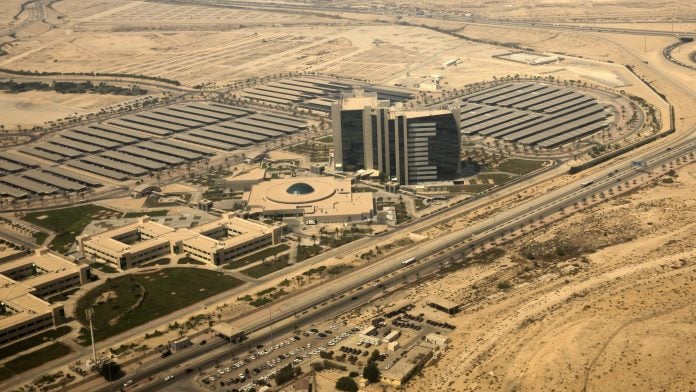
Iran-backed Houthis launched missile and drone attacks across Saudi Arabia, targeting several cities, as oil giant Saudi Aramco’s headquarters in the east of the kingdom was hit.
A limited fire erupted at Aramco’s office complex in Dhahran and there were no casualties, Saudi authorities said. The attacks continued into Wednesday, in fighting that has killed at least 18 people and injured hundreds more in Saudi Arabia over the past week. Missiles targeted cities including the capital Riyadh, and the Saudi-led coalition fighting the Houthis said it intercepted multiple projectiles.
At the same time, Iran is escalating attacks on ships crossing the Strait of Hormuz in the Persian Gulf, potentially threatening a recovery in oil supplies. Brent crude oil has traded at or above $100 a barrel for more than a month, contributing to inflationary pressure globally.
The Saudi-led coalition fighting the Houthis said it intercepted missiles targeting Kharj, the kingdom’s southern region, Dhahran and Haradh. Shrapnel from an interception fell in a residential area in Dhahran, it said. Earlier, the Saudi cabinet warned that the Houthis would “bear the consequences” of repeated “heinous attacks” on airports, civilian and economic sites.
The coalition yesterday told people in the vicinity of an oil site in Yemen’s Houthi-held capital Sanaa to leave the area “for their safety.” The Yemen Petroleum Co. later said the Al Sabah facilities and a refueling station were hit. The company said it had emptied the fuel tanks prior to the attack. Houthi-run Al Masirah TV reported that several areas in Saada and Al Jouf were also attacked.
Oil infrastructure in Saudi Arabia has also been targeted during the escalating hostilities with the Houthis.
A refinery at Jazan in the west of the kingdom has been shut since an earlier attack, while a key oil export port on the Red Sea coast has also been targeted. A cross-country pipeline that’s been the main means for Aramco to get its oil to markets was temporarily shut last month following an attack.
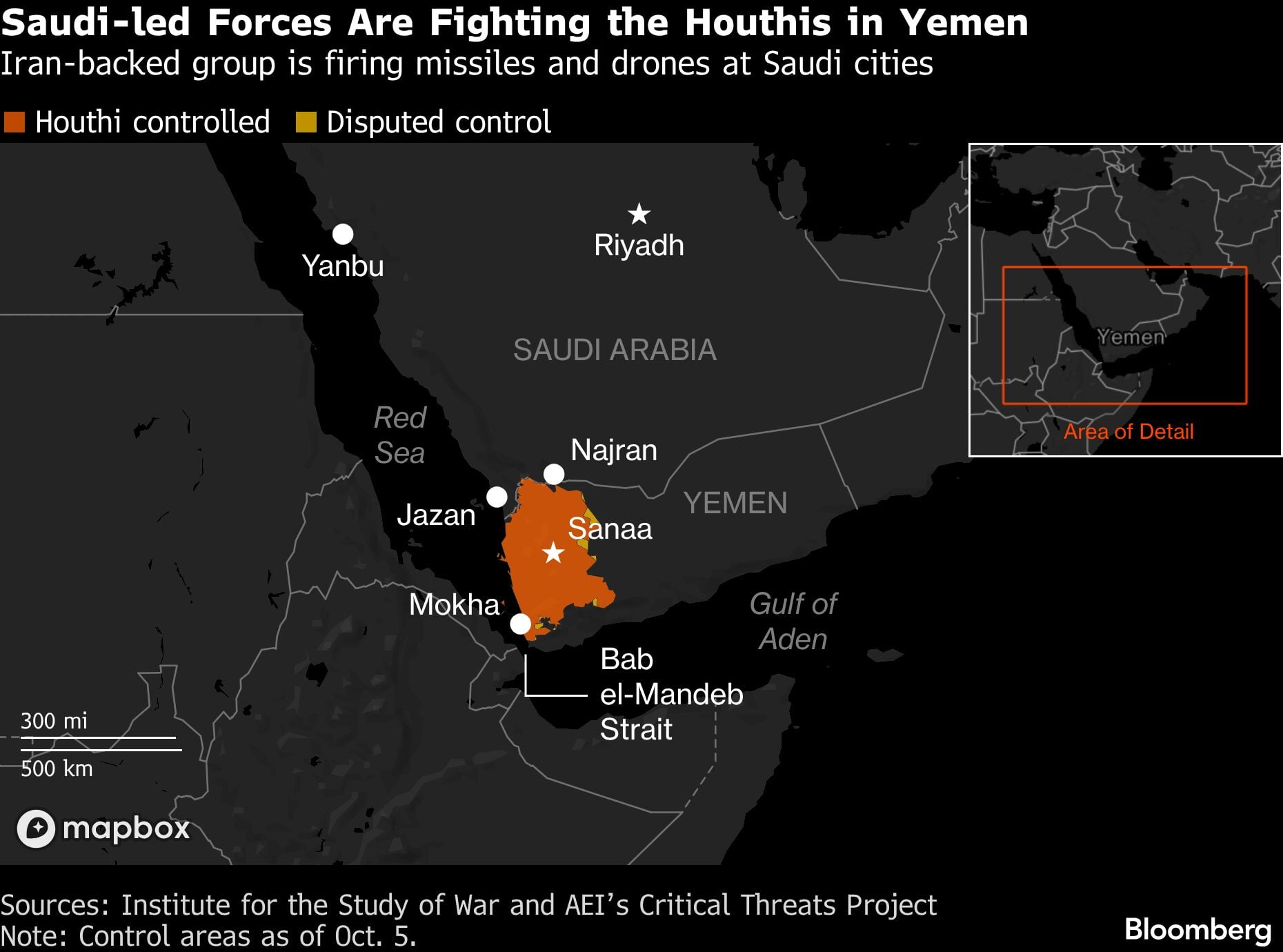
Dhahran, located on the Persian Gulf coast, is at the heart of the kingdom’s oil economy. In addition to Aramco, the region is home to a university specializing in petroleum engineering and a major air base. Saudi Arabia’s biggest oil fields are located in the deserts of the Eastern Province and in the Persian Gulf.
On Tuesday, President Donald Trump issued what appeared to be a veiled threat to the militant group on social media, saying they were “purposefully trying to drive up Oil Prices” at the “behest of Iran” ahead of the US midterm elections on Nov. 3.
“I thought they learned their lesson a year ago when we bombed the HELL out of them and, at their request, stopped,” Trump wrote. “I’ll be there after the Elections, and I will never forget!”
Trump said over the weekend he was considering joining the Saudi-backed campaign against Houthis. The US is already assisting Riyadh with intelligence, targeting and aerial refueling, but so far has resisted direct involvement.
The fighting poses a challenge to Saudi Crown Prince Mohammed bin Salman’s efforts to transform the kingdom’s oil-rich economy into a center for everything from tourism to finance.
Flights at Riyadh’s main airport have been halted and the capital’s primary financial center switched to remote work, just as the kingdom prepares to host a number of high-profile international events, including its flagship investor gathering.
Later this month, Riyadh is due to hold its key Future Investment Initiative, which usually draws in Wall Street titans from BlackRock Inc.’s Larry Fink to Citigroup Inc.’s Jane Fraser. It’s used by the kingdom as a platform to pitch itself as one of the region’s best investment opportunities.
Organizers are now planning to make the FII conference a hybrid event, giving executives the option to attend remotely, Reuters reported on Tuesday, citing two unidentified people familiar with the matter.
Citi’s finance chief Gonzalo Luchetti said Tuesday it’s allowing its employees in Saudi Arabia to work from home but hasn’t evacuated anyone. He said the bank has confidence in its ability to navigate disruptions.
Riyadh has been in conflict with the Houthis ever since they took control of the Yemeni capital, Sanaa, in 2014 and forced the internationally recognized government backed by Saudi Arabia to resign the following year.
Tensions flared up in July, when Saudi jets struck the runway of the airport in Sanaa to prevent a Houthi delegation returning from Iran from landing. Hostilities intensified over the last week as Saudi-led forces in Yemen launched a new campaign to take back control of Houthi-held areas.
–With assistance from Dana Khraiche and Omar Tamo.
By Christine Burke and Anthony Di Paola
Disclaimer: This report is auto generated from the Bloomberg news service. ThePrint holds no responsibility for its content.