



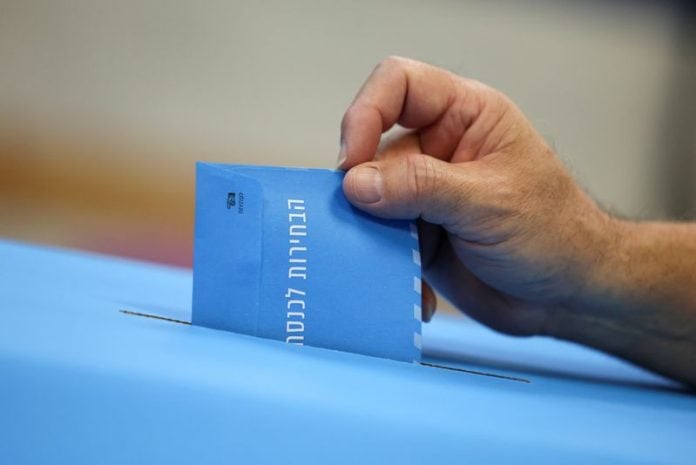
New Delhi: Israel’s Arab parties could emerge as pivotal players in the country’s first general election since the Hamas-led 7 October 2023 attack. Exit polls released on 28 October project that Palestinian parties could win as many as 19 seats in the 120-member Knesset. Neither the bloc led by Prime Minister Benjamin Netanyahu nor the opposition grouping led by Gadi Eisenkot is projected to secure the 61 seats required for a majority. The official results are still awaited.
The result could give Arab lawmakers greater leverage in negotiations over the next government. But Israel’s Arab parties are not a unified political force. While they share concerns about discrimination, crime and the treatment of Palestinians, they differ over ideology and how far they should cooperate with predominantly Jewish parties to influence government policy.
Who are Israel’s Arab parties?
Arab citizens make up roughly a fifth of Israel’s population. They can vote in national elections and elect representatives to the Knesset, although they have long faced inequalities in areas such as housing, public services and municipal funding.
The main Arab political forces contesting the 2026 election are Mansour Abbas’s Ra’am and the Joint List, an alliance comprising Hadash, Ta’al and Balad. The two are pursuing different approaches to political influence.
Also Read: Netanyahu sounds alarm as Israel voter turnout hits 53-yr high, Arab parties may emerge kingmakers
Ra’am: Mansour Abbas’s pragmatic approach
Ra’am, or the United Arab List, is an Islamist-conservative party led by Mansour Abbas. It advocates better public services and economic opportunities for Arab communities, alongside recognition of Arab citizens’ collective rights.
Its priorities include tackling organised crime, improving housing and infrastructure, narrowing educational inequalities and securing greater resources for Arab municipalities. The party also supports Palestinian statehood, an end to the occupation and the dismantling of Israeli settlements.
Abbas has pursued a pragmatic approach to coalition politics, arguing that Arab lawmakers can secure tangible benefits by negotiating with Israeli governments rather than remaining permanently outside them. In 2021, Ra’am became the first independent Arab party to join an Israeli governing coalition, supporting the government led by Naftali Bennett and Yair Lapid.
For this election, Ra’am’s strategy has centred on presenting itself as a potential negotiating partner. Its list also includes former Israeli deputy public security minister Yoav Segalovitz, a Jewish politician who previously belonged to the centrist Yesh Atid party.
The Joint List: Hadash, Ta’al and Balad
The Joint List brings together three parties with different political traditions.
Hadash, associated with the Jewish-Arab left, emphasises equality, social justice, workers’ rights and cooperation between Jewish and Arab citizens. Ofer Cassif is among its prominent representatives.
Ta’al, founded by Ahmad Tibi, combines Palestinian national advocacy with participation in Israeli parliamentary politics. Tibi is one of the most recognisable Arab lawmakers in Israel.
Balad, led by Sami Abu Shehadeh, advances an Arab-nationalist and democratic vision, calling for Israel to become a state of all its citizens rather than one that privileges Jewish national identity. Abu Shehadeh withdrew from the Joint List’s candidate slate in October, although he remains Balad’s chairman.
Yousef Jabareen and Ahmad Tibi head the Joint List’s filed electoral slate. The alliance supports Palestinian statehood, opposition to the occupation, civil equality and stronger protections for minority rights.
What did they campaign on?
Despite their differences, the parties converged on several domestic concerns.
Crime and inequality: Arab communities have faced high levels of violent crime and organised criminal activity. Ra’am and the Joint List have called for stronger law enforcement, better public services and more resources for Arab local authorities. Housing, education and employment remain important concerns.
Political representation: Both have sought to strengthen the influence of Arab citizens in national decision-making and oppose policies they consider discriminatory. Their approaches differ, however: Abbas prioritises negotiating for resources and policy concessions, while the Joint List places greater emphasis on civil equality and Palestinian national rights.
The Palestinian question: The parties support Palestinian statehood and oppose the occupation, although their ideological positions and approaches to Israeli coalition politics vary. The war in Gaza and the treatment of Palestinians have also sharpened tensions between Arab voters and Israel’s mainstream political establishment.
Can Arab parties decide who governs Israel?
The election’s arithmetic could make their seats decisive. Exit polls suggest the two principal political blocs are each short of a majority, leaving the opposition potentially dependent on Arab lawmakers to form a government.
But holding the balance of power is not the same as joining a coalition. Netanyahu has rejected a government dependent on Arab parties, while several opposition figures have also resisted formal coalition arrangements with them. Eisenkot’s ability to form a government could therefore depend on whether he is willing to negotiate with Arab representatives or seek their support without giving them cabinet positions.
Ra’am’s previous participation in government offers one possible model: supporting a coalition in exchange for commitments on funding and public services. The Joint List’s component parties have historically been more reluctant to enter governing coalitions, particularly when doing so could compromise their positions on Palestinian rights and the occupation.
For now, the exit polls point to increased representation, not a settled governing arrangement. The final seat count, the positions of smaller parties and the willingness of Jewish-led opposition parties to negotiate with Arab lawmakers will determine how much influence they can exercise.
The central question is whether a stronger Arab parliamentary presence can translate into policy changes for Arab citizens, and whether it can influence the formation of Israel’s next government.