





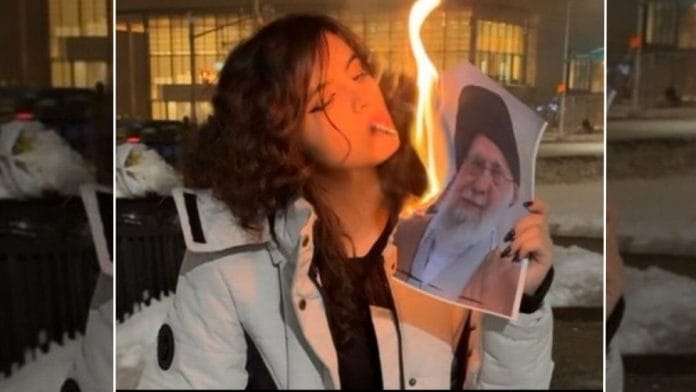



New Delhi: Photos showing Iranian women lighting cigarettes from burning photographs of Supreme Leader Ali Khamenei have circulated widely on social media recently, as protests sparked over the deepening economic crisis spread across the country. Triggered initially by a sharp fall in the value of the rial and rising living costs, the demonstrations have quickly expanded into a broader movement against the country’s political leadership.
The women seen in the images have joined thousands of others taking to the streets and online spaces to protest against Khamenei, defying long-standing social restrictions and direct legal prohibitions. Under Iranian law, defacing or burning images of the supreme leader is a serious offence. At the same time, public smoking by women has long been discouraged and socially policed. The pictures and videos have been shared multiple times on social media before being disrupted by state-imposed internet shutdowns.
A call for systemic change
A sharp depreciation of Iran’s currency in late December sparked protests over rising prices and deteriorating living conditions. Within days, the unrest expanded into broader anti-government demonstrations, with chants targeting the political leadership and calling for systemic change.
Protests have been reported in Tehran, Mashhad, Tabriz, Qom and several other cities. In some areas, residents have banged pots from balconies at night, while street protests have included slogans directly criticising the supreme leader. Videos verified by international media show crowds chanting “death to Khamenei” in parts of the capital.
Authorities have responded with a sweeping crackdown. Internet and mobile services have been repeatedly shut down, and security forces, including riot police, Basij militias and plainclothes units, have used force to disperse crowds.
Human rights groups report that at least 65 people have been killed in recent days, including children, with more than 2,300 detained. There have also been reports of live ammunition and pellet guns being used against protesters. Funerals of those killed have, in several instances, turned into further protest gatherings.
Iranian state media acknowledged the unrest after several days, describing the protests as violent riots instigated by foreign-backed “terrorist agents”. Officials have accused the United States and Israel of fuelling the demonstrations, claims that have been rejected by Western governments.
International rights organisations, including Amnesty International and Human Rights Watch, have condemned the use of force and mass arrests, warning that the internet shutdown is hampering documentation of abuses.
Also read: The twist no one saw coming — comet 3I/ATLAS is older than the Sun
Women’s defiance in Iran
There has been a continued resistance to Iran’s laws that are discriminatory against women. Over the past year, in Tehran and other major cities, young women have increasingly appeared in public without the hijab and posted videos of themselves walking unveiled. This defiance continues more than three years after the death of Mahsa Amini, a 22-year-old Kurdish woman who died in custody after being detained by the morality police for allegedly breaching dress code rules.
Amini’s death in 2022 triggered nationwide demonstrations that lasted for months and were met with a violent crackdown by security forces. Rights groups say hundreds of protesters were killed and thousands were injured during that period. Although the movement was suppressed, public compliance with hijab rules has visibly weakened since then, particularly in urban areas.
In 2024, Iran introduced a stricter “hijab and chastity” law. Under the legislation, women accused of promoting unveiling or “improper dress” can face heavy fines, flogging, and prison sentences of up to 15 years for repeat offences.
In December, Khamenei publicly reiterated that the hijab was essential to preserving women’s dignity. Security forces subsequently intensified checks, and several high-profile arrests followed.
Despite the tougher measures, public attitudes have shifted since 2022, with more Iranian women willing to defy dress codes and protest publicly even in the face of increased penalties.
(Edited by Saptak Datta)