



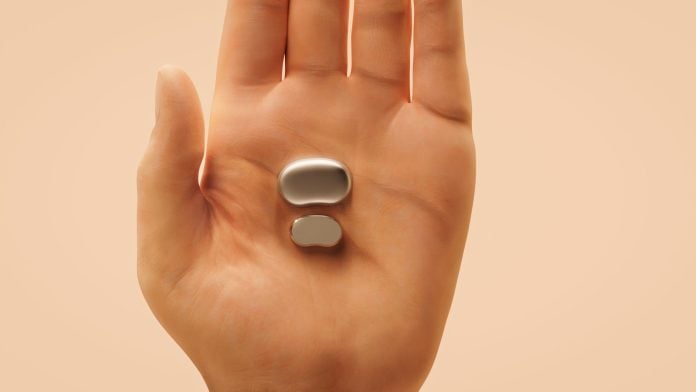
New Delhi: A tiny device stuck to the side of the head has become Deepinder Goyal’s latest big technology bet. Called Temple, the wearable is designed to sit over the temple and measure signals linked to blood flow in the brain, rather than counting steps or monitoring heart rate from the wrist.
Now, after months of testing, Temple is moving closer to becoming a product that people can actually buy. Goyal recently showed six colours for the launch edition and said pre-orders could open soon, with people on the early-access waitlist getting priority. The company says the device is expected to ship before the end of 2026.
So what exactly is Temple, why does it sit on the side of the head and what will it cost?
What is Temple?
Temple is a wearable developed by Goyal’s health-tech company, Temple Private Limited. Unlike a smartwatch or fitness band, it is attached to the side of the forehead, around the temple.
The company’s central claim is that the temple is a useful location for measuring physiological signals because of the blood vessels and relatively thin tissue in the area.
Temple calls its main measurement BrainFlow, which it describes as a proxy for cerebral blood flow measured continuously from the temple. The company says the number is intended to show how blood flow to the brain changes with factors such as exercise, sleep, posture, meditation and other daily activities.
The idea is not to produce a diagnosis. Temple’s own terms say the device is not a medical device, and that its data should not be treated as a substitute for professional medical assessment.
Why measure blood flow to the brain?
The brain needs a continuous supply of oxygen and nutrients delivered through blood.
Cerebral blood flow is therefore an established area of medical and scientific research. Changes in blood flow can be associated with physiological states and certain neurological or cardiovascular conditions.
But measuring it accurately is difficult.
Hospitals and researchers have established methods including MRI-based techniques, CT angiography and transcranial Doppler. These are very different from putting a small sensor against the skin.
Temple’s pitch is essentially to make a difficult physiological measurement available continuously during ordinary life.
Instead of getting a snapshot during a clinical test, the company wants to build a long-term record of how an individual’s brain circulation responds to exercise, sleep, posture and other changes.
What is ‘Entropy’?
Temple also produces another number called Entropy.
Goyal describes it as a measure of the body’s real-time “cost of being alive”, reflecting metabolic and sympathetic demand. The score changes as the body responds to things such as exercise, stress, sleep, caffeine and meditation.
Temple says the metric is updated continuously and is intended as a way of capturing the body’s overall physiological state rather than measuring one conventional fitness parameter.
The concept comes partly from Goyal’s broader interest in what he calls the Gravity Ageing Hypothesis, which examines whether the effects of gravity on blood circulation could contribute to ageing and changes in brain function.
That is a research hypothesis, however, rather than an established medical explanation of ageing.
Is Temple actually measuring blood flow inside the brain?
Temple says it has been testing its BrainFlow technology against established scientific instruments.
On its research page, the company cites a study comparing BrainFlow with time-domain near-infrared spectroscopy, or NIRS. It reports correlations of 0.84–0.91 with changes in brain blood volume in the study, compared with a weaker relationship with scalp blood volume. Another study involving 23 healthy adults compared Temple’s measurements with transcranial Doppler during exercise and changes in posture, reporting a within-person correlation of about 0.8.
These results are important because one obvious question about a sensor sitting on the skin is whether it is actually detecting signals from the brain or simply measuring blood flow in the scalp.
But these are still validation studies. They do not establish that Temple can diagnose neurological disease, predict dementia or replace clinical brain-imaging equipment.
That distinction is also reflected in Temple’s own disclaimer, which says the device’s accuracy is not intended to match professional medical or scientific measurement devices.
Why not just wear a smartwatch?
Temple’s argument is that the wrist is not necessarily the best place to measure everything.
Smartwatches are excellent at tracking signals such as heart rate, movement and, in some devices, blood oxygen. But they are relatively far from the brain.
The temple, meanwhile, is directly beside the head and contains a dense network of blood vessels. Temple’s research suggests that this location can capture physiological information that may be harder to obtain from the wrist.
That is why the company has deliberately made the device look so different from a conventional wearable.
It is less like a smartwatch and more like a tiny sensor that stays attached to the head throughout the day.
How is it worn?
The current device is designed to be attached using adhesive Grips.
The company says these allow Temple to remain attached during activities including exercise and swimming. The grips can last for several days, although Temple recommends replacing them more frequently for hygiene.
Goyal has also said the latest version is less than half the size of the earlier device he had shown publicly and has described it as the smallest wearable on the market by volume.
The launch edition is expected to come in six colours.
How much will Temple cost?
The final retail price has not been officially announced.
However, The Economic Times and the Times of India have reported that the first Temple wearable is expected to cost roughly Rs 75,000-80,000. Earlier reports said the indicative price could include lifetime access to Temple’s software platform and a lifetime supply of the adhesive tapes used to attach the device.
That would put Temple firmly in the premium wearable category, considerably above mainstream fitness bands and many smartwatches.
Also Read: India’s Gen-Z is fighting, not praying. Why its protests are bigger than politics
When can people buy it?
Temple is not yet broadly available.
The company’s website is currently collecting registrations for early access, and Goyal has said people on the waitlist will get priority when pre-orders open. He has indicated that the launch is targeted for before the end of 2026.
The current launch is also expected to be limited rather than a mass-market rollout.
That makes Temple less of a conventional consumer gadget launch and more of a test of whether people will pay a premium to continuously monitor a new set of physiological signals.
So what is Goyal really betting on?
Temple is not simply another fitness tracker.
The bigger bet is that continuous measurements from the head can reveal something about human performance and health that existing wrist and finger wearables miss.
The science behind measuring blood-flow-related signals is real. The harder question is what useful conclusions can eventually be drawn from those measurements in everyday life.
For now, Temple itself says it is a wellness product rather than a medical device. Its research page lists early validation studies, while its terms explicitly caution users against treating its readings as medical measurements.
At around Rs 75,000-80,000 if the reported pricing holds, buyers will therefore be paying not just for a tiny piece of hardware on their temple, but for Goyal’s bet that brain and body data can become the next frontier of wearable technology.