


Welcome to The First Metro. I am Manasi Phadke, a thoroughbred Mumbaikar and once every fortnight, I try to bring to you a glimpse of India through Mumbai-tinted glasses. Trust me, the hues seem different.
If you ask me, the most magical thing about my city is the sea. It’s what sets Mumbai apart from other Indian metros, which have over the years evolved to be somewhat comparable in other aspects—a bustling industry and competitive remuneration for specialised skills; cosmopolitanism to a certain extent; post-work recreational outlets; a growing public transportation network and so on. Some Indian metros honestly beat Mumbai on some of these counts.
But, we have the sea. And they don’t.
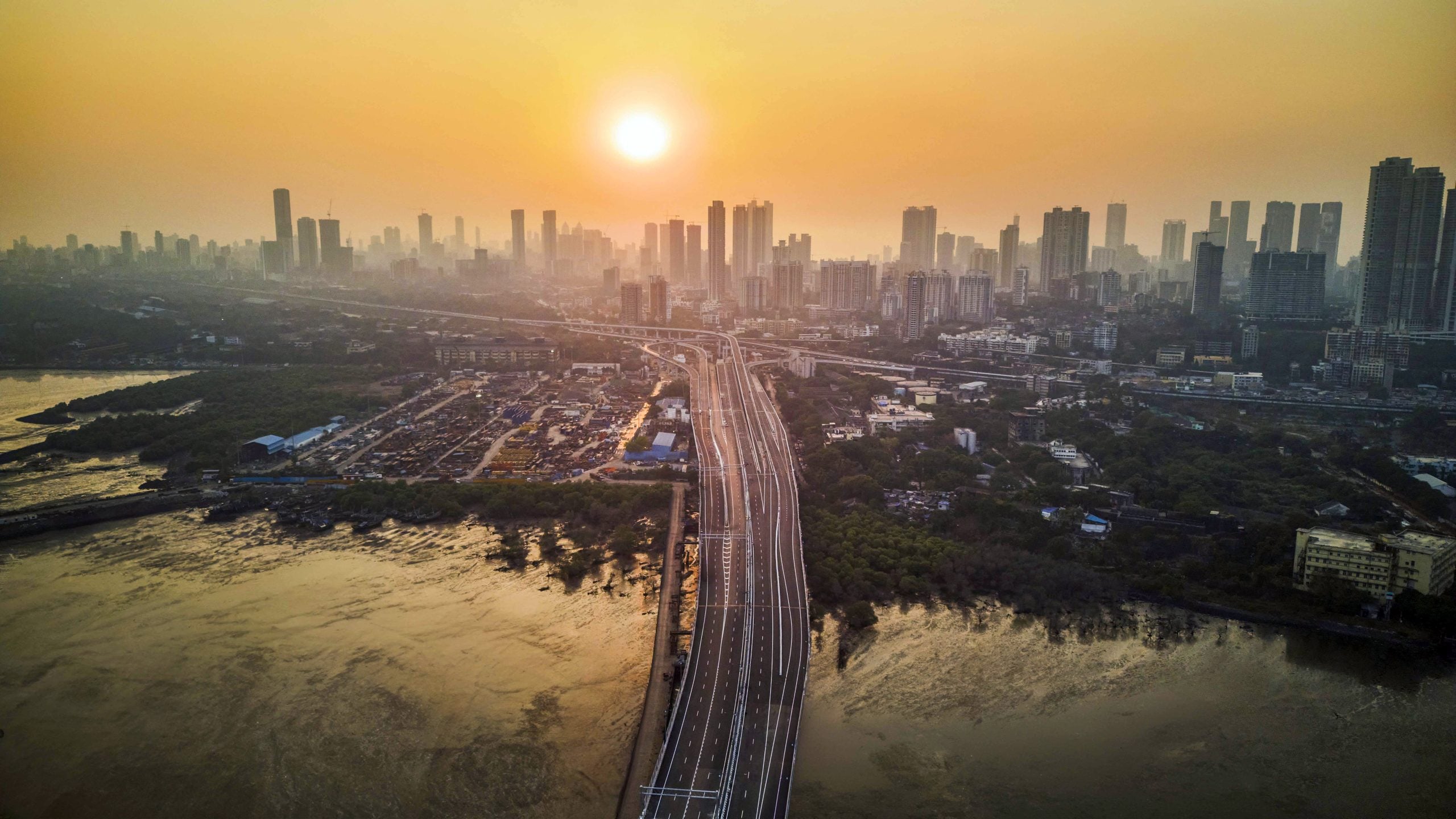
One may shrug it off, saying, so what? Have you seen Juhu beach at low tide with the beach bed embedded with all possible categories of trash where there should be shells and pearls? Had you even seen the eastern seaboard properly till the Atal Setu was built, giving commuters rare glimpses of the splendour that lies on Mumbai’s eastern side, concealed behind slums, decrepit buildings and crumbling port facilities?
Well, sure. I’m not saying we’ve treated our sea very well or even exploited its presence to our best advantage. We’ve just exploited it.
But, despite us having neglected our virtue, the sea has always given us everything it has, with all its magnanimity. Mumbai’s air quality, for instance. Just imagine how much worse off we would be if we didn’t have this giant natural air purifier.
Even the sea has its limits though. We’ve urbanised so much, concretised so much. We’re destroying our green spaces, our holding ponds. Temperatures have started rising and wind speeds, slowing down. There’s been much talk about what can be done, court interventions, action plans drawn up by the BMC, but the sea is still finding it tough to keep rescuing her subjects in Mumbai every single day.
And meanwhile, we find newer ways of disrespecting her, exploiting her.
The latest is this concept of installing large floating hoardings atop barges parked inside the sea—the Maharashtra government’s small effort at shoring up its revenue. The move has drawn criticism from many Mumbaikars, but the government looks firm on its plan, having gone ahead and floated a tender too.
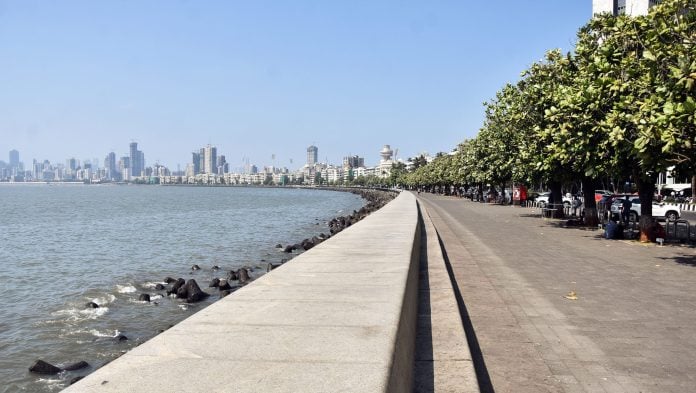
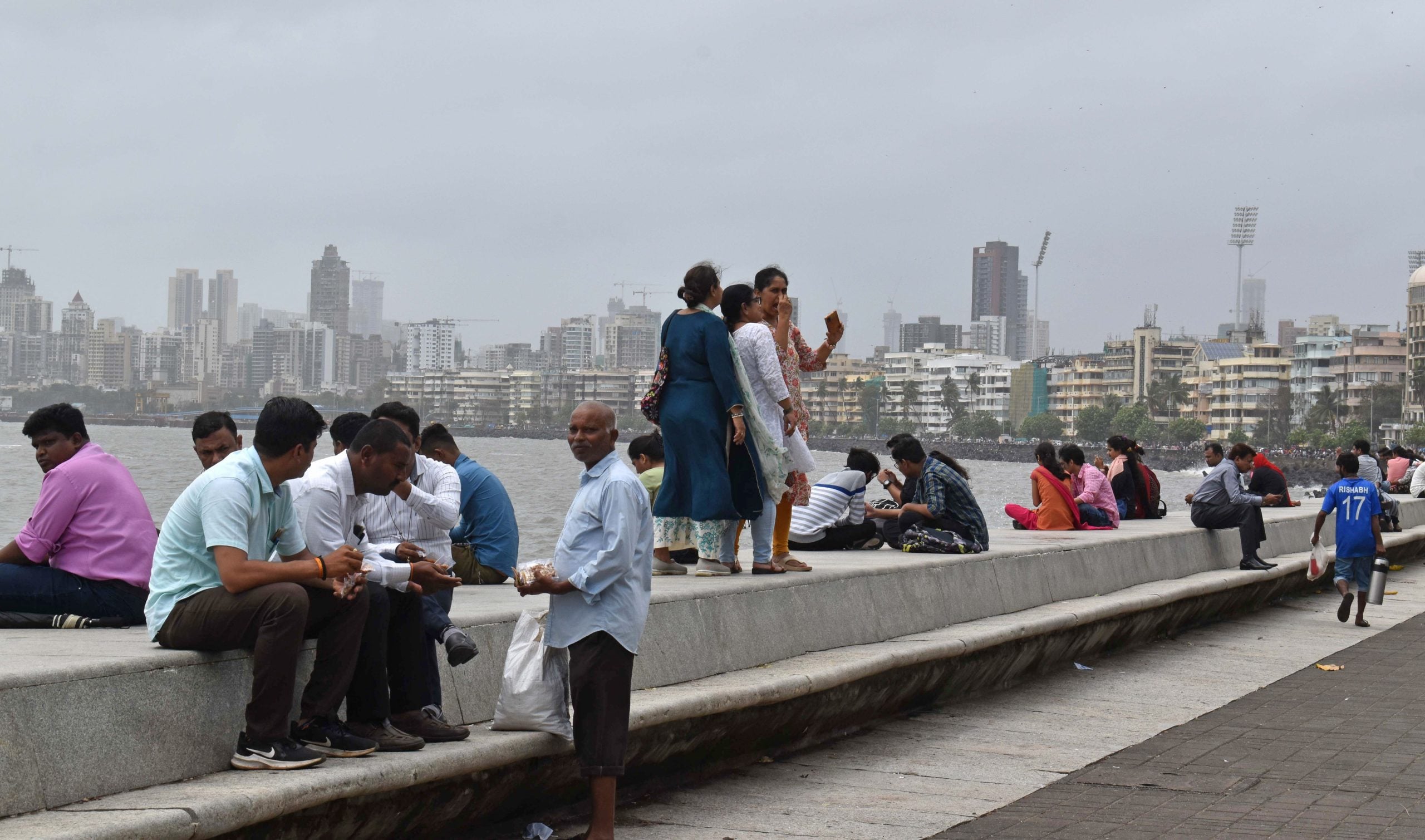
Anyone who’s spent some time in Mumbai has definitely been to Marine Drive. On any given public holiday or a weekend, it feels like the entire city has turned up on that small stretch of the promenade, occupying every inch of it. The overall sight is overwhelming. Overstimulating even. But, zoom into a single couple, holding hands, staring into the vastness of the Arabian sea, or a family with the father holding his toddler and pointing out to tall buildings on the skyline, or a lone woman with music in her ears, tuning out of life for just a little while.
Zoom into any of those people and see the sight through their eyes. It’s an oasis of peace—the golden lights of the skyline glistening on the bobbing water, the soul-cleansing breeze and just the sheer nothingness of the moment.
We need it in our lives. We need that nothingness, after fighting for a fourth seat in the local train on a bench made for three, after shelling out half our salaries in rentals for a box of a house looking into other buildings, after enduring constant noise day in and day out with all the honking, processions, protests, rallies, public celebrations of festivals and even weddings, and after being constantly on the edge with the city that never goes dark.
And that’s why all those angry Mumbaikars have probably berated the Maharashtra Maritime Board’s plan for those floating advertisements.
Also Read: Fair is foul and foul is air
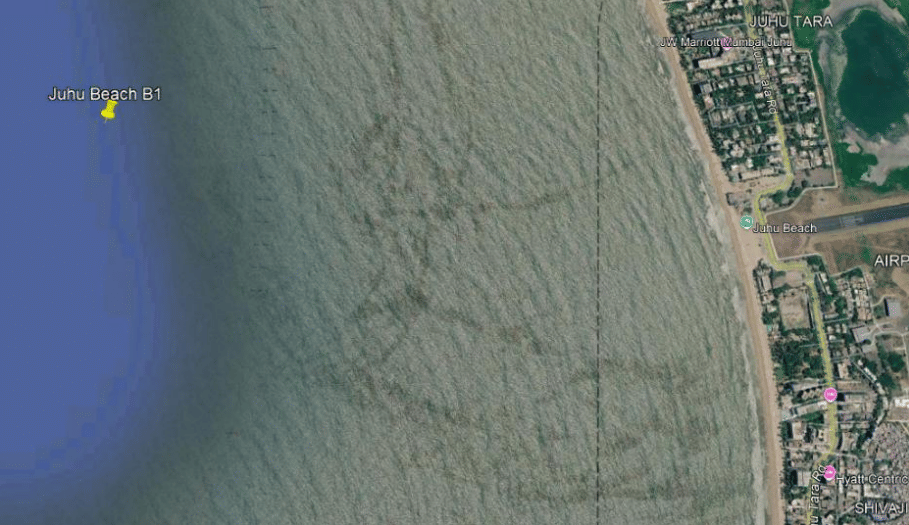
The Maritime Board has planned for four hoardings along Mumbai’s shoreline: near Juhu beach, Worli jetty, Lotus jetty and the Bandra Worli Sea Link. And then there are 11 more planned across the Mumbai Metropolitan Region in the creeks and coastal waters of places such as Navi Mumbai, Thane, Alibaug and Vasai.
These will be large luminous advertisements, measuring up to 40 feet by 40 feet. To put this into context, all of this is being done for an annual revenue of at least Rs 4.79 crore, or about a fourth of the cost of a sea-view Worli house of about 1,500 square feet.
Having covered the government and its agencies long enough, I can understand that most government corporations are not flush with funds, and those who especially deal with any sort of infrastructure creation—like the Maharashtra Maritime Board—need a cushion of some finances at their disposal. In search of that cushion, some bright bureaucratic minds try to optimise every possible avenue for revenue.
Take the practice of naming Mumbai Metro stations after brands and extracting some additional non-fare revenue. While there’s no harm in doing that and we have all internalised listening to announcements inside the trains saying, “Next station Kotak Bandra Kurla Complex” or “agla (next) station Fevicol Marol Naka,” but for long, Mumbai’s neighbourhoods had acquired an identity based on the names of the railway stations nearby.
Maybe, two decades down the line, people will still call Marol Naka by the same name, but the words ‘Fevicol’ and ‘Marol Naka’ will also be bound as strongly as the adhesive the brand is marketing.
These are small ways through which we slowly start altering our city’s character, as we’ve known it, without even realising the minute changes till they accumulate into something bigger and suddenly it’s a city that we no longer recognise.
The floating dazzling advertisements will change the way the city imagines its sea and its skyline, longer term.
And they will rob us, citizens, of the most important thing the sea gives us—some peace, some moments when your mind is not overstimulated by the hundred things that the city throws at you, some downtime when you can lose yourself in the blue, green or the grey in your life depending on the colour of the sea that day.
Critics have also argued that it will increase light pollution in this ‘city of blinding lights,’ as the U2 song goes.
My daughter has had a book about some children living in a coastal town in the United Kingdom devising home-grown solutions to minimise light pollution. The puffins in the town were getting distracted by the growing urban lights and there had been many bird accidents.
The other day, she told me we should switch off unnecessary lights in the house. Where we’re keeping the lights on, we should draw the curtains. “We will reduce light pollution in Mumbai and it will help the puffins,” she said. I explained that we have no puffins, but the amount of light pollution we create does interfere with the life of other birds like the migratory flamingos and even bats.
She drew the curtain shut, saying, “I don’t like bats, but I don’t want them to be sad.” I didn’t tell her how little a difference her drawing the curtains was going to make in Mumbai. I didn’t want her to be sad.
The hoardings in the sea and the amount of artificial light they generate, critics say, will disturb the city’s aquatic ecosystem.
I’ve sat by the sea when I was happy. I sat by the sea when I fell in love. I sat by the sea when I felt lonely. I sat by the sea when I lost my father. And each time, the nothingness that I would stare into would be a balm for my soul.
I didn’t realise just how much I took my time with the sea for granted.
In 2020, the Covid-necessitated lockdown coincided with my postpartum phase. I was doubly cautious, keeping myself under house arrest even as the world had started taking baby steps towards normalcy. When I stepped out after a gap of a good seven months, we decided to take my baby to the Bandra reclamation promenade. I stepped out of the car, walked to the edge and stared into the grey expanse, my baby clinging to my chest. And I suddenly realised my eyes had moistened. How I had missed the sea! It felt decompressing after some really tough months.
A bank or a real estate company putting up a glow sign, telling me to buy something and interrupting my moments of nothingness will feel intrusive.
Mumbai’s sea is its hallmark. It’s always given the city more and enough with a kind of generosity that parallels its vastness. It’s high time we start respecting her.
Also Read: The long and winding road to Goa